 38 citations
,
January 2016 in “Cell Death and Disease”
38 citations
,
January 2016 in “Cell Death and Disease” The TCL1 transgenic mouse model is useful for understanding human B-cell leukemia and testing new treatments.
 12 citations
,
December 2002 in “Archives of Dermatology”
12 citations
,
December 2002 in “Archives of Dermatology” Sweet syndrome can be the only sign of hairy cell leukemia relapse.
 1 citations
,
February 2015 in “Clinical and Experimental Dermatology”
1 citations
,
February 2015 in “Clinical and Experimental Dermatology” A man got six skin cancers within a year after a cell transplant for leukemia but was cancer-free 32 months later; skin checks are important post-transplant.
March 2022 in “Authorea (Authorea)” Chemotherapy for leukemia led to full hair regrowth in a child with alopecia totalis.
5 citations
,
June 2015 in “The Journal of Dermatology” HTLV-1-associated lichenoid dermatitis (HALD) is linked to an immune response against HTLV-1-infected cells.
 January 2021 in “American journal of dermatological research and reviews”
 The muscle damage was caused by T-cell large granular lymphocytic leukemia, not dermatomyositis.
 24 citations
,
September 2005 in “Journal of Cellular Biochemistry”
24 citations
,
September 2005 in “Journal of Cellular Biochemistry” Retinoids increase steroid sulfatase activity in leukemia cells through RARα/RXR and involves certain pathways like phosphoinositide 3-kinase and ERK-MAP kinase.
 January 2025 in “Dermatology Review”
 Giant keratoacanthoma can look like squamous cell carcinoma, requiring careful diagnosis and surgical removal.
3 citations
,
September 2016 in “The Journal of Dermatology” A patient with leukemia/lymphoma also had multiple autoimmune diseases, suggesting a link between them.
2 citations
,
September 2024 in “PLoS ONE” Bendamustine combined with tucidinostat may effectively treat adult T-cell leukemia.
6 citations
,
May 2013 in “The Journal of Dermatology” Autoimmune reactions may cause both alopecia areata and HAM.
 13 citations
,
February 2010 in “Stem Cell Reviews and Reports”
13 citations
,
February 2010 in “Stem Cell Reviews and Reports” Stem cells compete for space using cell adhesion, and mutations can affect their competitive success, with implications for tissue health and disease.
 January 2023 in “Indian dermatology online journal”
 Leukemia can sometimes appear as unusual skin issues in children.
 January 2025 in “Case Reports in Hematology”
 Leukemia should be considered in teens with unexplained bleeding.
November 2023 in “Skin Appendage Disorders” A rare scalp condition can occur due to leukemia affecting the skin.
September 2025 in “Blood Advances” Targeting androgen receptor signaling may improve acute myeloid leukemia treatment.

Wavy sinus hairs in cats are linked to feline leukemia virus infection.
55 citations
,
May 2007 in “Australasian journal of dermatology” Two boys developed a viral skin infection during chemotherapy, which resolved with improved immune function.
2 citations
,
September 2017 in “Journal of Zoo and Wildlife Medicine” An addax had skin cancer that spread to lymph nodes and was euthanized.
 5 citations
,
October 2018 in “American Journal of Clinical Dermatology”
5 citations
,
October 2018 in “American Journal of Clinical Dermatology” Skin problems are common after stem cell transplants, and early treatment by dermatologists can improve patient outcomes.
Donor lymphocyte infusions effectively treated leukemia relapse but caused vitiligo and alopecia areata.
22 citations
,
October 2000 in “British Journal of Haematology” Non-myeloablative stem cell transplants are a promising, less toxic option for older or weaker patients, with fewer side effects and good outcomes.
 9 citations
,
January 2018 in “Acta Clinica Croatica”
9 citations
,
January 2018 in “Acta Clinica Croatica” Bendamustine, often combined with other drugs, is effective and less toxic for certain blood cancers, but less effective for young, fit patients with CLL.
 November 1966 in “British Journal of Dermatology”
 The meeting discussed various skin conditions, treatments, and unusual cases, highlighting the effectiveness of tetracycline in treating rosacea.
 1 citations
,
January 2019 in “Skin appendage disorders”
1 citations
,
January 2019 in “Skin appendage disorders” A woman's sudden hair loss three years after a bone marrow transplant was a sign of chronic graft-versus-host disease but improved with treatment.
 80 citations
,
June 2000 in “Modern Pathology”
80 citations
,
June 2000 in “Modern Pathology” Long-standing benign tumors can become cancerous, especially in people with weakened immune systems.
4 citations
,
January 2014 in “Bone marrow transplantation” Alopecia areata can be transferred through stem cell transplants from affected siblings.
February 2026 in “World Academy of Sciences Journal” Lymphoma should be considered in unusual scalp hair loss cases, as treatment can work but may lead to severe complications.
 February 2024 in “Future science OA”
 Loss of the Y chromosome and UTY gene activity increases cancer risk in men.
 7 citations
,
December 2013 in “The Journal of Dermatology”
7 citations
,
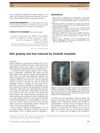
December 2013 in “The Journal of Dermatology” A woman's hair turned gray and fell out after starting a cancer drug called imatinib mesylate.