35 citations
,
January 2011 in “Journal of Biological Chemistry” sPLA2-X is crucial for normal hair growth and follicle health.
32 citations
,
January 2006 in “Liver transplantation” Vitamin A toxicity can cause severe health issues and may require a liver transplant if other treatments fail.
29 citations
,
December 2021 in “Pharmaceutics” Phospholipid soft vesicles improve topical drug delivery for better skin condition treatments.
23 citations
,
November 2019 in “International Journal of Molecular Sciences” Adipose-derived stem cells can help repair tissue in lipodystrophy patients.
19 citations
,
June 2021 in “The world journal of men's health” Using anabolic-androgenic steroids can harm men's reproductive health and increase the risk of heart problems and death.
18 citations
,
July 2024 in “Frontiers in Immunology” Targeting specific molecular pathways may improve treatments for chemoresistant cancers.
18 citations
,
February 2024 in “ACS Polymers Au” Silk fibroin shows promise for wound care but faces challenges in becoming widely available.
 18 citations
,
October 2021 in “Frontiers in Physiology”
18 citations
,
October 2021 in “Frontiers in Physiology” Lipocalin-Type Prostaglandin D2 Synthase (L-PGDS) is a protein that plays many roles in the body, including sleep regulation, pain management, food intake, and protection against harmful substances. It also affects fat metabolism, glucose intolerance, cell maturation, and is involved in various diseases like diabetes, cancer, and arthritis. It can influence sex organ development and embryonic cell differentiation, and its levels can be used as a diagnostic marker for certain conditions.
14 citations
,
March 2018 in “The American journal of case reports” People with the same genetic mutation for Woodhouse-Sakati syndrome can have different symptoms.
13 citations
,
November 2022 in “Journal of King Saud University - Science” Juniperus excelsa, Olea oleaster, and Olea europaea have potential as natural antioxidants and wound healing agents.
12 citations
,
December 2023 in “Antioxidants” Blackberry leaves have stronger antioxidant properties than raspberry leaves.
9 citations
,
December 2021 in “Androgens” Androgens like testosterone may help treat traumatic brain injury by reducing mitochondrial stress and inflammation.
5 citations
,
April 2024 in “ACS Chemical Neuroscience” A new method accurately measures nine neuroactive steroids in small blood samples, helping to study brain diseases.
5 citations
,
May 2020 in “Clinical Phytoscience” Cuscuta reflexa leaves extract may help lower blood sugar and improve diabetes symptoms.
4 citations
,
May 2025 in “International Journal of Nanotechnology and Nanomedicine” Nanocarriers show promise for improving skin drug delivery in treating skin conditions.
4 citations
,
October 2023 in “Fertility and Sterility” Some medications and supplements can affect male fertility, with some improving and others harming sperm quality.
 2 citations
,
July 2023 in “Life”
2 citations
,
July 2023 in “Life” COVID-19 can cause temporary hair loss, which is commonly reversible with treatment.
1 citations
,
May 2025 in “Analytical Science Advances” A new method accurately measures iron in small samples with high sensitivity and low cost.
1 citations
,
October 2024 in “Veterinary Sciences” Hemodialysis successfully treated a cat with minoxidil poisoning.
 June 2026 in “Acta Pharmacologica Sinica”
 Improving PROTAC delivery systems can enhance their effectiveness and speed up their use in medicine.
 March 2026 in “Journal of Nanotheranostics”
 Nanotechnology improves CRISPR-Cas9 delivery for cancer treatment, but challenges remain.
March 2026 in “Journal of the mechanical behavior of biomedical materials/Journal of mechanical behavior of biomedical materials” Hair cuticles remain stable and resilient under stress due to strong protein content and crosslinking.
November 2025 in “Photochemistry and Photobiology” Standardizing light therapy methods could improve spinal cord injury treatment.
October 2025 in “Diseases” Long COVID causes lasting symptoms in many body systems, needing more research for better treatments.
August 2025 in “International Journal for Vitamin and Nutrition Research” Vitamin B complex improves plastic and cosmetic surgery outcomes by enhancing tissue repair and reducing inflammation.
Haircare products may expose users to harmful chemicals despite regulations.
 January 2025 in “Medicina”
 Advanced techniques and technologies can improve burn wound healing, but more research is needed.
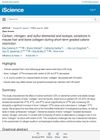
Calorie restriction changes the elemental and isotopic makeup of mouse hair and bone.
 April 2024 in “AAPS PharmSciTech”
 New microneedle method improves hair regrowth treatment delivery.
 March 2024 in “Cell communication and signaling”
 Lack of sleep in mice leads to prostatitis by reducing certain hormones and activating an inflammatory pathway, which can be temporarily fixed with normal sleep.