October 2017 in “Doctoral thesis, UCL (University College London).” Lipid-based nanoparticles are effective for applying hair growth treatments to the skin.
 69 citations
,
December 2015 in “Journal of Controlled Release”
69 citations
,
December 2015 in “Journal of Controlled Release” Nanocapsules can improve clobetasol delivery to hair follicles, reducing side effects.
Nanocarriers improve acne treatment by enhancing drug delivery and reducing side effects.
14 citations
,
August 2021 in “Journal of Pharmaceutical Sciences” Cholesterol- and phospholipid-free niosomes improve deep skin drug delivery.
 13 citations
,
January 2019 in “Colloids and Surfaces B: Biointerfaces”
13 citations
,
January 2019 in “Colloids and Surfaces B: Biointerfaces” The new drug delivery systems made with surfactants and block polymers are stable and not toxic.
Lipid carriers improve delivery of hair loss treatments to follicles.
January 2016 in “Universitätsbibliothek der FU Berlin Hochschulschriftenstelle u. Dokumentenserver” The new biodegradable nanocarriers safely and effectively deliver drugs into the skin.
 128 citations
,
March 2016 in “Advanced Pharmaceutical Bulletin”
128 citations
,
March 2016 in “Advanced Pharmaceutical Bulletin” Smaller nanoparticles penetrate skin better, especially through hair follicles.
2 citations
,
December 2024 in “Apple Academic Press eBooks” Nanocarriers improve skin disease treatment by targeting hair follicles effectively.
 32 citations
,
April 2016 in “Aaps Pharmscitech”
32 citations
,
April 2016 in “Aaps Pharmscitech” Nanostructured lipid carriers improve minoxidil delivery for hair loss treatment.
 28 citations
,
March 2014 in “International Journal of Nanomedicine”
28 citations
,
March 2014 in “International Journal of Nanomedicine” New lipid nanoparticles show promise for delivering hair loss treatments but need improvement for better skin penetration.
10 citations
,
December 2023 in “International Journal of Nanomedicine” Cell membrane-coated nanoparticles could improve gene therapy by enhancing delivery and targeting of nucleic acids.
 January 2015 in “Elsevier eBooks”
 Nanocarriers like liposomes and cyclodextrins improve how angiotensin-(1-7) is delivered in the body.
January 2018 in “Refubium (Universitätsbibliothek der Freien Universität Berlin)” Nanocarriers can improve skin treatments by effectively delivering drugs and enhancing skin hydration.
40 citations
,
March 2019 in “Pharmaceutical development and technology” Smaller particles of the drug carrier penetrated skin better, with 300 nm size being best for targeting hair follicles.
June 2021 in “Zenodo (CERN European Organization for Nuclear Research)” Nanoemulsions can effectively improve the delivery of certain hydrophobic molecules.
January 2018 in “Refubium (Universitätsbibliothek der Freien Universität Berlin)” New nanocarriers were developed for safer, targeted drug delivery and diagnostics, showing promise for future medical use.
January 2025 in “Pharmaceuticals” Nanocarriers can improve antioxidant delivery to the skin but face safety and production challenges.
 57 citations
,
September 2017 in “Journal of controlled release”
57 citations
,
September 2017 in “Journal of controlled release” Nanocarrier-loaded gels improve drug delivery for cancer, skin conditions, and hair loss.
 9 citations
,
November 2009 in “Recent Patents on Drug Delivery & Formulation”
9 citations
,
November 2009 in “Recent Patents on Drug Delivery & Formulation” Microemulsions could improve how drugs are delivered and absorbed in the body.
 December 2013 in “Biomedical and biopharmaceutical research”
 Nanotechnology shows promise for better drug delivery and cancer treatment.
 15 citations
,
October 2012 in “InTech eBooks”
15 citations
,
October 2012 in “InTech eBooks” Niosomes are a promising and effective way to deliver drugs through the skin.
 21 citations
,
July 2017 in “Journal of Cosmetic and Laser Therapy”
21 citations
,
July 2017 in “Journal of Cosmetic and Laser Therapy” Vesicular carriers like liposomes may improve cosmetic skin treatment delivery and effectiveness but need more human research.
 January 2022 in “Elsevier eBooks”
 Nanospanlastics are effective in targeted drug delivery for chronic diseases, improving skin conditions, treating hair loss, and increasing drug absorption.
January 2018 in “Refubium (Universitätsbibliothek der Freien Universität Berlin)” Nanocrystals and nanoparticles can enhance drug delivery for skin applications by improving solubility and dissolution rates.
 10 citations
,
January 2024 in “Polymer Chemistry”
10 citations
,
January 2024 in “Polymer Chemistry” Lipid–polymer hybrid nanoparticles can improve genome editing delivery and outcomes.
January 2021 in “Figshare” Tiny lipid particles carrying 17-α-estradiol gather in hair follicles, which may help target alopecia treatment.
 15 citations
,
May 2016 in “Die Pharmazie”
15 citations
,
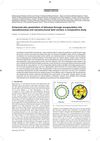
May 2016 in “Die Pharmazie” Nanostructured lipid carriers deliver lidocaine to the skin better than nanoethosomes.
 72 citations
,
December 2012 in “Expert Opinion on Drug Delivery”
72 citations
,
December 2012 in “Expert Opinion on Drug Delivery” Niosomes are promising for skin drug delivery, offering benefits like improved drug penetration and stability.
365 citations
,
March 2021 in “Frontiers in Bioengineering and Biotechnology” Nanocarriers can improve drug delivery through the skin by overcoming barriers.