 March 2026 in “Preprints.org”
 The MIRA technique improves cellulite treatment results and patient satisfaction.
August 2025 in “Journal of Clinical Medicine” Skin diseases alter the skin's microbiome, and prebiotic treatments might help.

Tofacitinib helped a woman with total-body hair loss grow her hair back.

Not having the gene PLAAT3 leads to fat loss, high insulin resistance, and abnormal fat levels in the blood due to a disruption in fat cell development and function.
6 citations
,
March 2024 in “Experimental Dermatology” Fibrosis causes loss of important fat cells, affecting tissue function.
March 2026 in “Adipocyte” Spt4 and Spt6 are essential for fat cell development.
23 citations
,
October 2015 in “Plastic and reconstructive surgery/PSEF CD journals” Radiesse is a versatile facial injectable used for cosmetic improvements and long-term collagen production, with careful dosing needed to prevent complications.
 9 citations
,
December 2018 in “JAAD case reports”
9 citations
,
December 2018 in “JAAD case reports” Lipedematous alopecia involves a thickened scalp and hair loss, with limited effective treatments available.
30 citations
,
May 2008 in “International Journal of Dermatology” Lipedematous alopecia causes permanent hair loss due to increased scalp fat.
16 citations
,
July 2021 in “American Journal of Medical Genetics Part A” Mutations in the LSS gene cause hair loss and may affect brain development, with varying severity.
 1 citations
,
July 2021 in “Journal of Skin and Sexually Transmitted Diseases”
1 citations
,
July 2021 in “Journal of Skin and Sexually Transmitted Diseases” Lipedema is a painful fat disorder in women that's hard to treat, often worsens with hormonal changes, and requires symptom-focused therapies.
10 citations
,
April 2004 in “Journal of the American Academy of Dermatology” Localized hair growth and fat loss may share a common cause in lupus panniculitis.
February 2024 in “Pediatric Dermatology” A 5-year-old girl with a rare genetic disorder, lipoid proteinosis, showed reduced new lesions but persistent scars after avoiding skin trauma.
 2 citations
,
January 2019 in “Case Reports in Dermatology”
2 citations
,
January 2019 in “Case Reports in Dermatology” A 66-year-old woman's thick scalp and hair loss were confirmed as lipedematous alopecia, a rare condition possibly influenced by genetics, with no effective treatment known.
8 citations
,
December 1997 in “International Journal of Dermatology” The patient has a leg condition caused by vein issues, needing lifestyle changes and leg care.
January 1962 in “Archives of Dermatology” A 5-year-old girl has lipoid proteinosis, causing voice issues, hair thinning, skin lesions, and tongue movement problems.
 May 2021 in “Our Dermatology Online”
 A woman with a rare scalp condition causing a thick scalp and hair loss didn't improve with steroid treatment.
 23 citations
,
February 2020 in “PLOS genetics”
23 citations
,
February 2020 in “PLOS genetics” Mice with LSS deficiency showed hair loss and cataracts, similar to humans, and can help in understanding and treating this condition.
 8 citations
,
April 2022 in “The journal of investigative dermatology/Journal of investigative dermatology”
8 citations
,
April 2022 in “The journal of investigative dermatology/Journal of investigative dermatology” Certain genetic changes in the LSS gene cause a rare skin and hair condition.
 September 2023 in “Russian Journal of Skin and Venereal Diseases”
 A rare scalp condition caused scarring hair loss in a woman, improved slightly with treatment.
 September 2022 in “The American journal of dermatopathology/American journal of dermatopathology”
 A patient with a thick scalp and hair loss was correctly diagnosed with alopecia areata and a thick scalp fat layer, not lipedematous alopecia, and regrew hair after treatment.
27 citations
,
December 1999 in “American Journal of Dermatopathology” Necrobiosis lipoidica may need new criteria for accurate diagnosis due to similarities with another condition.
 55 citations
,
November 2018 in “American journal of human genetics”
55 citations
,
November 2018 in “American journal of human genetics” Mutations in the LSS gene cause a rare type of hereditary hair loss.
 June 2022 in “Authorea (Authorea)”
 A 59-year-old woman was diagnosed with a rare hair loss condition called lipedematous alopecia.
2 citations
,
November 2023 in “Skin Appendage Disorders” Lipedematous scalp may have a genetic link and could be associated with psychiatric conditions.
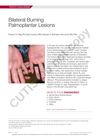
The woman was diagnosed with lichen sclerosus, a rare skin condition, after initial misdiagnosis and ineffective treatments.
 June 2023 in “British journal of dermatology/British journal of dermatology, Supplement”
 Two sisters with lipoedematous scalp suggest a genetic influence in the condition.
 5 citations
,
January 2019 in “Skin appendage disorders”
5 citations
,
January 2019 in “Skin appendage disorders” The conclusion is that it's important to tell apart alopecia areata from lipedematous alopecia for proper treatment, as alopecia areata can be reversed.
12 citations
,
April 2004 in “PubMed” A rare skin condition in a baby showed unusual fat and hair follicle changes.