 2 citations
,
November 2017 in “Journal of Cosmetic and Laser Therapy”
2 citations
,
November 2017 in “Journal of Cosmetic and Laser Therapy” JetPeel-assisted minoxidil improves hair density and thickness more than minoxidil alone.
 5 citations
,
July 2020 in “JAMA Dermatology”
5 citations
,
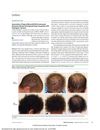
July 2020 in “JAMA Dermatology” Minoxidil solution applied twice daily improved hair growth in patients with Woolly Hair/Hypotrichosis due to LIPH gene issues, with mild side effects.
 March 2026 in “Preprints.org”
 Platelet-rich plasma, microneedling with minoxidil, and topical finasteride are promising treatments for hair loss.
 September 1988 in “Inpharma (Balgowlah)”
 Retinoids are effective for acne but can cause serious side effects.
 5 citations
,
October 1988 in “Clinics in Dermatology”
5 citations
,
October 1988 in “Clinics in Dermatology” Minoxidil promotes hair growth but exact mechanism is unknown.
 18 citations
,
January 1997 in “British Journal of Dermatology”
18 citations
,
January 1997 in “British Journal of Dermatology” 5% topical minoxidil can cause severe body hair growth, which disappears after stopping treatment.
 20 citations
,
March 2005 in “Current Medicinal Chemistry”
20 citations
,
March 2005 in “Current Medicinal Chemistry” New compounds show promise for treating hair loss, enlarged prostate, and prostate cancer, with some being more effective and having different side effects than current treatments.
26 citations
,
June 1988 in “PubMed” 3% topical minoxidil is ineffective for severe chronic alopecia areata.
January 2026 in “Updates in clinical dermatology” 2 citations
,
April 1984 in “BMJ” January 2018 in “Our Dermatology Online” Dutasteride injections can help hair growth in androgenic alopecia but need more research for long-term use.
3 citations
,
November 1983 in “BMJ” 20 citations
,
January 2004 in “PubMed” Dutasteride reduces DHT more than finasteride, but both drugs improve BPH symptoms similarly.
July 2022 in “Journal of Cosmetic Dermatology” Isotretinoin with tacrolimus may be more effective short-term for treating frontal fibrosing alopecia than finasteride with tacrolimus.
 November 2024 in “Skin Health and Disease”
 Minoxidil is effective for promoting hair growth and has various dermatological uses.
 2 citations
,
September 2016 in “Journal of Dermatological Science”
2 citations
,
September 2016 in “Journal of Dermatological Science” Squarticles, tiny particles made from sebum-derived lipids, can effectively deliver minoxidil, a hair growth drug, directly to hair follicles and skin cells, with less skin penetration and more tolerability.
 59 citations
,
January 2015 in “Nanoscale”
59 citations
,
January 2015 in “Nanoscale” The new micelle formulation delivers acne treatment more effectively and safely than current gels.
1 citations
,
June 2023 in “Jordan Journal of Applied Science - Natural Science Series” Minoxidil is more effective than Latanoprost for treating patchy alopecia areata.
February 2021 in “European Chemical Bulletin” A reliable method was developed to measure Minoxidil and Finasteride accurately in medicines.
July 2024 in “Journal of the American Academy of Dermatology” Oral retinoids like isotretinoin and acitretin can cause significant hair loss.
January 2022 in “Springer eBooks” January 2022 in “Drug Delivery” The aloe ferox gel with finasteride and oregano oil may effectively treat alopecia.
 February 2023 in “International Journal of Pharmaceutics”
 A new version of minoxidil, a hair loss treatment, was made using nanotechnology. This version, called minoxidil cubosomes, works better and causes fewer skin reactions than the old version. It also penetrates and stays in the skin better, promoting hair regrowth. It's safe and could be a good alternative to current treatments.
 January 2025 in “Journal of Dermatological Treatment”
 Combining low-level laser therapy with minoxidil doesn't improve hair loss treatment compared to using minoxidil alone.
 17 citations
,
June 2012 in “Australasian Journal of Dermatology”
17 citations
,
June 2012 in “Australasian Journal of Dermatology” Finasteride and low-dose dutasteride combo improves hair growth and reduces hair loss with no major side effects.
36 citations
,
March 1989 in “British journal of dermatology/British journal of dermatology, Supplement” DPCP is more effective than tretinoin gel for treating severe alopecia.
 3 citations
,
April 2010 in “Journal of Receptors and Signal Transduction”
3 citations
,
April 2010 in “Journal of Receptors and Signal Transduction” Minoxidil, a common alopecia medication, might cause eye changes due to its properties and lack of tissue selectivity.
1 citations
,
May 2023 in “Journal of the European Academy of Dermatology and Venereology” Minoxidil and vitamin E may help improve nail growth and health.

Intradermotherapy with minoxidil is as effective as topical application for treating hair loss.
 February 2025 in “Archives of Dermatological Research”
 Combining PRP with topical minoxidil is most effective for hair growth in androgenetic alopecia.