 July 2023 in “British journal of dermatology/British journal of dermatology, Supplement”
 HPV8 E6 gene causes growth of certain skin stem cells.
58 citations
,
February 2013 in “Journal of Biological Chemistry” LGR5 mainly stays inside cells, moving to the trans-Golgi network, and this process is important for its role in cell signaling.
 March 2025 in “Nature Communications”
 NSC167409 can effectively inhibit the virus causing hand, foot, and mouth disease.
 January 2020 in “bioRxiv (Cold Spring Harbor Laboratory)”
 Certain genetic variants in ERN1, TACR3, and SPPL2C are linked to when Alzheimer's disease starts.
1 citations
,
August 2021 in “Journal of Investigative Dermatology” ASLAN004 was safe and well-tolerated, supporting further development for treating certain diseases.
July 2024 in “Journal of Investigative Dermatology” 4 citations
,
March 2018 in “Animal biotechnology” The LAMTOR3 gene is involved in cashmere goat hair growth and is affected by certain treatments and other genes.
2 citations
,
May 2024 in “BMC Genomics” Certain genetic changes in the KRT82 gene may cause patchy skin in New Zealand rabbits.
 16 citations
,
April 2022 in “PLoS ONE”
16 citations
,
April 2022 in “PLoS ONE” Certain microRNAs found in normal cells can effectively suppress various cancers.
39 citations
,
January 2020 in “Scientific Reports” Four circRNAs were found to be significantly different in cashmere goat skin, affecting cashmere fineness.
2 citations
,
January 2014 in “Journal of Cytology & Histology” Rapamycin and anti-EGFR antibody reduce LAM/TSC cell migration and blood vessel growth in the uterus.
253 citations
,
April 2009 in “Journal of Biological Chemistry” p2y5, now called LPA6, is a receptor important for human hair growth.
 3 citations
,
December 2021 in “Frontiers in endocrinology”
3 citations
,
December 2021 in “Frontiers in endocrinology” A new mutation in the DCAF17 gene was found in a Chinese family, causing Woodhouse-Sakati syndrome and diabetes.
 11 citations
,
April 2019 in “Bioscience Reports”
11 citations
,
April 2019 in “Bioscience Reports” Certain genetic variations in the RAB5B gene are linked to a higher risk of polycystic ovary syndrome in Chinese Han women.
 24 citations
,
July 1994 in “Molecular Endocrinology”
24 citations
,
July 1994 in “Molecular Endocrinology” Researchers found an RNA transcript that might help control a growth factor linked to tumor development.
 23 citations
,
December 2013 in “British Journal of Dermatology”
23 citations
,
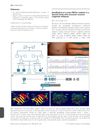
December 2013 in “British Journal of Dermatology” A new gene mutation linked to a skin condition was found in a Spanish family.
 May 2026 in “Scientific Reports”
 Overexpression of LRIG3 in skin causes hair loss.
 January 2021 in “Research Square (Research Square)”
 Chinese fine-wool sheep have genetic variations linked to traits like milk and health, with some genes under strong selection.
1 citations
,
November 2024 in “Genes” miR-144 affects hair growth by interacting with Lhx2.
 6 citations
,
May 2013 in “PloS one”
6 citations
,
May 2013 in “PloS one” The Foxn1(-/-) nude mouse shows disrupted and expanded skin stem cell areas due to high Lhx2 levels.
December 2014 in “Tesis Doctorals en Xarxa (Consorci de Serveis Universitaris de Catalunya)” Reducing SOX2 in colorectal cancer cells decreases tumor growth and self-renewal.
March 2026 in “Journal of Investigative Dermatology”  November 2022 in “The journal of investigative dermatology/Journal of investigative dermatology”
 Researchers made a detailed map of gene activity for different parts of human hair follicles to help create targeted hair disorder treatments.
 March 2018 in “Suez Canal University Medical Journal”
 NKG2D gene polymorphism doesn't affect SLE risk but may influence symptoms like rash and hair loss.
5 citations
,
June 2024 in “Pharmacological Research” FOL-026 peptide may help hair growth and cardiovascular health by improving blood flow and cell functions.
November 2022 in “Journal of Investigative Dermatology” ILC1-like cells can cause alopecia areata by themselves.
 January 2025 in “Cellular and Molecular Biology”
 The PIP5K1A gene helps cashmere growth in goats by promoting cell proliferation, and melatonin boosts its expression.
3 citations
,
February 2018 in “Experimental and Molecular Medicine/Experimental and molecular medicine” A protein called PCBP2 controls the production of a hair growth protein by interacting with its genetic message and is linked to hair loss when this control is disrupted.
 181 citations
,
January 2009 in “Nature Genetics”
181 citations
,
January 2009 in “Nature Genetics” Certain mutations in a hair growth-related gene cause a type of genetic hair loss.