 January 2025 in “Journal of Dermatological Treatment”
 Combining low-level laser therapy with minoxidil doesn't improve hair loss treatment compared to using minoxidil alone.
1 citations
,
January 2021 in “Journal of Cutaneous and Aesthetic Surgery” Low-level light therapy can safely and effectively stimulate hair growth in people with androgenetic alopecia.
 April 2016 in “British Journal of Dermatology”
 Eyelashes are important for looks and eye protection, and more people are treating sparse eyelashes; more research is needed to understand eyelash biology and improve treatments.
September 2024 in “Dermatology Reports” Sonidegib often causes hair loss, and LC-OCT helps identify early signs.
1 citations
,
April 2025 in “Drug Delivery and Translational Research” July 2026 in “Journal of the American Academy of Dermatology” Nanostructured lipid carriers can improve androgenic alopecia treatment by reducing dutasteride dosage and maintaining its presence in hair follicles longer.
January 2018 in “Journal of analytical, bioanalytical and separation techniques”  December 2025 in “Lasers in Medical Science”
 Combining red laser therapy with minoxidil improves hair growth more effectively than minoxidil alone in women with hair loss.

Both 5% minoxidil solution and milky lotion effectively and safely treat male hair loss, with the lotion being a good alternative for those sensitive to certain ingredients.
 19 citations
,
November 2017 in “Journal of Pharmaceutical Sciences”
19 citations
,
November 2017 in “Journal of Pharmaceutical Sciences” A new gel containing minoxidil can treat hair loss effectively, potentially reducing side effects and improving treatment.
Combining PRP with low-level laser therapy is better for hair growth than PRP alone.

Hair RiseTM microemulsion effectively promotes hair growth and treats hair loss better than standard treatments.
January 2019 in “The Journal of Korean Medicine Ophthalmology and Otolaryngology and Dermatology” Low-level laser therapy for hair loss shows promise but needs more reliable studies.
 28 citations
,
November 2020 in “Journal of Controlled Release”
28 citations
,
November 2020 in “Journal of Controlled Release” A new hair loss treatment uses tiny needles to deliver a drug-loaded lipid carrier, promoting hair growth more effectively than current treatments.
 26 citations
,
September 2018 in “Colloids and Surfaces B: Biointerfaces”
26 citations
,
September 2018 in “Colloids and Surfaces B: Biointerfaces” A new liposome treatment helps heal deep burns on mice by improving hair regrowth and reducing scarring.
April 2025 in “Asian Journal of Surgery” December 2024 in “Dermatologic Surgery” November 2025 in “Clinical Cosmetic and Investigational Dermatology” Sonidegib effectively treated basal cell carcinoma in a patient with lupus without worsening lupus symptoms.
 5 citations
,
July 2020 in “JAMA Dermatology”
5 citations
,
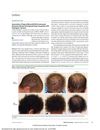
July 2020 in “JAMA Dermatology” Minoxidil solution applied twice daily improved hair growth in patients with Woolly Hair/Hypotrichosis due to LIPH gene issues, with mild side effects.
 August 2025 in “Arabixiv (OSF Preprints)”
 Low-level laser therapy effectively improves hair growth in androgenetic alopecia with minimal side effects.
 April 2024 in “Lasers in medical science”
 Lasers and light therapies are effective in promoting hair regrowth for different types of hair loss.
 10 citations
,
June 2018 in “Aaps Pharmscitech”
10 citations
,
June 2018 in “Aaps Pharmscitech” The flutamide-loaded hydrogel is a promising, skin-friendly treatment for acne and hair loss, potentially requiring less frequent application.
 5 citations
,
April 2021 in “Frontiers in Pharmacology”
5 citations
,
April 2021 in “Frontiers in Pharmacology” Using minoxidil-coated microbubbles with ultrasound significantly boosts hair growth.
 July 1998 in “Proceedings of SPIE”
 Low-power laser therapy is an effective, side-effect-free treatment that speeds up hair regrowth and crural ulcer healing.
 January 2025 in “Dermatologic Therapy”
 Low-dose oral minoxidil may help with symptoms and hair regrowth in lichen planopilaris without serious side effects.
2 citations
,
September 2023 in “PubMed” Laser-assisted prostaglandin analogs improve hypopigmented scars safely, but more research is needed.
 24 citations
,
October 2019 in “Biomaterials Research”
24 citations
,
October 2019 in “Biomaterials Research” Minoxidil in HA-PLGA nanoparticles effectively treats alopecia through skin delivery.
August 2022 in “Journal of The European Academy of Dermatology and Venereology” 1 citations
,
February 2025 in “Archives of Dermatological Research” Using Excimer light with topical steroids is the most effective treatment for alopecia areata.