A rare case of a woman having both lichen planus pigmentosus and classic lichen planopilaris at the same time.
September 2019 in “Journal of Investigative Dermatology” PCE-DP brightens skin and promotes hair growth by enhancing cell growth and reducing melanin uptake.
 6 citations
,
May 2022 in “Chemistry & biodiversity”
6 citations
,
May 2022 in “Chemistry & biodiversity” *Laportea bulbifera* contains unique compounds that may help treat benign prostatic hyperplasia.
 November 2022 in “Journal of Investigative Dermatology”
 A new molecule was found to be a safe and effective skin lightener and anti-aging product.
Lychnophora salicifolia extract in liposomes may protect skin from UV damage and inflammation.
43 citations
,
March 2009 in “Archives of dermatology” No treatment showed clear superiority for lichen planopilaris.
 3 citations
,
June 2022 in “Dermatology and therapy”
3 citations
,
June 2022 in “Dermatology and therapy” A new botanical treatment improved hair growth and symptoms in lichen planopilaris patients.
3 citations
,
November 2022 in “Molecules/Molecules online/Molecules annual” The substances improved hair regrowth and protected hair cells in humans and mice.
September 2015 in “Photodiagnosis and Photodynamic Therapy”  January 2024 in “Authorea (Authorea)”
 Using laccase to add poly(tyrosine) to wool makes it less likely to shrink and stronger.
1 citations
,
November 2022 in “International Journal of Cosmetic Science” Lotus corniculatus seed extract reduces oily skin by decreasing sebum production.
16 citations
,
March 2023 in “Gels” Paeonol-loaded gels may help reduce inflammation and skin damage in atopic dermatitis.
15 citations
,
June 2023 in “Journal of Microbiology and Biotechnology” Loliolide from Scenedesmus deserticola may help with anti-aging.
February 2023 in “Reactions Weekly”  3 citations
,
May 2022 in “Clinical and experimental dermatology”
3 citations
,
May 2022 in “Clinical and experimental dermatology” Drugs targeting EMT molecules show promise for treating lichen planopilaris.
January 2026 in “Deutsches Ärzteblatt international” 22 citations
,
February 2018 in “International Journal of Pharmacy and Pharmaceutical Sciences” Peperomia pellucida shows promise for developing new therapeutic drugs.
53 citations
,
July 2021 in “International Journal of Molecular Sciences” Geranium pyrenaicum extracts show potential for cancer, antiviral, and enzyme inhibition treatments.
4 citations
,
January 2014 in “JOURNAL OF CLINICAL AND DIAGNOSTIC RESEARCH” Oral minipulse therapy effectively treated bullous lichen planus in a 35-year-old woman.
 May 2014 in “Clinical and Experimental Dermatology”
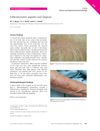
 A 70-year-old woman with a rare skin condition improved after treatment with topical steroids and acitretin.
48 citations
,
November 2018 in “Journal of dermatological treatment” Women are more likely to have Lichen planopilaris, and treatments with cyclosporine and methotrexate are most effective but less safe than mycophenolate mofetil.
7 citations
,
September 2024 in “Journal of Microbiology and Biotechnology” Peperomia pellucida is safe to eat and has strong antioxidant benefits.
 11 citations
,
February 2020 in “Dermatology and therapy”
11 citations
,
February 2020 in “Dermatology and therapy” Low-Level Light Therapy significantly reduced inflammation and promoted hair regrowth in patients with Lichen planopilaris.
 January 2000 in “Time to knit”
 SFE is a better extraction method, and the HPTLC method is effective for analyzing wedelolactone in E. alba.
 December 2019 in “University of Malaya Students Repository”
 Mimosine from Leucaena leucocephala can enhance biodiesel stability.
 January 2018 in “International Journal of Advances in Scientific Research and Engineering”
 A new method accurately measures phenolic compounds in Ziziphus Jujuba extract quickly and efficiently.
 January 2022 in “Pharmaceutical Sciences Asia”
 Liposomes with butterfly pea extract and clove oil are stable and effective according to users.
19 citations
,
July 2017 in “Clinical and experimental dermatology” Men with lichen planopilaris had earlier onset than women, and treatment usually improved the condition.
58 citations
,
January 2015 in “Journal of the American Academy of Dermatology” Pioglitazone may help treat lichen planopilaris, but more research is needed.
7 citations
,
February 2011 in “Journal of dermatology” The 736T>A mutation in the LIPH gene is common in Japanese people with autosomal recessive woolly hair.