 14 citations
,
January 2020 in “Korean Journal of Family Medicine”
14 citations
,
January 2020 in “Korean Journal of Family Medicine” Early diagnosis of leprosy is crucial to prevent disabilities and spread, even in non-endemic areas.
January 2025 in “Dermatology Research and Practice” Higher activity in lichen planopilaris is linked to certain immune and tissue genes.
 94 citations
,
October 2017 in “International Journal of Dermatology”
94 citations
,
October 2017 in “International Journal of Dermatology” Lichen planus pigmentosus causes dark skin patches and is treated by avoiding triggers and using anti-inflammatory medications.
 September 2025 in “Clinical Case Reports”
 Adipose tissue-derived exosomes may help treat lichen planopilaris and preserve hair.
January 2013 in “Anti-infection Pharmacy” Ligustri Lucidi Fructus has potential benefits for skin health, including anti-inflammation, anti-allergy, and promoting hair growth.
 September 2023 in “Clinical, cosmetic and investigational dermatology”
 A patient with a rare form of lupus improved after treatment for skin ulcers and hair loss on the face and scalp.
June 2023 in “International Journal of Dermatology” Lichen planus pigmentosus mainly affects middle-aged women with darker skin, is underreported, and is hard to treat.
 February 2009 in “Journal of The American Academy of Dermatology”
 Pulsed dye laser treatment was effective for a skin condition resistant to other treatments.
November 2021 in “Natural product research” Certain polyphenols may help treat skin pigmentation disorders.
 January 2020 in “International Journal of PharmTech Research”
 A man with severe leprosy developed painless ulcers and numbness, treated successfully with multiple drugs and vitamins.
 April 2023 in “Journal of Investigative Dermatology”
 PX-12 may help treat psoriasis by blocking inflammation and cell death.
June 2022 in “Pham Ngoc Thach Journal of Medicine and Pharmacy” Tongue fern contains important compounds like polyphenols and flavonoids, best extracted with 80% methanol at 60°C.
4 citations
,
November 2019 in “Dermatology - Open Journal” Lichen planus pigmentosus is hard to treat and may be more common in North Africa than previously thought.
3 citations
,
January 2016 in “Dermatology online journal” Some people with lichen planus pigmentosus might later develop frontal fibrosing alopecia.
 80 citations
,
April 2011 in “Plant physiology”
80 citations
,
April 2011 in “Plant physiology” White lupin uses specific genes to grow root hairs and access phosphorus when it's scarce.
2 citations
,
September 2023 in “Foods” Microcapsules and effervescent tablets make insect lipids easier to consume.
 7 citations
,
September 2024 in “BMC Genomics”
7 citations
,
September 2024 in “BMC Genomics” Two genes, ERBB4 and ROR1, may cause the unique pigmentation in Lanping black-boned sheep.
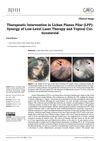 January 2024 in “Brazilian Journal of Hair Health”
 Combining low-level laser therapy with topical corticosteroids effectively improved Lichen Planopilaris symptoms.
Treat active lichen planopilaris early to prevent permanent hair loss.
3 citations
,
April 2019 in “Journal of Mind and Medical Sciences” Photodynamic therapy shows promise for oral lichen planus but needs more research for consistent results.
January 2023 in “Figshare” Triple therapy with clobetasol, hydroxychloroquine, and N-acetylcysteine is recommended for better outcomes in treating lichen planopilaris.
April 2025 in “Health Science Reports” PRP treatment improved skin pigmentation and appearance in facial lichen planus pigmentosus.
 105 citations
,
December 2009 in “Archives of dermatology”
105 citations
,
December 2009 in “Archives of dermatology” A specific drug can help treat Lichen Planopilaris, a condition causing permanent hair loss.
Liposomes with minoxidil and PEP penetrate skin slowly but reach deeper layers than foam.
 March 2024 in “Journal of cosmetic dermatology”
 Platelet-rich plasma (PRP) is an effective treatment for lichen planopilaris.
6 citations
,
March 2023 in “Journal of Ethnopharmacology” Jieduquyuziyin prescription helps treat SLE with atherosclerosis by improving cholesterol removal and reducing inflammation.
January 2026 in “European Journal of Therapeutics” Topical dapsone may effectively treat lichen planopilaris in the beard, especially for those who can't tolerate standard treatments.
July 2024 in “Journal of Investigative Dermatology” PP405 may help hair growth by activating hair follicle stem cells.
 16 citations
,
December 2017 in “Journal of The American Academy of Dermatology”
16 citations
,
December 2017 in “Journal of The American Academy of Dermatology” Low-level laser therapy may reduce symptoms and increase hair thickness in lichen planopilaris patients.
1 citations
,
July 2025 in “Journal of Cosmetic Dermatology” Exosome treatment from stem cells improved hair regrowth and reduced scalp issues in a woman with lichen planopilaris.