 53 citations
,
September 2011
53 citations
,
September 2011 Other common signs, not just the well-known immune cells around hair bulbs, are important for diagnosing hair loss from alopecia areata.
 19 citations
,
February 2016 in “Journal of The American Academy of Dermatology”
19 citations
,
February 2016 in “Journal of The American Academy of Dermatology” CD3+ T-cell presence is a reliable marker to tell apart alopecia areata from pattern hair loss.
 January 2023 in “Journal of Cutaneous Pathology”
 The study found certain scalp biopsy features can help tell apart alopecia areata from pattern hair loss even when typical immune cells are not seen.
January 2016 in “Indian dermatology online journal” The patient has frontal fibrosing alopecia (FFA).
 September 1997 in “Journal of The European Academy of Dermatology and Venereology”
 Examining scalp tissue under a microscope helps diagnose and understand hair loss diseases.
 January 2015 in “Indian Dermatology Online Journal”
 The patient's hair loss is most likely due to diffuse alopecia areata.
July 2024 in “LA Referencia (Red Federada de Repositorios Institucionales de Publicaciones Científicas)” Adipose tissue and eccrine gland displacement are common in certain alopecias but don't help differentiate between them.
January 2016 in “Indian dermatology online journal” Frontal fibrosing alopecia causes hair loss at the front hairline, and no effective treatment exists.
 64 citations
,
July 1997 in “Journal of The American Academy of Dermatology”
64 citations
,
July 1997 in “Journal of The American Academy of Dermatology” Finding eosinophils near hair bulbs helps diagnose alopecia areata.
22 citations
,
February 2000 in “Journal of the American Academy of Dermatology” Eosinophils are not a reliable marker for diagnosing alopecia areata.
 11 citations
,
January 2013 in “Indian Dermatology Online Journal”
11 citations
,
January 2013 in “Indian Dermatology Online Journal” CCCA is a common, progressive hair loss condition that may not always be linked to hair care practices and requires a biopsy for diagnosis.
 January 2026 in “Acta Dermatovenerologica Alpina Pannonica et Adriatica”
 Primary cicatricial alopecia causes permanent hair loss by destroying hair follicles, and its exact cause is unknown.
 43 citations
,
March 2006 in “Seminars in Cutaneous Medicine and Surgery”
43 citations
,
March 2006 in “Seminars in Cutaneous Medicine and Surgery” Different types of hair loss have unique features under a microscope, but a doctor's exam is important for accurate diagnosis.
 158 citations
,
February 2000 in “Archives of dermatology”
158 citations
,
February 2000 in “Archives of dermatology” Some people with pattern hair loss may also have scalp inflammation and scarring similar to lichen planopilaris.
 June 2023 in “JAAD case reports”
 The document concludes that "hot comb alopecia" is now called "central cicatricial centrifugal alopecia" and its causes are complex.
 May 2023 in “Tạp chí Da liễu học Việt Nam”
 Histopathological examination is essential for diagnosing alopecia areata.
 March 2026 in “Journal of Skin and Sexually Transmitted Diseases”
 Long hair can cause hair loss in the middle of the scalp, and cutting it shorter helps.
 November 2025 in “International Journal of Recent Innovations in Medicine and Clinical Research”
 Understanding different types of hair loss helps in accurate diagnosis and treatment.
 5 citations
,
June 2019 in “Dermatopathology”
5 citations
,
June 2019 in “Dermatopathology” Histopathology is not reliable for detecting early fibrosis in traction alopecia or for showing how severe it is.
 January 2020 in “Clinical dermatology open access journal”
 Changing certain hairstyles can prevent worsening hair loss in Mexican women.
 19 citations
,
September 2014 in “JAMA Dermatology”
19 citations
,
September 2014 in “JAMA Dermatology” Eosinophilic infiltrate is not a reliable indicator for diagnosing chronic alopecia areata.
 5 citations
,
April 2019 in “Journal of The American Academy of Dermatology”
5 citations
,
April 2019 in “Journal of The American Academy of Dermatology” Frontal Fibrosing Alopecia may be a complex condition linked to hormonal changes in women, not just a form of Lichen Planopilaris.
 1 citations
,
October 2018 in “InTech eBooks”
1 citations
,
October 2018 in “InTech eBooks” The document concludes that treatments for cicatricial alopecia are not well-supported by evidence, but hair transplantation shows more predictable and satisfactory results.
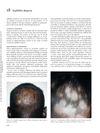 April 2012 in “Informa Healthcare eBooks”
 Syphilitic alopecia is a rare hair loss condition in secondary syphilis that looks similar to another condition but can be diagnosed with specific tests and responds to antibiotics.
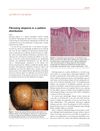 16 citations
,
February 2010 in “Journal of the European Academy of Dermatology and Venereology”
16 citations
,
February 2010 in “Journal of the European Academy of Dermatology and Venereology” Fibrosing alopecia in a pattern distribution is a unique hair loss condition that may respond to antiandrogen therapy.
 27 citations
,
September 2017 in “Journal of Investigative Dermatology Symposium Proceedings”
27 citations
,
September 2017 in “Journal of Investigative Dermatology Symposium Proceedings” Hair loss in black women needs more research, early intervention, and community education.
 170 citations
,
December 2009 in “Histopathology”
170 citations
,
December 2009 in “Histopathology” The conclusion is that accurate diagnosis of different types of hair loss requires good teamwork between skin doctors and lab experts.
 14 citations
,
January 2006 in “Australasian journal of dermatology”
14 citations
,
January 2006 in “Australasian journal of dermatology” Alopecia areata can look like frontal fibrosing alopecia, making diagnosis hard.
 76 citations
,
June 2008 in “Journal of the American Academy of Dermatology”
76 citations
,
June 2008 in “Journal of the American Academy of Dermatology” The conclusion is that certain scalp tissue changes are characteristic of lichen planopilaris, with mucinous perifollicular fibroplasia being a new feature for diagnosis.
 72 citations
,
July 2008 in “Dermatologic Therapy”
72 citations
,
July 2008 in “Dermatologic Therapy” CCCA is a scarring hair loss condition mainly in African descent women, possibly caused by genetics and hairstyling, treated with gentle hair care and medications.