 December 2025 in “npj Breast Cancer”
 Capivasertib improves survival in certain breast cancer cases but requires careful management of side effects.
 November 2025 in “Pacific Journal of Medical Research”
 Skin issues are common in lupus patients, highlighting the need for thorough skin checks.
 September 2025 in “Dermatology Online Journal”
 Biopsy is crucial for diagnosing unusual hair loss causes like lymphoma.

Doxycycline or flucloxacillin can cause a rare, severe skin reaction that can be fatal, especially in the elderly.

Human placental extract effectively and safely improves melasma, ulcers, and alopecia areata.
 June 2025 in “Saratov Medical Journal”
 Ongoing research and innovation are crucial for improving skin care and treatment.

A runner developed tangled armpit hairs from shirt friction, preventable by shaving or wearing smooth shirts.
 April 2025 in “Dermatology Practical & Conceptual”
 Increased LC3 gene expression may be linked to premature graying of hair.
 February 2025 in “Cureus”
 Early diagnosis and treatment of NCCAH can improve symptoms and fertility.
 February 2025 in “Physician s Journal of Medicine”
 Recognizing skin symptoms can help diagnose and manage COVID-19.
 January 2025 in “Dermatology Review”
 Artefactual skin disorder involves self-inflicted skin lesions linked to mental health issues, needing combined medical and psychological treatment.
 January 2025 in “Epsilon Archive for Student Projects (University of Southampton)”
 Mange and orf are present in some goat herds in Zambia, but more research is needed.
 September 2024 in “Journal of Medical Case Reports”
 People with keratosis pilaris might be more likely to get a rare type of tinea versicolor.
 July 2024 in “Plastic and Aesthetic Research”
 Careful planning and accurate diagnosis are crucial for successful hair restoration surgery.
 April 2024 in “Acta scientific dental sciences”
 Improving oral hygiene and quitting smoking can resolve black hairy tongue.
 April 2024 in “Dermatovenerologiâ, kosmetologiâ”
 Actinic keratosis is a sun-induced skin condition that can potentially turn into skin cancer and requires various treatments to prevent this.
 April 2024 in “Dermatovenerologiâ, kosmetologiâ”
 Actinic keratosis is a sun-induced skin condition that can potentially turn into skin cancer and requires treatment to prevent malignancy.

Abemaciclib can cause skin, hair, and nail problems, leading some patients to stop using it.
 March 2024 in “Journal of Rawalpindi Medical College/Journal Rawalpindi Medical College”
 Skin issues are common and important for diagnosing PCOS.

Donor lymphocyte infusions effectively treated leukemia relapse but caused vitiligo and alopecia areata.
 September 2023 in “Journal of Nepal Paediatric Society”
 Skin infections and rashes are the most common skin problems in children.
 August 2023 in “JOJ dermatology & cosmetics”
 Antibiotics often cause skin reactions, making them a major health concern.
Non-invasive methods can effectively diagnose and manage alopecia areata.
 March 2023 in “Revista română de reumatologie”
 Skin problems are common in lupus, often appearing first, with various types and treatments, and careful monitoring is important for diagnosis and management.
 February 2023 in “Cosmoderma”
 Combining red LED therapy with beta-carotene is more effective for treating photoaging than red LED therapy alone.
 January 2023 in “Acta dermatovenerologica Alpina, Pannonica et Adriatica (Tiskana izd.)”
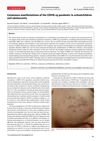
 The article concludes that schoolchildren and adolescents experienced various skin issues during the COVID-19 pandemic, including acne from masks and other skin reactions from the virus and vaccines.
 July 2022 in “Berkala Ilmu Kesehatan Kulit dan Kelamin/Berkala ilmu kesehatan kulit dan kelamin (Periodical of dermatology and venerology)”
 Most tinea capitis patients were young boys with cat contact, had scaly patches caused by Microsporum canis, and improved with griseofulvin treatment.
 March 2022 in “Journal of Clinical Case Studies Reviews & Reports”
 COVID-19 can cause or worsen skin conditions and might show early signs of infection.
 March 2022 in “Journal of clinical case studies reviews & reports”
 COVID-19 can cause different skin issues, including rashes and hair loss.
 January 2022 in “bioRxiv (Cold Spring Harbor Laboratory)”
 Skin lesions in Carney complex are likely caused by a specific group of skin cells that promote pigment production due to a genetic mutation.