January 2020 in “International Journal of Trichology” Androgen-producing ovarian tumors can cause male-pattern hair loss in women.
8 citations
,
October 2024 in “Developmental Cell”  49 citations
,
January 2010 in “International Journal of Pediatric Endocrinology”
49 citations
,
January 2010 in “International Journal of Pediatric Endocrinology” The document concludes that Nonclassic Congenital Adrenal Hyperplasia requires personalized treatment plans to manage symptoms and fertility, with glucocorticoids being a common therapy.
March 2026 in “The Journal of Dermatology” Hair transplantation in nevus sebaceus maintains hair cycling but doesn't prevent tumor growth; complete excision is recommended.
2 citations
,
August 2025 in “Reports — Medical Cases Images and Videos” A rare pigmented skin tumor called melanotrichoblastoma was diagnosed in a 51-year-old woman.
 47 citations
,
June 2012 in “Genes & Development”
47 citations
,
June 2012 in “Genes & Development” A mother's western diet can make her milk toxic, causing inflammation and hair loss in babies.
 February 2025 in “Skin Appendage Disorders”
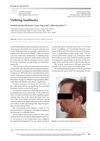
 Adrenal tumors can cause hair loss and high testosterone in women.
 August 2025 in “Endokrynologia Polska”
 A rare pancreatic tumor caused a woman's male-like features, treated successfully with surgery and medication.
The AMHR2-482A>G gene change is linked to higher PCOS risk.
 12 citations
,
March 2011 in “Journal of pathology”
12 citations
,
March 2011 in “Journal of pathology” Oncogenic K-ras causes rapid cancerous changes in the mouth's lining.
10 citations
,
April 2004 in “Journal of the American Academy of Dermatology” Localized hair growth and fat loss may share a common cause in lupus panniculitis.
16 citations
,
November 1994 in “Developmental Biology” Retinoic acid causes gland formation instead of hair in mouse skin by altering epidermal and dermal interactions.
 January 2026 in “Cosmoderma”
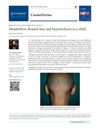
 A 9-year-old girl has a rare hair disorder causing beaded, sparse hair.
 11 citations
,
December 2010 in “Archives of Dermatology”
11 citations
,
December 2010 in “Archives of Dermatology” A man with rare skin changes on his fingers was diagnosed with multiple myeloma-linked amyloidosis.
9 citations
,
March 2009 in “Endocrine Practice”  2 citations
,
January 2000 in “Journal of Toxicologic Pathology”
2 citations
,
January 2000 in “Journal of Toxicologic Pathology” A single recessive gene causes sparse hair in certain Japanese White rabbits.
October 2025 in “Journal of the Endocrine Society” Ovarian hyperthecosis can cause high testosterone and symptoms like hair loss, and surgery can help improve these symptoms.
7 citations
,
September 1980 in “Zoological Journal of the Linnean Society” Dendritic cells help regulate skin development and hair growth in mice.
 January 2025 in “Iraqi Journal of Science”
 PDCD4 protein levels, affected by genetics and breastfeeding, may predict breast cancer treatment response.
13 citations
,
April 1982 in “The Journal of Dermatology” Poly(ADP-ribose) synthesis is linked to skin cell differentiation.
73 citations
,
November 1979 in “British Journal of Dermatology” Minoxidil can cause excessive hair growth.
January 2026 in “Case Reports in Dermatological Medicine” Intralesional steroids effectively treated a young female's scalp nodules without recurrence.
April 2026 in “Expert Opinion on Biological Therapy” Prurigo nodularis is hard to diagnose and treat, but new biologics offer hope for better management.
 27 citations
,
June 2017 in “International Journal of Dermatology”
27 citations
,
June 2017 in “International Journal of Dermatology” The study suggests that acne keloidalis nuchae is linked to conditions like pseudofolliculitis barbae, scalp infections, metabolic syndrome, and is more common in males with an average onset age of 25.4 years.
October 1967 in “Archives of Dermatology” A 42-year-old woman had a scalp lesion that didn't cause hair loss and showed specific changes under a microscope.
 2 citations
,
November 2017 in “Journal of Endocrinological Investigation”
2 citations
,
November 2017 in “Journal of Endocrinological Investigation” The painting of an 18th-century Sicilian baroness shows she had hair loss, possibly due to ovarian issues, insulin resistance, or a specific type of tumor.
November 2016 in “Oncology Letters” Milia may come from the outer part of the hair follicle.
 4 citations
,
December 2018 in “Case reports in endocrinology”
4 citations
,
December 2018 in “Case reports in endocrinology” A 63-year-old woman's male-like symptoms were caused by a rare testosterone-producing ovarian tumor, treated by removing her ovaries and fallopian tubes.
 27 citations
,
April 2017 in “European journal of endocrinology”
27 citations
,
April 2017 in “European journal of endocrinology” The research found that MRI and certain hormone levels can help tell apart ovarian tumors from hyperthecosis in postmenopausal women, but tissue analysis is still needed for a definite diagnosis.
October 2025 in “Journal of the Endocrine Society” Anastrozole can cause increased testosterone, leading to symptoms like hair growth and thinning.