 July 2023 in “Письма в Вавиловский журнал генетики и селекции”
 Extracellular nucleic acids help start inflammation needed for tissue repair, but must be properly regulated.
3 citations
,
June 2021 in “Actas Dermo-Sifiliográficas” Dermoscopy can effectively identify Malassezia folliculitis.
 April 2016 in “Journal of Investigative Dermatology”
 MEK and BRAF inhibitors increase sebum production and accumulation, which could cause acne-like side effects.
 June 2026 in “Frontiers in Immunology”
 Understanding tissue remodeling can help create precise treatments for various organ issues.
 April 2023 in “Journal of Investigative Dermatology”
 Skin cells and immune cells change in a skin condition called hidradenitis suppurativa, and a certain treatment can improve these changes.
 14 citations
,
December 2007 in “Pediatric allergy and immunology”
14 citations
,
December 2007 in “Pediatric allergy and immunology” Newborns with the common rash Erythema Toxicum have many active mast cells in their skin, but these cells don't produce the LL-37 peptide.
 September 2007 in “Journal of Investigative Dermatology”
 ANp63 is crucial for skin integrity, new filaggrin gene mutations link to eczema, hair can regrow from non-stem cells, sunburns are increasing, and glucocorticoids help treat skin allergies by affecting immune cells.
 10 citations
,
November 2015 in “Experimental Dermatology”
10 citations
,
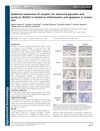
November 2015 in “Experimental Dermatology” Skin RAGE levels are linked to inflammation and cell death.
2 citations
,
July 2021 in “Bali Medical Journal” A preauricular crease is common in people with coronary artery disease.
79 citations
,
January 2019 in “International Journal of Molecular Sciences” Burn injuries in mice heal similarly to humans, with inflammation and cell changes normalizing over time.
26 citations
,
June 2024 in “Frontiers in Immunology” SOCS1 and SOCS3 help control skin inflammation and are important for developing treatments for skin diseases.
 4 citations
,
June 2013 in “The Journal of Rheumatology”
4 citations
,
June 2013 in “The Journal of Rheumatology” The document concludes that various findings in rheumatology offer insights into disease severity, treatment responses, and potential risks in medication, with some limitations due to unspecified participant numbers.
2 citations
,
May 2024 in “International Journal of Molecular Sciences” Targeting CD169+ skin macrophages may help treat psoriasis.
February 2026 in “ACS Omega” The hydrogel effectively treats oral mucositis by reducing oxidative damage and bacterial infection.
 January 2021 in “Revista Dermatológica Centro Uraga”
 Endocrinological evaluation is crucial for properly diagnosing and treating acne.
 2 citations
,
March 2022 in “Journal of Personalized Medicine”
2 citations
,
March 2022 in “Journal of Personalized Medicine” Personalized medicine is important for treating skin disorders, with new treatments and connections to hormones and genetics being explored.
July 2025 in “Nano Research” Nanotechnology can improve tissue healing by controlling immune responses.
 13 citations
,
January 1999 in “Postgraduate Medicine”
13 citations
,
January 1999 in “Postgraduate Medicine” New drugs for rheumatoid arthritis show improvement but have side effects and are not a cure.
32 citations
,
October 2004 in “Experimental Dermatology” α-MSH may help treat skin inflammation and fibrosis.
 April 2024 in “DAHUDER Medical journal”
 Ocrelizumab may cause pancreatitis in some patients.
 2 citations
,
February 2014 in “Journal of Crohn's and colitis”
2 citations
,
February 2014 in “Journal of Crohn's and colitis” Some IBD patients on anti-TNFs developed severe skin issues, but ustekinumab helped.
3 citations
,
October 2020 in “Arthritis Care & Research” New tools and criteria have been developed to better assess and treat pediatric lupus.
July 2024 in “The Egyptian Journal of Hospital Medicine” Serum calprotectin is not a reliable marker for alopecia areata activity.
July 2024 in “Journal of Investigative Dermatology” Reactive lipids from aging cells change the extracellular matrix, affecting cell function and inflammation.
 1 citations
,
November 2025 in “Frontiers in Immunology”
1 citations
,
November 2025 in “Frontiers in Immunology” More research is needed to understand and manage rheumatoid arthritis better.
February 2023 in “Reactions Weekly”  June 2020 in “Annals of the Rheumatic Diseases”
 Patients need better information about the risks of long-term steroid use.
May 2026 in “Chemical Engineering Journal”  October 2023 in “Benha Journal of Applied Sciences”
 Serum clusterin may play a key role in the inflammation and immune response in post-adolescent acne.
1 citations
,
May 2022 in “Reproductive Endocrinology” Accurate diagnosis and treatment of hyperandrogenism in women require comprehensive evaluation of symptoms and hormone levels.