 6 citations
,
September 2019 in “Skin pharmacology and physiology”
6 citations
,
September 2019 in “Skin pharmacology and physiology” RCS-01 therapy is safe and may improve skin structure by affecting gene expression.
1 citations
,
January 2018 in “International Journal of Clinical and Developmental Anatomy” Dermoscopy improves accuracy in predicting treatment success for androgenetic alopecia with the Regenera® protocol.
January 2019 in “FarFar - Pharmacy Repository” Microemulsions improve adapalene's skin absorption for better acne treatment.
 November 2025 in “Dermatology Reports”
 Microinfusion using tattoo devices effectively treats hair loss and skin conditions with minimal side effects.
51 citations
,
February 2004 in “Journal of Investigative Dermatology” MCSP may help identify and regulate skin stem cells, affecting hair growth and regeneration.
 March 2026 in “Preprints.org”
 DRDE-07 shows promise for treating skin diseases due to its favorable properties.
 39 citations
,
December 2008 in “Clinics in Dermatology”
39 citations
,
December 2008 in “Clinics in Dermatology” Dermoscopy has improved skin cancer diagnosis and has expanding applications in dermatology, but requires staying updated with new research and techniques.
 46 citations
,
May 2018 in “The journal of investigative dermatology/Journal of investigative dermatology”
46 citations
,
May 2018 in “The journal of investigative dermatology/Journal of investigative dermatology” The vitamin D receptor is essential for skin stem cells to grow, move, and become different cell types needed for skin healing.
9 citations
,
April 2025 in “Stem Cell Research & Therapy” MSC-derived conditioned media can improve skin treatments.
 November 2022 in “Journal of Investigative Dermatology”
 Human-induced stem cell-created skin models can help understand skin diseases by studying the skin's layers.

Exosomes show promise for improving skin health and healing.
 2 citations
,
February 2023 in “Research Square (Research Square)”
2 citations
,
February 2023 in “Research Square (Research Square)” The scaffold effectively prevents melanoma relapse and aids wound healing.
 January 2016 in “Journal of Investigative Dermatology”
 Some cells may slow melanoma growth, a protein could affect skin pigmentation, a gene-silencing method might treat hair defects, skin bacteria changes likely result from eczema, and a defensin protein could help treat multiple sclerosis.
January 1994 in “Medical Entomology and Zoology” Electron microscopy helps understand skin structure and diseases.
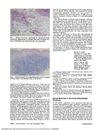 8 citations
,
November 1990 in “Archives of Dermatology”
8 citations
,
November 1990 in “Archives of Dermatology” A woman with EMS showed unusual skin mucinosis without the typical hard skin syndrome, suggesting EMS can cause skin mucinosis.
 15 citations
,
January 2000 in “Dermatology”
15 citations
,
January 2000 in “Dermatology” Minoxidil use may cause skin pigmentation loss.
8 citations
,
August 1986 in “Journal of Investigative Dermatology” 8 citations
,
January 2024 in “Journal of Materials Chemistry B” ADM hydrogels help heal radiation skin injuries.
 17 citations
,
July 2014 in “Our Dermatology Online”
17 citations
,
July 2014 in “Our Dermatology Online” Older adults have a wide range of skin conditions, with dry skin being very common and many also experiencing skin growths, itching, and infections.
1 citations
,
June 2014 in “Journal of developmental biology” Retinoic acid helps change skin cells and is important for skin development and hair growth.
 5 citations
,
September 2015 in “Nepalese journal of ophthalmology”
5 citations
,
September 2015 in “Nepalese journal of ophthalmology” An 11-year-old girl with a rare skin disorder also had cornea issues and dry eye, needing careful management.
June 2025 in “British Journal of Dermatology” Melanocytic matricoma can look like skin cancer but is usually harmless; surgery and follow-up are advised.
 August 1994 in “Journal of dermatological science”
 Different substances affect hair and skin cell growth in various ways, with some promoting and others inhibiting cell proliferation.
January 2003 in “Jiepouxue zazhi” HHK can help restore skin structure.
9 citations
,
July 2012 in “Dermatitis” Hair dye with para-phenylenediamine can cause skin depigmentation.
1 citations
,
June 2024 in “Preprints.org” Dermal sheath cells play a key role in wound healing and could impact fibrosis.
 January 2026 in “Forum Dermatologicum”
 LED therapy is safe and can help with acne, aging skin, and hair loss, but consumer devices may be less effective.
 April 2018 in “Journal of Investigative Dermatology”
 Ginsenoside Rd may help improve skin aging by increasing collagen in the skin.