
Keratin hydrogels from human hair show promise for tissue engineering and regenerative medicine.
 34 citations
,
May 2021 in “Journal of Nanobiotechnology”
34 citations
,
May 2021 in “Journal of Nanobiotechnology” The 3D electrospun fibrous sponge is promising for tissue repair and healing diabetic wounds.
 101 citations
,
July 2021 in “Nature Communications”
101 citations
,
July 2021 in “Nature Communications” 4D polycarbonate scaffolds show promise for soft tissue repair due to their biocompatibility, shape memory, and minimal immune response.
The skin can still regenerate and function well even with fewer fibroblasts.
 82 citations
,
March 2016 in “Cell”
82 citations
,
March 2016 in “Cell” The conclusion is that tissue structure is key for stem cell communication and maintaining healthy tissues.
11 citations
,
April 2022 in “Biophysical Journal” Disulfide bonds in keratin fibers break more easily under stress, especially when wet, affecting fiber strength.
 January 2024 in “Authorea (Authorea)”
 Using laccase to add poly(tyrosine) to wool makes it less likely to shrink and stronger.
13 citations
,
April 2023 in “Biochemical Society Transactions” Tissue stiffness helps shape how organisms develop.
 3 citations
,
February 2023 in “ACS omega”
3 citations
,
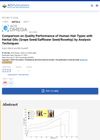
February 2023 in “ACS omega” Grape seed oil improved hair quality the most, followed by rosehip and safflower seed oils, and reduced damage from shampoo.
 May 2024 in “International Journal of Cosmetic Science”
 Disulfide bonds are crucial for hair's strength, especially when wet.
17 citations
,
October 2023 in “Polymers” Electrospun nanofibers are promising for medical, sensing, and energy uses, especially with 3D printing.
269 citations
,
October 2017 in “International Journal of Molecular Sciences” Improving mesenchymal stromal cell therapies requires overcoming cell death and optimizing delivery methods.
156 citations
,
March 2022 in “Exploration” Bioactive inorganic particles-based biomaterials show promise for improving skin wound healing.
128 citations
,
February 2023 in “Molecules” Chitosan-based hydrogels effectively control bleeding and have promising medical uses.
63 citations
,
February 2010 in “Journal of Neurophysiology” Microstimulation of certain facial and mouth nerves can evoke specific sensations, while deeper nerves may require multiple stimulations to affect perception.
30 citations
,
September 2024 in “Pharmaceuticals” Silk fibroin nanofibers may help heal diabetic wounds, but more research is needed.
18 citations
,
February 2024 in “ACS Polymers Au” Silk fibroin shows promise for wound care but faces challenges in becoming widely available.
12 citations
,
September 2023 in “Polymers” The hydrogel speeds up skin wound healing effectively.
11 citations
,
January 2024 in “Regenerative Biomaterials” A new 3D-printed hydrogel scaffold helps regenerate corneas and prevent scarring.
9 citations
,
September 2019 in “PLoS ONE” K42 and K124 keratins are only found in horse hoof lamellae.
 8 citations
,
January 2023 in “Biosensors”
8 citations
,
January 2023 in “Biosensors” Piezoelectric Nanogenerators are promising for non-invasive health monitoring but need efficiency and durability improvements.
6 citations
,
March 2023 in “Materials” The GNP crosslinked scaffold with antibacterial coating is effective for rapid wound healing and infection prevention.
3 citations
,
July 2025 in “Gels” Engineered protein hydrogels improve medical treatments by mimicking natural body structures.
 1 citations
,
August 2024 in “Polymers”
1 citations
,
August 2024 in “Polymers” The P25H5-O microneedles effectively deliver substances through hair follicles and are safe for skin cells.
January 2026 in “Molecules” A new perming method is less damaging to hair and works as well as traditional methods.
January 2026 in “Eng—Advances in Engineering” Berry extracts improve fabric strength and flexibility, making it suitable for medical and cosmetic uses.
September 2025 in “Journal of Polymer Science” Functionalized bacterial cellulose can improve medical tissue engineering.
February 2025 in “bioRxiv (Cold Spring Harbor Laboratory)” Cell detachment, not autoantibody binding, causes major changes in pemphigus.
70 citations
,
February 2016 in “EMBO reports” Scientists found a specific group of itch-sensing nerve cells in mice important for feeling itch but not for sensing heat or touch.
37 citations
,
August 2024 in “Current Issues in Molecular Biology” Keratins 6, 16, and 17 increase in damaged or diseased skin and may help diagnose skin issues.