May 2025 in “OPAL (Open@LaTrobe) (La Trobe University)” Differences in cashmere quality between goat breeds are linked to specific genes and pathways.
28 citations
,
November 2009 in “European Journal of Neuroscience” Progesterone and allopregnanolone increase glycine release in rat brain cells.
 June 1997 in “The American Journal of Cosmetic Surgery”
 Reharvesting hair from donor sites using punch and strip methods can provide more hair for transplants and improve scar appearance.
7 citations
,
May 1995 in “The journal of investigative dermatology/Journal of investigative dermatology”  April 2018 in “Journal of Investigative Dermatology”
 High amphiregulin in the skin is a bad sign for acute graft-versus-host disease.
May 2025 in “OPAL (Open@LaTrobe) (La Trobe University)” Differences in cashmere quality between goat breeds are linked to specific genes affecting hair follicle development.
82 citations
,
July 2012 in “Brain pathology” High LGR5 levels in glioblastoma indicate poor prognosis and are essential for cancer stem cell survival.
 32 citations
,
January 2005 in “Advances in Biochemical Engineering / Biotechnology”
32 citations
,
January 2005 in “Advances in Biochemical Engineering / Biotechnology” Fetal wounds heal without scarring because of different biological factors, which could help improve adult wound healing.
43 citations
,
September 2001 in “Annals of Neurology” Hair root analysis can effectively detect somatic mosaicism in double cortex syndrome.
May 2025 in “OPAL (Open@LaTrobe) (La Trobe University)” Key genes affect cashmere quality differences between Jiangnan and Changthangi goats.
 17 citations
,
November 2017 in “PLoS ONE”
17 citations
,
November 2017 in “PLoS ONE” Transplanted bone marrow cells actively move, form clusters, and grow after transplantation.
2 citations
,
July 1999 in “JEADV. Journal of the European Academy of Dermatology and Venereology/Journal of the European Academy of Dermatology and Venereology” Proteolytic enzymes damaged hair follicle stem cells in transgenic mice.
November 2025 in “OPAL (Open@LaTrobe) (La Trobe University)” A new method helps find proteins in hair to identify fetal growth issues.
69 citations
,
May 1997 in “Veterinary Pathology” The angora mouse mutation causes long hair and hair defects due to a gene deletion.
 March 2021 in “Indian Journal of Dermatology”
 A man unhappy with his old hair restoration got a new, natural-looking hairline using a combination of follicular unit extraction and punch graft reduction.
May 2025 in “OPAL (Open@LaTrobe) (La Trobe University)” Cashmere quality differences between goat breeds are linked to specific genes and pathways.
 119 citations
,
November 2014 in “Trends in Cell Biology”
119 citations
,
November 2014 in “Trends in Cell Biology” Fibroblast growth factor receptor signaling controls cell development and repair, and its malfunction can cause disorders and cancer, but it also offers potential for targeted therapies.
April 2019 in “The journal of investigative dermatology/Journal of investigative dermatology” Spiny mice regenerate skin better than laboratory mice due to larger hair bulges, more stem cells, and different collagen ratios.
 24 citations
,
July 1994 in “Molecular Endocrinology”
24 citations
,
July 1994 in “Molecular Endocrinology” Researchers found an RNA transcript that might help control a growth factor linked to tumor development.
 September 2018 in “Research in medical & engineering sciences”
 The author was scammed by a marketing company and discussed a man scammed by a clinic that provided poor hair transplants, leading to bad results and scarring.
 4 citations
,
March 2007 in “Hair transplant forum international”
4 citations
,
March 2007 in “Hair transplant forum international” The document's conclusion cannot be provided as the content is not available.
51 citations
,
January 1997 in “PubMed” GABEB is a less severe skin condition caused by a gene mutation affecting collagen, leading to blisters and other symptoms.
2 citations
,
January 2023 in “Biomedicines” The treatment combining laser and fetal fibroblasts effectively reduces scarring.
 6 citations
,
May 2009 in “Cell transplantation”
6 citations
,
May 2009 in “Cell transplantation” Green tea component EGCG helps keep rat skin grafts viable longer.
 1 citations
,
September 2017
1 citations
,
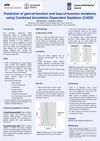
September 2017 C-scores can help predict gain-of-function and loss-of-function mutations.
December 2024 in “Macromolecular Bioscience” The new collagen template speeds up production and supports skin healing without harmful reactions.
 June 2025 in “Dermatologic Surgery”
 GFC improves hair quickly, while PRP offers longer-lasting benefits; using both sequentially is recommended.
 2 citations
,
January 2022 in “Experimental Dermatology”
2 citations
,
January 2022 in “Experimental Dermatology” GDNF signaling helps in hair growth and skin healing after a wound.
 6 citations
,
December 1997 in “Journal of The American Academy of Dermatology”
6 citations
,
December 1997 in “Journal of The American Academy of Dermatology” CTE can distort results in hair growth trials, so exclude it carefully.
January 2010 in “Acta Laboratorium Animalis Scientia Sinica” The UHS promoter is specific to mouse hair follicles.