13 citations
,
March 1999 in “Biochemical Journal” Overexpressing SSAT in mice makes them highly sensitive to polyamine analogues, causing liver damage and high mortality.
5 citations
,
August 2023 in “G3 Genes Genomes Genetics” The improved genome of the African spiny mouse will help understand its tissue regeneration abilities.
 July 2023 in “International Journal of Molecular Sciences”
 N,N-Dimethylglycine Sodium Salt helps reduce skin inflammation and improves skin cell growth and healing.
 April 2026 in “International Journal of Advanced Biochemistry Research”
 Aegle marmelos fruit extract can protect against arsenic toxicity in mice.
2 citations
,
January 2023 in “Frontiers in Veterinary Science” Buffalo flies and Stephanofilaria nematodes cause severe skin lesions in beef cattle, and treatment should target both.
8 citations
,
September 2011 in “Scanning” Multiphoton microscopy effectively images mouse skin layers and structures.
Some bacteria use arsenic compounds as antibiotics, and others have evolved resistance; a particular arsenic-based compound shows potential as a new antimalarial treatment.
 January 2022 in “JPK Jurnal Proteksi Kesehatan”
 Mangkokan leaf extract is more effective against Staphylococcus aureus than Escherichia coli.
 12 citations
,
February 1998 in “Gene”
12 citations
,
February 1998 in “Gene” The B2 genes are crucial for hair growth in rats.
 4 citations
,
June 2022 in “Journal of Cosmetic Dermatology”
4 citations
,
June 2022 in “Journal of Cosmetic Dermatology” Multi-peptide factors from fibroblasts may stimulate hair growth by increasing growth factors and β-catenin in hair cells.
 June 2020 in “Annals of the Rheumatic Diseases”
 Patients with Systemic Sclerosis have much higher levels of GDF-15, which could help predict organ involvement and guide treatment.
187 citations
,
May 1979 in “British Journal of Dermatology” Topical steroids can manage chronic scalp pustules in elderly women.
8 citations
,
July 2015 in “International Journal of Dermatology” A new DSG4 gene mutation causes hair defects in a young girl.
12 citations
,
October 2006 Matriptase imbalance contributes to cancer development and spread.
8 citations
,
January 2019 in “JAAD Case Reports” EPDS can cause recurring scalp sores and hair loss if not treated.
12 citations
,
August 2004 in “Veterinary Dermatology” Fipronil effectively treats Lynxacarus radovskyi in outdoor cats.
2 citations
,
May 2023 in “The Journal of Immunology” NXC736 significantly reduced hair loss in mice with alopecia areata.
December 2016 in “Experimental and Molecular Pathology” Mus pahari mice have fragile skin due to abnormal collagen and elastin.
 12 citations
,
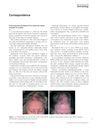
November 2011 in “International Journal of Dermatology”
12 citations
,
November 2011 in “International Journal of Dermatology” A woman developed a scalp condition from using minoxidil, which improved with a different treatment but left scarring.
September 2025 in “JID Innovations” Squaric acid dibutylester promotes hair growth by activating immune cells, especially macrophages.
13 citations
,
July 1978 in “Journal of comparative pathology” Acanthospermum hispidum is toxic to mice, causing death and damage to internal organs.
2 citations
,
February 2024 in “JAAD International” Sebaceous gland maturity and size differ between psoriatic alopecia and alopecia areata.
5 citations
,
October 2021 in “American Journal of Medical Genetics Part A” A new genetic variant causes BRESHECK syndrome by disrupting cell growth and stress response.
4 citations
,
April 2023 in “bioRxiv (Cold Spring Harbor Laboratory)” The improved genome of the African spiny mouse helps study its tissue regeneration.
2 citations
,
December 2023 in “Stem Cells Translational Medicine” ISX-9 helps stem cells heal lung injury better by boosting growth factor secretion.
 83 citations
,
August 2014 in “PLoS ONE”
83 citations
,
August 2014 in “PLoS ONE” All adults have Demodex mites, which vary by region.
 February 2025 in “Buletin Veteriner Udayana”
 Ivermectin and sulfur effectively treated the cat's scabies and sporotrichosis in 14 days.
4 citations
,
October 2024 in “International Journal of Molecular Sciences” GCN reduces lung inflammation and damage from air pollution in mice.
September 2025 in “e-space (Manchester Metropolitan University)” Blocking androgen receptors helps immune cells better fight certain bacteria.
2 citations
,
September 2020 in “International Journal of Molecular Sciences” Removing certain hair follicle stem cells worsens skin reactions to allergens.