 January 2015 in “Springer eBooks”
 Fat-derived stem cells and their secretions show promise for treating skin aging and hair loss.
January 2015 in “DSpace@MIT (Massachusetts Institute of Technology)” PHGDH promotes cancer growth by aiding cell proliferation and tumor progression.
 April 2005 in “Dermatologic Clinics”
 The document summarizes recent dermatological treatments and advances in areas like pediatric care, wound healing, skin closure, light-based therapies, pigment disorders, hair loss, immunotherapy, infection management, melanoma, drug reactions, and facial rejuvenation.
 July 2002 in “Dermatologic Surgery”
 Some people's hair turned white or gray after using intense pulsed light for hair removal, and for some, it was permanent.
The agouti gene may help understand and treat obesity.
 9 citations
,
January 2014 in “DARU Journal of Pharmaceutical Sciences”
9 citations
,
January 2014 in “DARU Journal of Pharmaceutical Sciences” Cuscuta reflexa extracts helped regrow hair in rats with drug-induced hair loss.
 8 citations
,
February 2013 in “Central European Journal of Biology”
8 citations
,
February 2013 in “Central European Journal of Biology” Melanocytes are diverse cells important for pigmentation and skin health, influenced by genetics and environment.
3 citations
,
May 1979 in “PubMed”  11 citations
,
April 2013 in “SpringerPlus”
11 citations
,
April 2013 in “SpringerPlus” Human skin's melanocytes respond to light by changing shape, producing pigments and hormones, which may affect sleep patterns.
75 citations
,
January 1980 in “Journal of Investigative Dermatology” 43 citations
,
October 2005 in “Molecular and cellular endocrinology” Hair melanocytes help the skin respond to stress and regulate hair pigmentation.
 349 citations
,
January 2005 in “The FASEB journal”
349 citations
,
January 2005 in “The FASEB journal” Human skin can make serotonin and melatonin, which help protect and maintain it.
 35 citations
,
February 2015 in “Experimental Dermatology”
35 citations
,
February 2015 in “Experimental Dermatology” Cells from the base of hair follicles help blood vessel cells survive and grow, which is important for healthy hair.
 10 citations
,
November 2010 in “Pigment Cell & Melanoma Research”
10 citations
,
November 2010 in “Pigment Cell & Melanoma Research” Only skin melanocytes, not other types, can color hair in mice.
4 citations
,
January 2019 in “Micron” Fetal hair follicles have melanocytes with melanosomes at different stages, which are broken down into pigment particles in keratinocytes.
 February 2025 in “bioRxiv (Cold Spring Harbor Laboratory)”
 Hair follicles protect melanocytes from sun damage, helping them replenish skin.
 401 citations
,
January 2013 in “Postepy Dermatologii I Alergologii”
401 citations
,
January 2013 in “Postepy Dermatologii I Alergologii” The paper concludes that understanding melanocyte development can help in insights into skin diseases and melanoma diversity.
 November 2022 in “Journal of Investigative Dermatology”
 Dynlt3 is important for melanosome transport and skin coloration.
June 2025 in “Albus Scientia” MC1R gene variations affect skin, hair color, UV sensitivity, and melanoma risk.
37 citations
,
July 2002 in “Archives of Pathology & Laboratory Medicine” Tyrosinase and gp100 proteins can help diagnose and treat melanoma.
 35 citations
,
July 2007 in “Dermatologic clinics”
35 citations
,
July 2007 in “Dermatologic clinics” Facial dark spots can be caused by the sun, genetics, makeup, or medicine, and are diagnosed by patient history and skin tests.
 22 citations
,
November 2012 in “Journal of cosmetic dermatology”
22 citations
,
November 2012 in “Journal of cosmetic dermatology” Stem cells can rejuvenate skin, restore hair, and aid in wound healing.
 5 citations
,
April 2018 in “Chem”
5 citations
,
April 2018 in “Chem” Graphene-based hair dye is a safe, durable, and effective alternative to traditional black hair dyes.
 1 citations
,
July 2018 in “Elsevier eBooks”
1 citations
,
July 2018 in “Elsevier eBooks” Avoid chemical and physical damage to protect hair.
 1 citations
,
October 2015 in “CRC Press eBooks”
1 citations
,
October 2015 in “CRC Press eBooks” Nutricosmetics with active ingredients can help with hair loss and improve hair growth.
 1 citations
,
January 1999 in “Journal of the European Academy of Dermatology and Venereology”
1 citations
,
January 1999 in “Journal of the European Academy of Dermatology and Venereology” Dermatology residents need thorough training in dermatosurgery for better patient outcomes.
 1 citations
,
January 1967 in “The BMJ”
1 citations
,
January 1967 in “The BMJ” The document concludes that while some hair and scalp disorders can be treated, hair loss from destroyed follicles is permanent, and damaged hair can only regrow naturally.
 January 2026 in “Inflammation and Regeneration”
 Two-photon microscopy improves skin imaging but faces safety and cost challenges for clinical use.
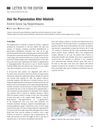 April 2025 in “Turkish Journal of Hematology”
 Nilotinib may cause gray hair to return to its original color.
 December 2022 in “Kristu Jayanti Journal of Core and Applied Biology (KJCAB)”
 Scalp hair characteristics vary across different regions of India and can help identify a person's origin.