 June 2025 in “International Journal for Research in Applied Science and Engineering Technology”
 The herbal shampoo is a safer and effective alternative to the commercial product.
 June 2025 in “Mağallaẗ ʻulūm al-rāfidayn”
 New pyrazole derivatives may help treat hair loss, but more testing is needed.

Human hair follicle stem cells improved memory and brain health in rats.
 May 2025 in “Journal of Food and Nutrition Research”
 Black wolfberry ferment may help regrow hair in cases of androgenetic alopecia.

CD4 T cells need IFN-γ to cause hair loss in alopecia areata.
 April 2025 in “Journal of the Association for Research in Otolaryngology”
 NM2 and RLC phosphorylation are essential for normal inner ear hair cell function.
 March 2025 in “Scientific Reports”
 Menthol-based microemulsions improve skin delivery of finasteride and silodosin.

Technology can improve sexual dysfunction in chronic disease patients but faces challenges like cost and accessibility.
 February 2025 in “International Journal for Research in Applied Science and Engineering Technology”
 The herbal shampoo is a safer alternative to synthetic shampoos but needs more testing for effectiveness.

New therapies like JAK inhibitors, PRP, and stem cell treatments show promise for better alopecia management.
 January 2025 in “International Journal of Biology Pharmacy and Allied Sciences”
 The herbal hair removal cream effectively removes hair naturally and gently.
 January 2025 in “Clinical and Medical Engineering Live”
 Implementing safety strategies is crucial to prevent radiation-related health issues.

Polarized microscopy helps identify hair irregularities in genetic disorders.
 January 2025 in “Open Life Sciences”
 Overexpression of the HE4 gene in mice causes eye inflammation and cloudiness.
 January 2025 in “International Journal of Pharmacognosy and Clinical Research”
 The herbal scalp serum may help hair growth by reducing DHT levels.
 January 2025 in “Journal of Pharmacognosy and Phytochemistry”
 Plant-based pigments in shampoo offer vibrant colors and scalp benefits, meeting quality standards and providing a natural alternative to synthetic dyes.
 January 2025 in “Universidad de Córdoba Insitutional Repository (Universidad de Córdoba)”
 An imbalanced scalp microbiome may worsen alopecia areata severity and inflammation, but treatment can partially restore balance.
 December 2024 in “Journal of Cancer Therapy and Research”
 Artocarpus heterophyllus seed extract may help treat prostate inflammation without side effects.
 November 2024 in “Journal of Translational Internal Medicine”
 Exosomes from stem cells help hair regrowth by activating a specific signaling pathway.
 September 2024 in “South Eastern European Journal of Public Health”
 Alopecia areata patients have higher IgE and IL-13 levels, suggesting immune involvement.
 August 2024 in “Journal of Animal Science and Technology”
 Angora goat hair growth is influenced by gene expression, sex hormones, and breed differences.
 July 2024 in “ADMET & DMPK”
 Surface-modified nanostructured lipid carriers can improve hair growth treatments.
 June 2024 in “International Journal of Advanced Research in Science Communication and Technology”
 Herbal extracts like Ficus religiosa may help with hair growth and skin rejuvenation.
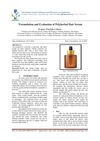 June 2024 in “International Journal of Pharmaceutical Research and Applications”
 Polyherbal hair serum can hydrate the scalp and promote hair growth safely.
 May 2024 in “Scientific reports”
 Twist2 is essential for scarless skin healing and hair growth in mouse fetuses.
 May 2024 in “Brazilian Journal of Hair Health”
 Finasteride-loaded nanoparticles were successfully created for potential improved hair growth treatment.

Curry leaves offer health benefits and can be used safely in various forms for digestion, diabetes control, and hair growth.
 April 2024 in “Research Square (Research Square)”
 16-MHA can restore the barrier and moisture of damaged hair, making it similar to undamaged hair.
 April 2024 in “Frontiers in physiology”
 Immune cells are crucial for hair growth and preventing hair loss.
 April 2024 in “Frontiers in pharmacology”
 Cynoglossum amabile has medicinal potential but poses safety concerns due to liver toxicity.