 9 citations
,
January 2013
9 citations
,
January 2013 Alopecia areata patients have lower zinc, copper, and selenium levels than healthy people.
 9 citations
,
January 1997 in “Endocrine Journal”
9 citations
,
January 1997 in “Endocrine Journal” Gonadal biopsy is the best method to diagnose gonadal dysgenesis.
 8 citations
,
April 2020 in “Journal of Ethnopharmacology”
8 citations
,
April 2020 in “Journal of Ethnopharmacology” Herbs might help with hair loss, but more research is needed to confirm their safety and effectiveness.
 8 citations
,
August 2019 in “Dermatologic surgery”
8 citations
,
August 2019 in “Dermatologic surgery” Nonsteroid treatments for alopecia areata show promise but need more high-quality research.
 6 citations
,
February 2016 in “Journal of Microencapsulation”
6 citations
,
February 2016 in “Journal of Microencapsulation” Improved finasteride formula allows slow, sustained release and better absorption for patients.
 3 citations
,
September 2010 in “Acta Médica Portuguesa”
3 citations
,
September 2010 in “Acta Médica Portuguesa” Polycystic ovary syndrome (PCOS) significantly impacts women's emotional well-being and social lives, requiring treatments that include psychological support.
 3 citations
,
March 1932 in “Journal of the American Medical Association”
3 citations
,
March 1932 in “Journal of the American Medical Association” Radium exposure causes severe health issues, so strict safety measures are essential.
 2 citations
,
January 2019 in “Springer eBooks”
2 citations
,
January 2019 in “Springer eBooks” The conclusion is that different blood diseases cause specific oral symptoms and require varied treatments to manage these symptoms and improve patient health.
 2 citations
,
July 2005 in “Baylor University Medical Center Proceedings”
2 citations
,
July 2005 in “Baylor University Medical Center Proceedings” A 4-year-old girl was diagnosed with trichotillomania, a condition where she pulls out her hair, which may resolve on its own or require therapy.
 1 citations
,
November 2025 in “International Journal of Clinical Pharmacy”
1 citations
,
November 2025 in “International Journal of Clinical Pharmacy” Cladribine has known risks and potential new safety concerns, requiring careful monitoring.
Certain gut microbes are linked to better health in 14 conditions.
 1 citations
,
December 2024 in “Bulletin of Osh State University”
1 citations
,
December 2024 in “Bulletin of Osh State University” Mercury can disrupt sex hormones and cause reproductive issues.
 1 citations
,
June 2023 in “Radiation oncology journal”
1 citations
,
June 2023 in “Radiation oncology journal” Low-dose radiation therapy may improve brain function in some Alzheimer's patients and is generally well-tolerated.
 July 2026 in “Frontiers in Medicine”
 A new treatment plan for alopecia areata considers disease severity, quality of life, and progression to offer personalized care.
 June 2026 in “International Journal of Homoeopathic Sciences”
 Personalized homeopathic treatment improved chronic facial melasma and skin texture.
 March 2026 in “Plastic and Aesthetic Research”
 Adipose-derived stem cell exosomes can help reduce skin aging from UV exposure.
 February 2026 in “International Journal of Web of Multidisciplinary Studies”
 Restoring microbial balance and using exosome therapies may help treat hair disorders like alopecia and acne.
 January 2026 in “International Journal of Pharmaceutical Quality Assurance”
 Alopecia Areata patients have low zinc and high copper levels.
 January 2026 in “Nature Communications”
 A wearable device using NIR light may help treat hair loss non-invasively.

Higher cannabis use may be linked to more severe hair loss.
 November 2025 in “Clinical Cosmetic and Investigational Dermatology”
 Tattoos may trigger autoimmune symptoms in some people.
 January 2025 in “Exploratory Animal and Medical Research”
 Lithium carbonate and lead acetate together harm the heart more than individually.
 December 2024 in “Qlantic Journal of Social Sciences and Humanities”
 Men seeking hair transplants show higher perfectionism and body dysmorphic disorder symptoms.
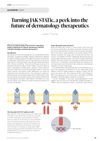 August 2024 in “New Zealand Medical Student Journal”
 JAK inhibitors show promise for treating skin diseases effectively and safely.
 December 2021 in “Research Square (Research Square)”
 Hair follicle sampling is a feasible method to measure FMRP and FMR1 mRNA levels in children.
 September 2021 in “International Ayurvedic Medical Journal”
 Bhringraj capsule and oil with Nasya effectively reduce hair fall and related symptoms.
 July 2018 in “International journal of research - granthaalayah”
 Croton tiglium application significantly improved hair regrowth in alopecia areata patients.
 January 2017 in “Journal of clinical & experimental dermatology research”
 Low ferritin levels might be linked to telogen effluvium, but vitamin D levels are not.
 January 2017 in “Research Portal (King's College London)”
 Mantel's family life affected her view of femininity and worsened her endometriosis.
 December 2016 in “Journal of Evolution of Medical and Dental Sciences”
 Chronic Acrodermatitis Enteropathica can persist into adulthood and requires careful zinc treatment.