14 citations
,
October 2002 in “Journal of cutaneous pathology” MAP-2 is crucial for the structure of hair follicles and nails.
miR-214-3p helps nerve repair and recovery.
209 citations
,
October 2008 in “The Journal of Pathology” Stem cell niches are essential for tissue health and repair.
 January 2026 in “Mendeley Data”
 Hair follicle stem cell exosomes help nerve regeneration.
11 citations
,
January 2014 in “Dermatology” Certain SPINK5 gene mutations are common in Israeli families with Comèl-Netherton syndrome.
 January 2026 in “Mendeley Data”
 Hair follicle stem cell exosomes help nerve regeneration.
1 citations
,
September 2004 in “Experimental Dermatology” MC-1R is present in skin cells and may help reduce inflammation.
10 citations
,
July 2023 in “World Journal of Stem Cells” The secretome helps protect and regenerate retinal cells by enabling communication between stem cells and retinal cells.
11 citations
,
February 2020 in “Journal of Biomaterials Science Polymer Edition” The new GelMet hydrogel can effectively support skin cell growth for tissue engineering.
August 2006 in “Experimental dermatology” Neurotrophins are important for hair growth and response to stress.
4 citations
,
November 2024 in “Journal of Advanced Research” Targeting NMMHC IIA may help treat blood-brain barrier damage.
294 citations
,
February 2011 in “Cell” Nephronectin helps attach muscle cells to hair follicles.
 January 2023 in “bioRxiv (Cold Spring Harbor Laboratory)”
 Newly born mesenchymal cells quickly spread out in response to tissue tension during early development.
June 2025 in “Histopathology” Epithelial elements in superficial angiomyxomas are non-neoplastic growths mimicking embryogenesis.
 April 2018 in “Journal of Investigative Dermatology”
 The keratin network in mouse skin changes during cornification and affects the skin's protective barrier.
March 2024 in “European Journal of Neuroscience” Dopaminergic neurons in the gut have diverse subtypes with different neurotransmitter contents.
6 citations
,
January 2010 in “Journal of Biochemical and Molecular Toxicology” The ID2 gene can help distinguish between sensitizers and irritants in skin cells.
 August 2023 in “International Journal of Molecular Sciences”
 The human scalp hair bulb contains different types of melanocytes with varying abilities to produce melanin.
 59 citations
,
April 2016 in “Cell Reports”
59 citations
,
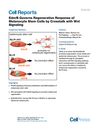
April 2016 in “Cell Reports” EdnrB signaling helps melanocyte stem cells regenerate and could be targeted to treat pigmentation issues.
 May 2026 in “Nature Communications”
 Targeting catecholaminergic signaling may help treat keloid scars.
January 1990 in “대한피부과학회지” Peanut agglutinin staining helps differentiate malignant melanoma from nevocellular nevus.
28 citations
,
September 2011 in “Stem Cell Reviews and Reports”  April 2016 in “Journal of Investigative Dermatology”
 Tumor cell adhesion is linked to higher risk of SLN metastasis and melanoma recurrence, and a model including these factors predicts these outcomes better than one with just clinical data.
January 2004 in “Kölner Universitäts PublikationsServer (Universität zu Köln)” Collagen XVII and CD151 affect cell movement, with CD151 inhibiting migration when bound to integrins.
91 citations
,
March 1994 in “Journal of Investigative Dermatology” 65 citations
,
August 2013 in “Acta Biomaterialia” The new matrix improves skin regeneration and graft performance.
372 citations
,
December 2004 in “Nature Genetics” March 2026 in “Experimental Dermatology” The new model helps understand and develop treatments for genetic skin disorders like AEC.
 417 citations
,
September 2005 in “PLoS biology”
417 citations
,
September 2005 in “PLoS biology” Understanding gene expression in hair follicles can reveal insights into hair growth and disorders.
5 citations
,
December 2016 in “Microscopy Research and Technique” EPI-NCSCs from hair follicles may help treat brain development issues in mice.