1 citations
,
January 2018 in “Jornal Brasileiro de Patologia e Medicina Laboratorial” Monilethrix causes brittle hair and hair loss, and it runs in families.
44 citations
,
August 2004 in “Journal of Investigative Dermatology” A gene deletion in DSG4 causes sparse hair in some Pakistani families.
 May 2025 in “Scholars Journal of Medical Case Reports”
 A 10-year-old boy's scalp infection was cured with oral medication in two months.
55 citations
,
May 2007 in “Australasian journal of dermatology” Two boys developed a viral skin infection during chemotherapy, which resolved with improved immune function.
14 citations
,
September 1999 in “Mammalian genome” The scraggly mutation causes hair loss and skin defects in mice.
14 citations
,
August 2013 in “Journal of Parasitology” Mite infestations severely harm the health of endangered Amargosa voles.
July 2023 in “Indian Journal of Sexually Transmitted Diseases and AIDS” "Moth-eaten alopecia" can be a sign of secondary syphilis, treatable with penicillin.
 5 citations
,
December 2017 in “The Journal of Dermatology”
5 citations
,
December 2017 in “The Journal of Dermatology” A new gene mutation caused a man's rare skin condition, Schöpf-Schulz-Passarge syndrome.
 8 citations
,
June 2018 in “ACTA SCIENTIAE VETERINARIAE”
8 citations
,
June 2018 in “ACTA SCIENTIAE VETERINARIAE” A maned wolf was successfully treated for a fungal infection, highlighting the need to understand such diseases for conservation.

Microbial imbalances on the scalp can help diagnose and manage hair loss early.
13 citations
,
July 2015 in “Archives of dermatological research” N1-methylspermidine helps hair growth and reduces inflammation in hair follicles.
January 2025 in “Clinical Case Reports” Follicular porokeratosis may be linked to diabetes and can lead to hair loss.
 3 citations
,
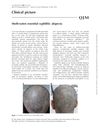
July 2014 in “QJM”
3 citations
,
July 2014 in “QJM” A 35-year-old man had patchy hair loss that was actually due to syphilis, not alopecia areata.
 May 2020 in “JOJ Dermatology & Cosmetics”
 A rare skin condition usually on the face was found on a man's heel.
4 citations
,
September 2015 in “JAAD case reports” Substance P may play a role in the inflammation seen in keratosis follicularis spinulosa decalvans.
February 2022 in “Authorea (Authorea)” PAON shows skin patterns due to genetic mosaicism.
Researchers created a new mouse model, G4, that mimics human PCOS symptoms and links the condition to a specific gene.
March 2004 in “Journal of the American Academy of Dermatology” A rare fungal infection caused hair loss in a North American infant.
 50 citations
,
April 2014 in “Nature Communications”
50 citations
,
April 2014 in “Nature Communications” The research identified new skin traits in mice, some linked to human skin conditions.
 5 citations
,
July 2022 in “Orphanet journal of rare diseases”
5 citations
,
July 2022 in “Orphanet journal of rare diseases” RSPO1 mutations in certain patients lead to skin cells that don't develop properly and are more likely to become invasive, increasing the risk of skin cancer.
 December 2023 in “International Journal of Medical Sciences And Clinical Research”
 Dermoscopy is a useful tool for diagnosing female pattern hair loss.
70 citations
,
September 2008 in “PubMed” MicroRNAs are important for skin development and diseases and could be used for treatment and diagnosis.
1 citations
,
June 2024 in “Access Microbiology” Some moulds can cause skin issues and produce enzymes that may increase their harmfulness.
17 citations
,
October 2015 in “PubMed” Proper diagnosis is essential for effective treatment of skin fungal infections.
10 citations
,
March 1997 in “Pediatric Dermatology” A rare case of trichothiodystrophy was found with autism, seizures, and mental retardation.
2 citations
,
April 2022 in “Medicine” A Chinese boy's scalp infection from a guinea pig was cured with medication.
 32 citations
,
February 2008 in “Journal of the American Academy of Dermatology”
32 citations
,
February 2008 in “Journal of the American Academy of Dermatology” KFSD is a genetic disorder causing hair loss and skin issues, with no effective treatment.
 November 2024 in “medRxiv (Cold Spring Harbor Laboratory)”
 Genetic factors affecting skin health and body weight may increase the risk of dermatophytosis.
21 citations
,
October 2009 in “Molecular Biology Reports” July 2025 in “Clinical Case Reports” A new genetic mutation in the TRPS1 gene causes Trichorhinophalangeal Syndrome, leading to specific hair, dental, and bone issues.