10 citations
,
January 1925 in “Archives of Dermatology” Trichostasis spinulosa is a rare skin condition with hair-filled plugs in hair follicles.
 3 citations
,
January 2022 in “Medical Mycology Journal”
3 citations
,
January 2022 in “Medical Mycology Journal” Malassezia fungi in healthy noses can form a "spaghetti-and-meatballs" structure.
6 citations
,
October 1998 in “PubMed” Antifungal treatment can improve severe skin infections with cutaneous horns.
2 citations
,
September 2021 in “JAAD case reports” A man with a weakened immune system was diagnosed with a rare skin condition called trichodysplasia spinulosa using skin examination techniques.
11 citations
,
October 2017 in “Mycoses” An 80-year-old man's deep beard infection was cured with oral terbinafine after identifying the fungus Trichophyton verrucosum.
March 2024 in “Clinical Case Reports” Early detection of tinea capitis is possible by spotting specific hair patterns like comma or corkscrew hairs.
 February 2023 in “JAAD case reports”
 Reducing immunosuppression and using antiviral creams improved the woman's skin condition.
September 2022 in “Medical Mycology” Malassezia fungi may contribute to hair loss and inflammation in androgenetic alopecia.
 May 2022 in “International journal of infectious diseases”
 A woman with a rare scalp infection was cured after one month of medication.
 9 citations
,
January 2006 in “American Journal of Clinical Dermatology”
9 citations
,
January 2006 in “American Journal of Clinical Dermatology” Malassezia yeast might be linked to more hair shedding.
Trichodysplasia spinulosa can occur after a heart transplant due to immunosuppressive drugs.
14 citations
,
May 1979 in “International Journal of Dermatology” Trichostasis spinulosa mainly affects the nose, with many tiny hairs in one follicle, possibly influenced by hormones and sunlight.
February 1988 in “Journal of the American Academy of Dermatology”  September 2024 in “BMJ Case Reports”
 An adult had a rare scalp infection in the forehead area, treated successfully with itraconazole.
 January 2025 in “Journal of the European Academy of Dermatology and Venereology”
 Trichophyton mentagrophytes genotype VII is a sexually transmitted fungus causing skin issues, mainly among men who have sex with men in Europe, and requires quick treatment.
8 citations
,
January 2014 in “Indian Dermatology Online Journal” Trichostasis spinulosa is a common but often unnoticed skin condition involving bundled vellus hairs, especially in people with darker skin or UV exposure.
12 citations
,
August 2016 in “Mycopathologia” A man's pubic hair infection was treated by shaving and using antifungal medications.
28 citations
,
October 2000 in “International Journal of Dermatology” A fungal infection developed on a herpes scar and was successfully treated with antifungal medication.
6 citations
,
February 2019 in “Journal of dermatology” Favus, a rare fungal infection, has reappeared in Japan.
 July 2023 in “Institutional Repositories DataBase (IRDB)”
 Malassezia species may contribute to hair loss in AGA patients.
 3 citations
,
July 2014 in “QJM”
3 citations
,
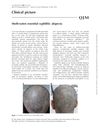
July 2014 in “QJM” A 35-year-old man had patchy hair loss that was actually due to syphilis, not alopecia areata.
 March 2023 in “Journal of the American Academy of Dermatology”
 Treating underlying conditions and using antifungals effectively resolve Pityrosporum folliculitis in immunocompromised people.
December 2025 in “Mycoses” The study developed a successful mouse model to study skin infections, highlighting the importance of choosing the right fungal strains.
1 citations
,
September 2023 in “Portuguese Journal of Dermatology and Venereology” Trichoscopy can help diagnose and decide when to biopsy folliculotropic mycosis fungoides.
28 citations
,
June 1995 in “The Journal of Dermatology” The flaky skin mouse mutation is a natural model for studying human psoriasis.
11 citations
,
January 2016 in “Mycoses” Human black hair is best for distinguishing between T. mentagrophytes and T. verrucosum.
10 citations
,
October 1981 in “Archives of Dermatology” The man's skin condition was finally identified as tinea incognito, a fungal infection.
3 citations
,
July 2024 in “Dermatology and Therapy” Hair shaft abnormalities can help distinguish mycosis fungoides from other skin conditions.
March 2021 in “LA Referencia (Red Federada de Repositorios Institucionales de Publicaciones Científicas)” A dog with a rare skin infection caused by a human fungus was successfully treated with antifungal medication.
10 citations
,
June 2023 in “Medical Mycology Case Reports” An elderly man had a scalp infection misdiagnosed as dandruff, treated successfully with antifungal medication.