72 citations
,
March 2023 in “Biomolecules” Dupilumab effectively treats various inflammatory skin diseases beyond its initial use for atopic dermatitis.
 7 citations
,
January 2011 in “Veterinary Pathology”
7 citations
,
January 2011 in “Veterinary Pathology” A horse with severe hair loss was diagnosed with alopecia areata and a yeast infection.
 1 citations
,
May 2017 in “Journal of the American Academy of Dermatology”
1 citations
,
May 2017 in “Journal of the American Academy of Dermatology” Oral tofacitinib may be an effective and tolerable treatment for some people with severe alopecia areata.
 October 2023 in “Benha Journal of Applied Sciences”
 Methotrexate and vitamin D3 are potentially more effective and safer than triamcinolone for treating localized alopecia areata.
 July 2013 in “Our Dermatology Online”
 Minoxidil 2% is more effective than tacrolimus 0.1% for hair regrowth in mild to moderate patchy hair loss, and combining both might give better results.
90 citations
,
April 2013 in “Dermatology online journal” Different treatments for Hidradenitis suppurativa range from antibiotics and hormonal therapies to surgery, depending on severity.
 4 citations
,
January 2012 in “Elsevier eBooks”
4 citations
,
January 2012 in “Elsevier eBooks” The document concludes that various skin conditions have specific treatments, ranging from antihistamines for urticaria to surgery and medication for tumors and chronic skin diseases.
 July 2026 in “Applied Sciences”
 Excimer laser therapy can help regrow hair in alopecia areata but is less effective for severe cases and has mixed results for cicatricial alopecia.
 July 2026 in “Quality in Sport”
 New treatments for alopecia areata focus on targeted drugs and regenerative therapies, but challenges remain.
June 2025 in “British Journal of Dermatology” Tofacitinib is more effective than methotrexate for treating moderate-to-severe alopecia areata.
 222 citations
,
September 2016 in “JCI insight”
222 citations
,
September 2016 in “JCI insight” Tofacitinib is safe and effective for severe alopecia areata, but hair loss may return 2 months after stopping treatment.
 54 citations
,
September 2019 in “Journal of the European Academy of Dermatology and Venereology”
54 citations
,
September 2019 in “Journal of the European Academy of Dermatology and Venereology” Tofacitinib is somewhat effective for alopecia areata, but more research is needed on its safety and long-term effects.
 48 citations
,
January 2011 in “International journal of trichology”
48 citations
,
January 2011 in “International journal of trichology” Intralesional triamcinolone acetonide is the most effective treatment for localized alopecia areata.
 37 citations
,
August 2022 in “Frontiers in pharmacology”
37 citations
,
August 2022 in “Frontiers in pharmacology” Oral JAK inhibitors are effective and safe for treating alopecia areata but may need ongoing use to keep results.
 24 citations
,
June 2016 in “Acta dermato-venereologica”
24 citations
,
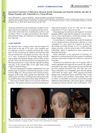
June 2016 in “Acta dermato-venereologica” Tofacitinib helped a young woman's severe hair loss and arthritis but not her plaque psoriasis.
 12 citations
,
January 2011 in “Photodermatology, photoimmunology & photomedicine”
12 citations
,
January 2011 in “Photodermatology, photoimmunology & photomedicine” This therapy effectively treats resistant alopecia areata with minimal side effects.
 4 citations
,
September 2017 in “Skin appendage disorders”
4 citations
,
September 2017 in “Skin appendage disorders” The dog with an Alopecia Areata-like condition showed signs of an autoimmune disease and partially regrew hair without treatment, suggesting dogs could be models for human AA research.
 1 citations
,
October 2023 in “Clinical, cosmetic and investigational dermatology”
1 citations
,
October 2023 in “Clinical, cosmetic and investigational dermatology” Traditional treatment for pediatric alopecia areata is most effective and should be first choice.
19 citations
,
April 2024 in “International Journal of Environmental Research and Public Health” Long COVID symptoms are linked to immune issues, poor blood flow, and lung problems.
 15 citations
,
January 2014 in “Dermatology”
15 citations
,
January 2014 in “Dermatology” Some patients treated with peginterferon and ribavirin for chronic hepatitis C had mild to moderate skin reactions, but treatment did not need to be stopped.
 November 2025 in “Mendeley Data”
 Standard dosing is more effective for severe alopecia areata in children, but unorthodox dosing can be safe and considered if needed.
 November 2025 in “Mendeley Data”
 Unorthodox dosing of tofacitinib and baricitinib is safe but less effective than standard dosing for treating alopecia areata in kids.
 March 2019 in “European archives of medical research”
 Platelet-rich plasma injections are a cheap and effective way to reduce hair loss and improve hair quality in people with mild to moderate androgenetic alopecia.
 3 citations
,
February 2023 in “International Journal of Molecular Sciences”
3 citations
,
February 2023 in “International Journal of Molecular Sciences” Autologous Platelet and Extracellular Vesicle-Rich Plasma (PVRP) has potential in enhancing tissue regeneration and improving hair conditions, but its effectiveness varies due to individual differences.
2 citations
,
September 2023 in “Cosmetics” Cannabinoids may help some skin conditions but more research is needed.
July 2025 in “Canadian Family Physician” Use topical treatments for mild acne and oral treatments for moderate to severe acne, avoiding antibiotic monotherapy.
April 2024 in “Indian Journal of Paediatric Dermatology” Children with alopecia areata in Singapore generally have a good quality of life.
December 2024 in “Value in Health” A comprehensive approach is needed to accurately assess alopecia areata severity and guide treatment decisions.
63 citations
,
March 2020 in “Clinical Cosmetic and Investigational Dermatology” Alopecia areata affects many in the US, impacting quality of life, with limited treatment options.
 41 citations
,
February 2021 in “Cureus”
41 citations
,
February 2021 in “Cureus” Dutasteride treatment in men with mild to moderate COVID-19 reduced viral shedding, inflammation, and recovery time without serious side effects.