July 2022 in “Journal of Investigative Dermatology” TRPS1 loss in balding scalp areas contributes to hair loss in androgenic alopecia.
February 2015 in “American journal of medical and biological research” Balding hair follicles have less growth-promoting factors and more inhibitory factors, leading to hair loss.
 224 citations
,
March 2006 in “Seminars in Cutaneous Medicine and Surgery”
224 citations
,
March 2006 in “Seminars in Cutaneous Medicine and Surgery” The document concludes that understanding hair follicle biology can lead to better hair loss treatments.
 58 citations
,
January 2006 in “Skin Pharmacology and Physiology”
58 citations
,
January 2006 in “Skin Pharmacology and Physiology” High levels of testosterone and 5α-DHT can lead to cell death in cells important for hair growth.
 53 citations
,
April 2014 in “Experimental Dermatology”
53 citations
,
April 2014 in “Experimental Dermatology” Wnt10b makes hair follicles bigger, but DKK1 can reverse this effect.
28 citations
,
June 2000 in “PubMed” Androgenetic alopecia is common hair loss due to genetics and DHT.
 20 citations
,
August 2005 in “Journal of Cutaneous Pathology”
20 citations
,
August 2005 in “Journal of Cutaneous Pathology” The protein ARA70/ELE1 is involved in male pattern baldness, and lower levels of its short form may lead to hair thinning.
15 citations
,
May 2002 in “PubMed” Hormones, especially DHT, affect hair loss and growth, and targeting specific enzymes may help treat hair loss.
 11 citations
,
June 2019 in “Tissue & Cell”
11 citations
,
June 2019 in “Tissue & Cell” Hair stem cells produce a protein called COL17A1 that plays a key role in their development and is linked to hair thinning and baldness.
 11 citations
,
January 2015 in “Current problems in dermatology”
11 citations
,
January 2015 in “Current problems in dermatology” The conclusion is that treatments like finasteride and minoxidil can prevent baldness progression and improve hair density, but more research is needed on other therapies.
10 citations
,
May 2021 in “Clinical, cosmetic and investigational dermatology” UV exposure causes hair thinning, graying, and changes in hair growth cycles in mice.
10 citations
,
January 2015 in “International Journal of Trichology” Mechanical stress contributes to hair loss in androgenetic alopecia.
10 citations
,
October 2000 in “PubMed” Androgenetic alopecia affects many people, impacting quality of life, and treatment focuses on reversing hair follicle miniaturization.
8 citations
,
April 2017 in “Journal of Dermatological Science” Hair loss is caused by the breakdown of a protein called COL17A1 in hair follicle stem cells.
 8 citations
,
January 1989 in “Annual Reports in Medicinal Chemistry”
8 citations
,
January 1989 in “Annual Reports in Medicinal Chemistry” Hair loss from alopecia areata and androgenetic alopecia can be treated, but more effective and safer treatments are needed.
 6 citations
,
January 2022 in “Journal of Investigative Dermatology”
6 citations
,
January 2022 in “Journal of Investigative Dermatology” Male pattern baldness is linked to higher levels of a certain receptor in the scalp, which leads to the shrinking of blood vessels and hair loss. Early treatment targeting this receptor could be more effective.
5 citations
,
January 2021 in “Frontiers in Cell and Developmental Biology” Inhibiting Zyxin may help treat androgenetic alopecia by promoting hair growth.
 5 citations
,
April 2016 in “The American Journal of Dermatopathology”
5 citations
,
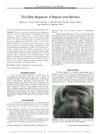
April 2016 in “The American Journal of Dermatopathology” A tick bite caused temporary hair loss in a man, which is a rare condition that usually gets better within 3 months.
 5 citations
,
August 2012 in “Journal of Dermatology”
5 citations
,
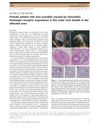
August 2012 in “Journal of Dermatology” Tamoxifen may cause female hair loss by increasing androgen receptor expression.
 1 citations
,
January 2011
1 citations
,
January 2011 The document concludes that androgenetic alopecia is common, has a genetic link, and can be diagnosed and treated with medications like finasteride and minoxidil.
 1 citations
,
January 2010 in “Springer eBooks”
1 citations
,
January 2010 in “Springer eBooks” Hair loss in androgenetic alopecia may be due to ongoing tiny inflammation and tissue changes around hair follicles.
July 2026 in “Cell Transplantation” Fibroblasts in hair follicles play a key role in hair loss, suggesting they could be a target for treatment.
 June 2026 in “HAL (Le Centre pour la Communication Scientifique Directe)”
 SH-1 effectively treats hair loss without side effects.
 June 2026 in “Zenodo (CERN European Organization for Nuclear Research)”
 SH-1 effectively treats hair loss without side effects.
June 2026 in “Advanced Healthcare Materials” A new taurine-based liquid can help treat hair loss by improving hair follicle health and promoting regrowth.
 May 2026 in “Zenodo (CERN European Organization for Nuclear Research)”
 Androgenetic alopecia is common hair loss caused by genetics and hormones, with treatments mainly slowing it down.
 May 2026 in “Zenodo (CERN European Organization for Nuclear Research)”
 Alopecia treatments are improving, but future therapies need to target underlying causes for better results.
 May 2026 in “Zenodo (CERN European Organization for Nuclear Research)”
 Alopecia treatments are improving, but future therapies need to target underlying causes for better results.
 April 2026 in “Frontiers in Immunology”
 Blocking the CXCL12–CXCR4 axis may help treat hair loss in alopecia.
 March 2026 in “Lithuanian University of Health Sciences”
 Finasteride, dutasteride, and oral minoxidil are effective for treating hair loss, with spironolactone as an option for women.