26 citations
,
October 1999 in “Archives of Dermatology” Curly hair in certain scalp areas can be an early sign of hair loss.
 17 citations
,
June 2016 in “Australasian Journal of Dermatology”
17 citations
,
June 2016 in “Australasian Journal of Dermatology” Treatment with dutasteride, minoxidil, and artificial hair transplantation improved appearance but caused folliculitis.
 12 citations
,
January 2014 in “The Pan African medical journal”
12 citations
,
January 2014 in “The Pan African medical journal” Minoxidil caused unwanted hair growth in a child, but stopped after stopping treatment.
 9 citations
,
January 1987 in “Journal of The American Academy of Dermatology”
9 citations
,
January 1987 in “Journal of The American Academy of Dermatology” A man lost a lot of scalp hair quickly after stopping minoxidil, but it grew back with mild male pattern baldness.
 2 citations
,
January 2014 in “Hair therapy & transplantation”
2 citations
,
January 2014 in “Hair therapy & transplantation” Using 5% Minoxidil solution with oral chelated zinc supplement can effectively treat female pattern hair loss.
 2 citations
,
September 2007
2 citations
,
September 2007 Surgical hair restoration involves moving hair from a non-balding area to a balding area, with the transplanted hair not subject to male pattern baldness. Medications can slow hair loss and regrow some hair, but successful treatment needs careful planning, skill, and ethical responsibility due to progressive hair loss and limited donor hair.
 1 citations
,
August 2017
1 citations
,
August 2017 Minoxidil helps stimulate hair growth and enlarge small follicles in common hair loss, but doesn't stop it, and its effects can be boosted when combined with finasteride.
January 2025 in “Global Journal of Medical Therapeutics” Minoxidil can cause allergic skin reactions, especially in those with underlying health issues.
 April 2024 in “Vestnik oftalʹmologii”
 Stopping minoxidil and using prostaglandin analogues improved the man's eye condition.
 July 1987 in “Reactions (Auckland)”
 Oral minoxidil may slow male pattern baldness and cause body hair growth, but hair loss can happen after stopping it.
Combining minoxidil with microneedling may be more effective for hair growth than using minoxidil alone.
December 2016 in “Journal of Pakistan Association of Dermatology” Systemic cyproterone acetate and 5% topical minoxidil are effective and safe for treating female pattern hair loss.
32 citations
,
June 2024 in “Pharmaceutics” Nanoformulations improve drug delivery through the skin, reducing side effects and enhancing effectiveness.
 July 2024 in “Journal of Cosmetic Dermatology”
 Fractional laser therapy is a promising, effective, and minimally invasive treatment for hair loss.
 7 citations
,
January 1990 in “Clinical and Experimental Dermatology”
7 citations
,
January 1990 in “Clinical and Experimental Dermatology” Hair loss gradually happens, and minoxidil helps regrow hair.
 14 citations
,
September 2010 in “Annals of Plastic Surgery”
14 citations
,
September 2010 in “Annals of Plastic Surgery” Hair restoration has evolved from surgery to drugs to potential gene therapy, with improved results and ongoing research driven by high demand.
 December 2022 in “Jurnal Kesehatan Jompa”
 AAG causes hair loss in many people, with limited treatments like finasteride, minoxidil, light therapy, and hair transplants.
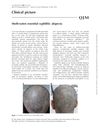 3 citations
,
July 2014 in “QJM”
3 citations
,
July 2014 in “QJM” A 35-year-old man had patchy hair loss that was actually due to syphilis, not alopecia areata.
 2 citations
,
October 2021 in “Indian Journal of Plastic Surgery”
2 citations
,
October 2021 in “Indian Journal of Plastic Surgery” The best treatments for slowing down pattern hair loss are minoxidil and finasteride, with some other drugs and hair transplantation also used.
July 2026 in “International Journal of Homoeopathic Sciences” Homeopathy improved hair growth and scalp health in a woman with alopecia areata.
 October 2023 in “Case Reports”
 A man with a new type of male pattern hair loss that affects the back of the head responded well to common hair loss treatments.
 January 2022 in “Clinical Cases in Dermatology”
 Androgenetic alopecia, a common hair loss condition, can be treated with topical minoxidil, oral finasteride, or oral spironolactone, and new treatments like platelet-rich plasma, low-level laser therapy, and janus-kinase inhibitors are being explored.
4 citations
,
January 2018 in “Annals of dermatology/Annals of Dermatology” Hair transplantation successfully treated hair loss in a patient with Trichorhinophalangeal syndrome.
 March 2026 in “Revista Ibero-Americana de Humanidades, Ciências e Educação”
 Exosome and PRP therapies show promise for treating hair loss but need more research for standardization and safety.
 May 2026 in “Zenodo (CERN European Organization for Nuclear Research)”
 Androgenetic alopecia is common hair loss caused by genetics and hormones, with treatments mainly slowing it down.
 May 2026 in “Zenodo (CERN European Organization for Nuclear Research)”
 Androgenetic alopecia is common hair loss caused by genetics and hormones, with treatments to slow it but no cure.
 September 2024 in “Ain Shams Medical Journal”
 Androgenic alopecia causes hair thinning, and treatments include minoxidil, finasteride, and light therapy.

Minoxidil and finasteride are the only FDA-approved treatments for hair loss caused by genetic and hormonal factors, but their effectiveness is often doubted, indicating a need for new treatments.
January 2022 in “Clinical Cases in Dermatology” An 11-year-old girl with severe hair loss was successfully treated with a new combination therapy.
 February 2021 in “Revue médicale de Liège”
 Platelet-rich plasma injections are a promising new treatment for hair loss, showing initial positive results.