1 citations
,
February 2020 in “The Journal of clinical investigation/The journal of clinical investigation” Certain cancer drugs interact with skin bacteria to cause acne-like rashes.
January 2025 in “International Journal of Genomics” Three genes, BMP4, POSTN, and WNT5A, may help treat keloids.
 February 2022 in “Journal of Biomedical Nanotechnology”
 Shikonin, a small molecule, speeds up burn wound healing and hair growth by activating the PI3K/Akt pathway.
 32 citations
,
October 2004 in “Pharmacotherapy”
32 citations
,
October 2004 in “Pharmacotherapy” Peginterferon alfa-2b and ribavirin therapy for hepatitis C can cause serious side effects, some different from those reported in clinical trials.
 9 citations
,
June 2013 in “Australasian Journal of Dermatology”
9 citations
,
June 2013 in “Australasian Journal of Dermatology” Infliximab improved skin and bowel symptoms in Crohn's disease but caused side effects and the disease returned after stopping treatment.
 20 citations
,
February 2017 in “International Journal of Dermatology”
20 citations
,
February 2017 in “International Journal of Dermatology” Honokiol helps protect skin from damage and aging caused by cigarette smoke.
The CD4 protein may play a role in the behavior of certain skin cells, affecting their growth, movement, and differentiation.
28 citations
,
January 2005 in “Photochemistry and Photobiology” Protein kinase C epsilon may increase skin cancer risk by affecting nearby cells.
The microenvironment affects the behavior and survival of melanocytes with the GNAQ oncogene in melanoma.
April 2019 in “Journal of Investigative Dermatology” Targeting immune pathways like JAK/STAT may help treat frontal fibrosing alopecia.
 3 citations
,
June 2025 in “Archives of Dermatological Research”
3 citations
,
June 2025 in “Archives of Dermatological Research” Biologics and JAK inhibitors may improve treatment for scarring alopecias.
January 2026 in “Burns & Trauma” NLRP3 helps control inflammation and repair in wound healing, making it a potential target for treatment.
March 2005 in “Journal of the American Academy of Dermatology” Higher levels of IL-1a and IL-1RA were found in severe alopecia areata cases.
 December 2025 in “Nature Communications”
 Skin organoids can model tuberculosis infection and help test treatments.
 68 citations
,
November 2015 in “The Journal of Allergy and Clinical Immunology”
68 citations
,
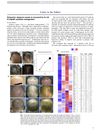
November 2015 in “The Journal of Allergy and Clinical Immunology” Blocking IL-12/IL-23p40 helped reverse severe hair loss in patients.
May 2023 in “The Journal of Immunology” Expanding CD4+ Tregs can stop hair loss in alopecia areata.
245 citations
,
October 2015 in “Nature medicine” Hair follicle-derived IL-7 and IL-15 are crucial for maintaining skin-resident memory T cells and could be targeted for treating skin diseases and lymphoma.
6 citations
,
March 2005 in “Journal of the American Academy of Dermatology” Follicular dystrophy in immunocompromised patients may be linked to medication or viral factors and can improve with treatment changes.
10 citations
,
January 2020 in “Biomedicine & Pharmacotherapy” XiaoZhenFang (XZF) can help prevent skin problems caused by certain cancer drugs.
 April 2026 in “Journal of Inflammation Research”
 Alopecia areata and atopic dermatitis share immune system issues, and treatments like JAK inhibitors can help both.
Upadacitinib and oral minoxidil improved Crohn's disease and hair regrowth in a patient.
14 citations
,
March 2014 in “Journal of the Society of Cosmetic Scientists of Korea” Some Korean herb extracts can reduce inflammation and are safe for skin use.
May 2024 in “International journal of medicine and psychology.” Monoclonal antibodies LT-1, LT-2, and LT-7 help diagnose certain blood cancers.
59 citations
,
March 2003 in “The Lancet” Imatinib can repigment grey hair, while SU11428 can cause temporary hair depigmentation.
17 citations
,
June 2022 in “Frontiers in Nutrition” Fermented mushroom extract reduces intestinal inflammation in mice.
April 2021 in “Journal of Investigative Dermatology” Arg1+ macrophages may play a role in causing alopecia areata.
 April 2017 in “Journal of Investigative Dermatology”
 SM04755 may be an effective topical treatment for psoriasis.
4 citations
,
October 2016 in “The journal of investigative dermatology/Journal of investigative dermatology” Using an anti-ICAM-1 antibody with rapamycin improves hair transplant survival in monkeys.
 December 2024 in “PubMed”
 Cyclosporine effectively treated a woman's stubborn skin condition.
 August 2011 in “Planta Medica”
 4-O-methylhonokiol from Magnolia Officinalis may promote hair growth by interfering with TGF-β1 effects in skin cells.