 6 citations
,
May 2012 in “Clinical and experimental dermatology”
6 citations
,
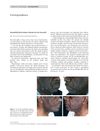
May 2012 in “Clinical and experimental dermatology” Oral minoxidil can cause inflamed, ingrown hairs in the beard area.
 36 citations
,
August 2011 in “Journal of dermatological science”
36 citations
,
August 2011 in “Journal of dermatological science” Human hair has a protective lipid layer that can be damaged by moisture and treatments, affecting hair growth and health.
 51 citations
,
January 2006 in “Wound Repair and Regeneration”
51 citations
,
January 2006 in “Wound Repair and Regeneration” MRL/MpJ mice's skin wounds heal with scars, unlike their ear wounds which can regenerate.
20 citations
,
February 2017 in “European journal of pharmaceutical sciences” The MPA-ISO cocrystal improved solubility and dissolution rate, while the others did not.
12 citations
,
April 2023 in “Molecular Pharmaceutics” A new patch can deliver stable antibodies over time for potential HIV treatment.
 September 2023 in “Mağallaẗ baġdād li-l-ʿulūm”
 Microbial communities in Duku plant roots vary between wet and dry habitats, affecting plant health.
 1 citations
,
June 2024 in “European Journal of Dentistry”
1 citations
,
June 2024 in “European Journal of Dentistry” Human placental extract may be better for tooth repair than current materials.
28 citations
,
November 2018 in “Journal of cellular physiology” miR-124 helps mouse hair follicle stem cells become nerve cells by blocking Ptbp1 and Sox9.
 1 citations
,
June 2011 in “Journal of Genetics”
1 citations
,
June 2011 in “Journal of Genetics” Some human genetic markers work for genetic studies in pig-tailed and stump-tailed macaques, which can help in their conservation.
23 citations
,
October 2021 in “FEBS Journal” Sonic Hedgehog helps keep skin and airway barriers healthy and reduces inflammation.
 5 citations
,
March 2017 in “International journal of GEOMATE : geotechnique, construction materials and environment”
5 citations
,
March 2017 in “International journal of GEOMATE : geotechnique, construction materials and environment” Adding pig-hair fibers and green mussel shells to concrete can make it stronger.
53 citations
,
October 2003 in “Developmental Biology” Too much Sonic Hedgehog protein stops hair growth in embryos.
 1 citations
,
September 2017 in “Journal of Investigative Dermatology”
1 citations
,
September 2017 in “Journal of Investigative Dermatology” Hair care products reduced hair roughness, a combination of Stemoxydine and Resveratrol increased hair density, fermented mackerel oil promoted hair growth, and genes TERT and Bmi-1 helped create new hair follicles.
 November 2019 in “Nosotchu”
 Man had stroke possibly linked to hair loss medications finasteride and minoxidil.
20 citations
,
February 2010 in “Journal of Investigative Dermatology” Slug (Snai2) helps regulate hair growth timing in mice.
 19 citations
,
November 1993 in “Mammalian Genome”
19 citations
,
November 1993 in “Mammalian Genome” A gene mutation in mice causes permanent hair loss and skin issues.
Hedgehog signaling can create new hair follicles but may also cause tumors.
 12 citations
,
June 2017 in “Cell Cycle”
12 citations
,
June 2017 in “Cell Cycle” Minoxidil foam helps hair growth by increasing good proteins and decreasing bad pathways in men with hair loss.
45 citations
,
March 2001 in “Journal of Investigative Dermatology” A new protein, mK6irs, is found in specific hair layers and may help understand hair growth and diseases.
 62 citations
,
April 2008 in “Neurobiology of aging”
62 citations
,
April 2008 in “Neurobiology of aging” Scientists found a gene in mice that causes early hearing loss.
 April 2016 in “The journal of investigative dermatology/Journal of investigative dermatology”
 MPZL3 is crucial for seborrheic dermatitis development.
 May 2026 in “Journal of the Egyptian Womenʼs Dermatologic Society”
 Microneedling radiofrequency improves skin texture and tone by stimulating collagen and elastin.
9 citations
,
March 1993 in “Biochemical Pharmacology” Rat skin can convert minoxidil into its active form, aiding hair growth.
2 citations
,
January 1990  January 2023 in “Al-Azhar International Medical Journal /Al-Azhar International Medical Journal”
 Acne patients have higher mTOR gene expression.
 August 2022 in “Yakugaku zasshi”
 Using a steam towel, l-menthol, and carpronium before applying minoxidil nanoparticles can increase its absorption and potentially improve hair growth.
 2 citations
,
January 2013 in “Türkiye klinikleri tıp bilimleri dergisi”
2 citations
,
January 2013 in “Türkiye klinikleri tıp bilimleri dergisi” The study suggests using a score of 11 on the mFG scale to diagnose hirsutism in Turkish women, with adjustments for age, skin type, and family history.
1 citations
,
January 2014 in “Indian journal of dermatology, venereology, and leprology” Papular mucinosis can cause eyebrow hair loss, but treatment can lead to regrowth.
 January 2025 in “International Journal of Veterinary Science”
 Hibiscus leaf ointment helps hair growth and reduces UV skin damage in rats.
 April 2026 in “Journal of Aesthetic Medicine”
 The MIRA technique improves cellulite treatment and skin quality better than standard methods.