49 citations
,
December 2022 in “Pharmacological Reviews” Targeting androgen receptors shows promise for treating triple-negative breast cancer, but more research is needed.
February 2012 in “Hospital Pharmacy” February 2023 in “Archives of Dermatological Research” A multi-tiered treatment approach is crucial for managing hidradenitis suppurativa in patients with intellectual and developmental disabilities.
44 citations
,
May 2023 in “MedComm” PROTAC technology shows promise for cancer treatment but needs more effective E3 ligase recruiters.
 9 citations
,
November 2018 in “Acta Clinica Belgica”
9 citations
,
November 2018 in “Acta Clinica Belgica” Don't combine abiraterone and spironolactone for prostate cancer treatment as it may worsen the disease.
2 citations
,
April 2020 in “Journal of Mind and Medical Sciences” Psychotropic drugs can interact with natural products, affecting their effectiveness and safety.

Camel hair textiles treated with Rose Bengal effectively kill bacteria under light.
February 2016 in “Journal of Allergy and Clinical Immunology” Consider DRIF and perform skin biopsies for persistent papular rashes.

Enterococcus faecalis delays wound healing by disrupting cell functions and creating an anti-inflammatory environment.
 April 2023 in “The journal of investigative dermatology/Journal of investigative dermatology”
 Folliculotropic mycosis fungoides has unique molecular features and cell interactions that could guide targeted therapy.
 35 citations
,
May 2008 in “Journal of Clinical Oncology”
35 citations
,
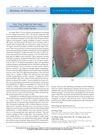
May 2008 in “Journal of Clinical Oncology” A cancer patient died from a severe skin reaction after taking the drug cetuximab.
 January 2025 in “JCEM Case Reports”
 Diagnosing and managing Glucocorticoid Resistance Syndrome is complex due to genetic differences and varied symptoms.
 10 citations
,
September 1997 in “Molecular carcinogenesis”
10 citations
,
September 1997 in “Molecular carcinogenesis” Mirex seems to promote a unique group of skin cells different from those affected by another tumor promoter, TPA.
 April 2026 in “International Journal of Drug Delivery Technology”
 Nanoparticle-based dressings and theranostic innovations improve chronic wound care by effectively targeting biofilms and offering precise treatment.

Camel hair textiles treated with Rose Bengal effectively kill bacteria under light.
1 citations
,
October 2011 in “Hospital Pharmacy” 99 citations
,
June 2011 in “Journal of biomedical materials research. Part A” Keratin hydrogels can slowly release effective ciprofloxacin to prevent infections.
January 2026 in “Biocell” Gut microbiota-derived exosomes could be effective natural carriers for targeted drug delivery in personalized medicine.

Finasteride and testosterone are the drugs most linked to male infertility, but many other potential drugs may be under-reported.
January 1975 in “NJEA Review” The drug showed promise in treating renal cell carcinoma with manageable side effects.
July 2026 in “Frontiers in Bioengineering and Biotechnology” Microbioreactors improve cell-based therapies and personalized medicine but face scalability challenges.
 51 citations
,
August 2021 in “Turkish Journal of Medical Sciences”
51 citations
,
August 2021 in “Turkish Journal of Medical Sciences” As of December 2021, the most effective COVID-19 treatments were monoclonal antibodies and possibly early-administered convalescent plasma, while several drugs were found ineffective or were still under evaluation.
The study identified a key protein involved in producing underarm odor and found ways to inhibit it.
5 citations
,
April 2016 in “PubMed” Cetuximab often causes skin problems, but they can be managed without stopping treatment.
1 citations
,
October 2025 in “Journal of Clinical Investigation” Staphylococcus aureus delays wound healing by disrupting lipid metabolism in skin cells.
 May 2020 in “International Journal of Engineering Applied Sciences and Technology”
 Bioactive plant materials like lemon, garlic, and neem effectively fight harmful bacteria.
February 2024 in “Frontiers in Cell and Developmental Biology” Eribulin-based chemotherapy is more effective and has fewer side effects for advanced triple-negative breast cancer.
August 2004 in “Veterinary Dermatology” A Brittany spaniel's skin issues from cephalexin improved with treatment, showing drug-induced pemphigus foliaceus.
 August 2023 in “The journal of investigative dermatology/Journal of investigative dermatology”
 Longer immunotherapy treatment may improve outcomes for Merkel cell carcinoma patients.
The 1298CC genotype in RA patients leads to higher methotrexate toxicity, while the 1298AA genotype results in better treatment response.