 34 citations
,
December 2012 in “Indian Journal of Dermatology, Venereology and Leprology”
34 citations
,
December 2012 in “Indian Journal of Dermatology, Venereology and Leprology” Mesotherapy shows promise for cellulite and facial rejuvenation but has mixed results for body sculpting and hair loss, with more research needed for safety and effectiveness.
8 citations
,
September 2011 in “Scanning” Multiphoton microscopy effectively images mouse skin layers and structures.
1 citations
,
May 2024 in “Journal of Dermatological Science” Injecting specific cells into the skin can help improve skin structure and reduce blisters in a genetic skin disorder.
January 2000 in “The Mouseion at the JAXlibrary (Jackson Laboratory)” The lanceolate hair-J mutation in mice helps understand human hair disorders like Netherton's syndrome.
 40 citations
,
November 2021 in “npj Regenerative Medicine”
40 citations
,
November 2021 in “npj Regenerative Medicine” Adult spiny mice recover better from heart attacks than common lab mice.
 November 2022 in “Journal of Investigative Dermatology”
 Neutrophils quickly respond to skin injury.
Hair transplantation can restore underarm hair after surgery, despite challenges.
Men with early-onset hair loss are less responsive to bromocriptine's heart and metabolism benefits.
Pangolin scales evolved for protection, hardening with age, due to keratin gene diversification.
June 2011 in “Portuguese National Funding Agency for Science, Research and Technology (RCAAP Project by FCT)” Estrogens and androgens are crucial for male fertility.
 September 2022 in “bioRxiv (Cold Spring Harbor Laboratory)”
 A new staining method shows a special area in the hair's skin layer with lots of proteoglycans.
 142 citations
,
September 2020 in “Journal of neurophysiology”
142 citations
,
September 2020 in “Journal of neurophysiology” Young adults have about 230,000 tactile nerve fibers, decreasing 5-8% per decade with age.
New bio-ink can print complex tissues and organs.
7 citations
,
February 2024 in “The Journal of Physiology” Reduced plakoglobin and steroid abuse increase the risk of heart rhythm issues.
16 citations
,
June 1992 in “PubMed” Steroid pulse therapy improved symptoms in a man with Satoyoshi syndrome.
 10 citations
,
May 2012 in “Journal of Craniofacial Surgery”
10 citations
,
May 2012 in “Journal of Craniofacial Surgery” Cerament effectively corrected forehead irregularities in one patient, and various surgical techniques successfully reconstructed perioral soft tissue in 14 patients.
67 citations
,
September 2017 in “Cell Reports” Caloric restriction improves skin and fur structure but can cause muscle loss and movement issues.
 2 citations
,
January 1960 in “Australian Journal of Biological Sciences”
2 citations
,
January 1960 in “Australian Journal of Biological Sciences” The Naked gene in mice causes abnormal sebaceous glands and disrupts hair follicle organization.
20 citations
,
April 2002 in “PubMed” Mini rats have thinner skin, more fat, and different hair cycles than Wistar rats due to lower growth hormone levels.
4 citations
,
July 2025 in “Annals of the New York Academy of Sciences” Combining skeletal and molecular anthropology improves identifying human remains.
53 citations
,
August 2015 in “The Italian Journal of Pediatrics/Italian journal of pediatrics” Excessive body hair can signal complex health issues.
2 citations
,
July 2025 in “Journal of Ovarian Research” Going to bed late may increase hormones and decrease muscle in women with PCOS.
1 citations
,
January 2006 in “Clínicas obstétricas y ginecológicas de Norteamérica” Analyzing hair proteins can help identify new markers for hair health and aging.
A runner developed tangled armpit hairs from shirt friction, preventable by shaving or wearing smooth shirts.
110 citations
,
January 1984 in “Progress in brain research” Gonadal hormones may influence sex differences in play fighting in animals, but their effect on human spatial behavior is unclear and needs more research.
 November 1993 in “PubMed”
 High levels of androgens can cause skin issues like acne, hair loss, and excessive hair growth.
 April 2023 in “Journal of Investigative Dermatology”
 MPZL3 protein helps control the size of oil glands and the growth of oil-producing cells in both mice and humans.
 January 2022 in “Autopsy and Case Reports”
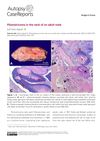
 A man had a non-cancerous neck tumor related to hair follicles removed with no return of the tumor.
 20 citations
,
September 2005 in “Endocrinology”
20 citations
,
September 2005 in “Endocrinology” Certain changes to the B-ring of androgen receptor ligands can increase their effectiveness for potential treatments of muscle and bone conditions.
142 citations
,
September 2015 in “PubMed” Keloid scars are aggressive, excessive skin scars with unique features and complex diagnosis.