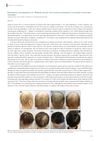
April 2019 in “The journal of investigative dermatology/Journal of investigative dermatology” Blocking JAK1 or JAK3 helps reverse hair loss in a mouse model of alopecia areata.
 8 citations
,
May 2017 in “Singapore Medical Journal”
8 citations
,
May 2017 in “Singapore Medical Journal” A Korean woman with complete hair loss regrew her hair after taking tofacitinib, with no side effects.
 2 citations
,
August 2025 in “Scientific Reports”
2 citations
,
August 2025 in “Scientific Reports” Pexidartinib often causes liver issues and fatigue, especially in women.
March 2026 in “Journal of Clinical Oncology” Using 5-α-reductase inhibitors before treatment improves outcomes for patients with metastatic renal cell carcinoma.
September 2019 in “The journal of investigative dermatology/Journal of investigative dermatology” A new mutation in the STING protein causes a disease with lupus-like symptoms and responds well to a specific inhibitor treatment.
 16 citations
,
January 2017 in “Archives of Medical Science”
16 citations
,
January 2017 in “Archives of Medical Science” Sorafenib after liver surgery may increase survival for some liver cancer patients.
March 2017 in “Current dermatology reports” Topical JAK inhibitors can effectively treat alopecia areata and vitiligo by modulating immune responses.
July 2025 in “Journal of Investigative Dermatology” Complex basal cell carcinomas need personalized treatment due to unique genetic mutations.
Finasteride and dutasteride might lower melanoma risk.
 January 2024 in “American journal of clinical dermatology”
 Ritlecitinib is safe and well-tolerated for treating alopecia areata in patients aged 12 and older.
 July 2025 in “The Journal of Dermatology”
 Ritlecitinib has common side effects like headache and acne, and unexpected ones like diabetes and thyroid issues.
 5 citations
,
June 2019 in “British Journal of Dermatology”
5 citations
,
June 2019 in “British Journal of Dermatology” Tofacitinib was more effective than apremilast in treating hair loss in a mouse model of alopecia areata.
57 citations
,
August 2006 in “Journal of the American Academy of Dermatology” Gefitinib can cause hair loss without scarring.
 28 citations
,
December 2017 in “Journal of Investigative Dermatology Symposium Proceedings”
28 citations
,
December 2017 in “Journal of Investigative Dermatology Symposium Proceedings” Tofacitinib shows promise for treating severe hair loss in adults and teens, with many experiencing regrowth, but hair loss returns when treatment stops.
 September 2022 in “Journal of The American Academy of Dermatology”
 Baricitinib was effective in regrowing eyebrow and eyelash hair in patients with severe alopecia areata.
January 2022 in “SSRN Electronic Journal” Gemcitabine and Disitamab Vedotin effectively and safely reduced bladder cancer in a patient.
 58 citations
,
February 2016 in “Scientific reports”
58 citations
,
February 2016 in “Scientific reports” Blocking BACE1 and BACE2 enzymes causes hair color loss in mice.
15 citations
,
March 2024 in “Journal of Clinical Medicine” Selumetinib causes skin and hair side effects in kids with NF1, affecting treatment and quality of life.
 August 2025 in “Ophthalmic Plastic and Reconstructive Surgery”
 Selumetinib significantly reduced tumor size and improved vision in a child with neurofibromatosis type 1.
 March 2026 in “Journal of Personalized Medicine”
 Genetic differences affect breast cancer treatment success with tamoxifen in South African patients.
![Discovery of 7-Methoxy-6-[4-(4-Methyl-1,3-Thiazol-2-yl)-1H-Imidazol-5-yl]-1,3-Benzothiazole (TASP0382088): A Potent and Selective Transforming Growth Factor-β Type I Receptor Inhibitor as a Topical Drug for Alopecia](/images/assets/9620bd26-3366-4f2a-bcac-f511697bbc41/small/35997.jpg) 6 citations
,
January 2013 in “Chemical & pharmaceutical bulletin/Chemical and pharmaceutical bulletin”
6 citations
,
January 2013 in “Chemical & pharmaceutical bulletin/Chemical and pharmaceutical bulletin” A new compound shows promise as a topical treatment for hair loss.
 1 citations
,
September 2022 in “International Journal of Trichology”
1 citations
,
September 2022 in “International Journal of Trichology” Tofacitinib can be effective in treating hair loss caused by alopecia areata.
May 1961 in “Tumori Journal” Vitamin A treatment reduced abnormal cell growth and improved skin conditions in rats with tumors.
39 citations
,
October 2012 in “Familial cancer” New therapies for Birt–Hogg–Dubé syndrome are being developed based on understanding the FLCN gene's role.
 10 citations
,
May 2007 in “Oncology Reports”
10 citations
,
May 2007 in “Oncology Reports” Colorectal cancer's ability to spread is due to changes in many genes, not just one.
4 citations
,
March 2008 in “Journal of the American Academy of Dermatology”  32 citations
,
September 2015 in “Dermatology”
32 citations
,
September 2015 in “Dermatology” Certain leukemia drugs can cause severe skin reactions that may require stopping treatment.
 August 2013 in “Nature Reviews Drug Discovery”
 New treatments may restore cancer-blocking proteins, slow prostate cancer, identify drug targets, and potentially regrow hair.
May 2024 in “Indian Journal of Pharmacology” Tofacitinib effectively regrew scalp hair in an 11-year-old girl with alopecia areata.
15 citations
,
December 2019 in “European Journal of Dermatology” Low-dose tofacitinib is effective and cheaper for severe alopecia areata.