
Baricitinib is more effective than methotrexate for severe alopecia areata.
 March 2025 in “Mediterranean Journal of Rheumatology”
 Laser hair removal is safe for people with Systemic Lupus Erythematosus.
 January 2025 in “Advances in Dermatology and Allergology”
 Eating foods with sulfhydryl may worsen pemphigus vulgaris.
 January 2025 in “Advances in Dermatology and Allergology”
 Hair disorders in organ transplant patients are often underestimated and need more attention and research.
 September 2024 in “Cureus”
 Guselkumab effectively treats skin reactions caused by adalimumab in certain conditions.
 September 2024 in “Portuguese Journal of Dermatology and Venereology”
 CCCA and LPP may be related hair loss conditions influenced by genetics and environment, needing early treatment.
 September 2024 in “Cureus”
 Early detection and targeted management are crucial for better outcomes in systemic lupus erythematosus.
 May 2024 in “International Seven Journal of Multidisciplinary”
 More research is needed to better understand and treat Fibrosing Frontal Alopecia.
 March 2024 in “Intisari Sains Medis”
 Low free thyroxine (FT4) is common in young lupus patients and needs quick diagnosis and treatment.
 March 2024 in “Cirugía y Cirujanos (English Edition)”
 Kidney transplant patients often have skin issues, mainly infections.
 February 2024 in “International journal of medical science and clinical research studies”
 CCCA is a scarring hair disorder mainly affecting people of African descent, needing better awareness and treatment.
 February 2024 in “Journal of dermatology research reviews & reports”
 A 50-year-old woman with breast cancer developed an autoimmune skin disorder, highlighting the need for thorough checks and team-based treatment.
 February 2024 in “PloS one”
 Tofacitinib and adalimumab are promising treatments for cicatricial alopecia with few side effects.
 January 2024 in “Archives of dermatological research”
 Both treatments for alopecia areata showed similar modest effectiveness.
 January 2024 in “Ankara City Hospital Medical Journal”
 Rhupus is a complex syndrome that is hard to diagnose due to unclear clinical criteria.
January 2024 in “Ankara City Hospital Medical Journal” Rhupus is a complex syndrome that combines rheumatoid arthritis and lupus, making diagnosis challenging.
 December 2023 in “Tuberkuloz ve Toraks/Tüberküloz ve toraks”
 Many COVID-19 patients have long-term symptoms, especially women, but certain medications may help reduce these symptoms.
 December 2023 in “Curēus”
 A woman with lupus had rare severe symptoms but improved with treatment.
 December 2023 in “Intisari Sains Medis”
 SLE and DM can coexist but are rare and need careful evaluation.
 December 2023 in “Revista de la Facultad de Ciencias Médicas (Quito)”
 Fever and rash can be early signs of lupus.
 November 2023 in “The actual problems in dentistry”
 New, safer, and personalized treatments are needed for oral lichen planus.
 November 2023 in “European medical journal. Dermatology”
 Early diagnosis and new treatments are crucial to prevent permanent hair loss in scarring alopecia.

Recognizing unusual brain and skin symptoms is crucial for diagnosing lupus early.
 August 2023 in “Journal of Knowledge Learning and Science Technology ISSN 2959-6386 (online)”
 New technologies help better understand and treat inflammatory skin diseases.

COVID-19 can cause skin problems and affect dermatology treatments, with recommendations for skin care and cautious use of certain drugs.

Older men with late-onset lupus have a higher mortality rate than women.

A woman in Sri Lanka was diagnosed with lupus after presenting with protein loss from the gut and other symptoms.
 March 2023 in “Journal of Pakistan Society of Internal Medicine.”
 Lupus enteritis is a rare but serious gut inflammation in lupus patients, often hard to diagnose without prior lupus symptoms.
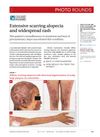 March 2022 in “The Journal of Family Practice”
 Following treatment plans is crucial to prevent worsening skin and hair conditions.
 January 2022 in “Juniper Online Journal of Case Studies”
 A patient regrew hair after a lung transplant using standard post-transplant medication.