1 citations
,
July 2024 in “New Phytologist” ZmSPL10, ZmSPL14, and ZmSPL26 genes are essential for forming maize structures needed for pollen capture and kernel production.
18 citations
,
November 2005 in “European Journal of Cell Biology” Keratin gene clusters in humans and marsupials are similarly organized.
 September 2021 in “International Journal of Biomedicine”
 Certain gene variations are linked to a higher risk of severe acne, suggesting a genetic influence on the condition.
 January 2021 in “Research Square (Research Square)”
 Chinese fine-wool sheep have genetic variations linked to traits like milk and health, with some genes under strong selection.
 2 citations
,
August 2008 in “Journal of Liaquat University of Medical & Health Sciences”
2 citations
,
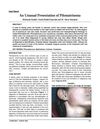
August 2008 in “Journal of Liaquat University of Medical & Health Sciences” A painless cheek lump was misdiagnosed but found to be a rare, benign skin lesion called pilomatrixoma, treatable by surgery.
5 citations
,
September 2023 in “Journal of Cosmetic Dermatology” c-Maf positive macrophages help form hypertrophic scars by affecting fibroblasts and collagen production.
 11 citations
,
December 2014 in “The American journal of pathology”
11 citations
,
December 2014 in “The American journal of pathology” A gene deletion in mice causes weak protein, immune issues, hair loss, airway problems, and wasting disease.
 49 citations
,
June 2019 in “eLife”
49 citations
,
June 2019 in “eLife” Ancient DNA blocks are still present in human genomes, possibly due to advantages they provide.
 52 citations
,
October 2012 in “Journal of Dermatological Science”
52 citations
,
October 2012 in “Journal of Dermatological Science” The document concludes that mouse models are crucial for studying hair biology and that all mutant mice may have hair growth abnormalities that require detailed analysis to identify.

Key genes and pathways influence cashmere production in goats.
12 citations
,
December 2016 in “Medical Hypotheses” A vaccine may prevent benign prostatic hyperplasia (BPH).
 10 citations
,
January 2016 in “Dermatology”
10 citations
,
January 2016 in “Dermatology” People with myotonic dystrophy type 1 tend to develop basal cell carcinoma at a younger age but not more frequently than others.
 86 citations
,
December 2001 in “Experimental dermatology”
86 citations
,
December 2001 in “Experimental dermatology” Mutant mice help researchers understand hair growth and related genetic factors.
6 citations
,
December 2022 in “Journal of Infection” The ACE1 gene variant doesn't affect long-COVID symptoms.
April 2019 in “Journal of Investigative Dermatology” Researchers created a new mouse model for studying scleroderma.
7 citations
,
May 1993 in “Journal of the European Academy of Dermatology and Venereology” Cell adhesion molecules are important in the development of certain skin diseases.
 4 citations
,
July 2021 in “bioRxiv (Cold Spring Harbor Laboratory)”
4 citations
,
July 2021 in “bioRxiv (Cold Spring Harbor Laboratory)” BLMP-1 is important for regular molting and gene expression cycles in worms.
 May 2015 in “Journal of The American Academy of Dermatology”
 Mycophenolate mofetil may improve symptoms and stop hair loss in Lichen planopilaris, but more research is needed.
22 citations
,
September 2003 in “Journal of Investigative Dermatology” New mutations in the EBP gene cause CDPX2, affecting bones, skin, eyes, and hair, with females generally less affected than males.
 April 2019 in “Journal of Investigative Dermatology”
 The PROCLIPI study found markers that help predict outcomes in skin lymphoma patients.
4 citations
,
October 2021 in “Journal of Clinical Medicine” Carriers of a specific gene mutation have subtle skin changes without visible symptoms.
 7 citations
,
December 2021 in “Curēus”
7 citations
,
December 2021 in “Curēus” Breast cancer skin metastases are rare, look different, and can be confused with other skin issues, so a biopsy is needed for accurate diagnosis.
July 2024 in “Journal of Investigative Dermatology” 5 citations
,
May 2021 in “Small ruminant research” The study found specific proteins that could mark different growth stages of cashmere goat hair and may help improve cashmere production.
6 citations
,
August 2024 in “Biomacromolecules” The model helps test drugs for clubfoot fibrosis by mimicking cell environments and shows minoxidil reduces harmful collagen links.
 7 citations
,
October 2013 in “Methods in molecular biology”
7 citations
,
October 2013 in “Methods in molecular biology” These methods help understand DNA changes in mouse skin.
 17 citations
,
January 2014 in “Annals of Dermatology”
17 citations
,
January 2014 in “Annals of Dermatology” Malassezia folliculitis mainly affects the trunk in males and is better detected with d-PAS staining.
15 citations
,
April 2024 in “Animals” Inner Mongolia cashmere goats have the lowest inbreeding, aiding future breeding and conservation.
January 2022 in “Figshare” lncRNA MTC helps goat skin cells grow and may aid hair growth by controlling proteins linked to cell growth.

Single-cell omics can improve sheep and goat breeding by enhancing traits like wool quality and fertility.