 1 citations
,
February 1977 in “Archives of Dermatology”
1 citations
,
February 1977 in “Archives of Dermatology” Fresh plasma transfusions did not help treat Leiner disease in an infant.
April 2026 in “Health care of Tajikistan” Combined therapy reduces inflammation and restores immune balance in alopecia areata patients.
 July 2026 in “Dermatology Practical & Conceptual”
 Methotrexate via microneedling is more effective than triamcinolone for treating stubborn alopecia areata.
 July 2022 in “Media Dermato Venereologica Indonesiana”
 The combination of PRP and triamcinolone injections improved hair growth in a man with alopecia areata.
August 2021 in “Journal of advances in medicine and medical research” Excimer light therapy is more effective than low level laser therapy for treating alopecia areata.
2 citations
,
October 1990 in “PubMed” Severe alopecia areata involves higher levels of certain immune cells, which can be normalized with betamethasone.
 19 citations
,
June 2018 in “Breast Cancer Research and Treatment”
19 citations
,
June 2018 in “Breast Cancer Research and Treatment” Scalp cooling effectively prevents severe hair loss in breast cancer patients treated with docetaxel and is safe.
1 citations
,
December 2018 in “IOP conference series. Materials science and engineering” CD34+ hair follicle stem cells can become melanin-producing cells for treating skin conditions.
 2 citations
,
October 2022 in “British journal of haematology”
2 citations
,
October 2022 in “British journal of haematology” A girl with Evans' syndrome had her low platelet count successfully treated with zanubrutinib.
53 citations
,
August 2014 in “Cochrane library” Methotrexate is not proven effective for inducing remission in ulcerative colitis.
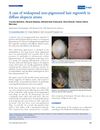 March 2019 in “Our Dermatology Online”
 A woman with severe hair loss regrew mostly white hair after treatment.
1 citations
,
November 2016 in “Saengmyeong gwahag hoeji/Saengmyeong gwahak hoeji” New treatments for the autoimmune hair loss condition alopecia areata may include JAK inhibitors and other immunomodulators.
 April 2023 in “The journal of investigative dermatology/Journal of investigative dermatology”
 Phototherapy helps some patients with alopecia areata regrow hair, especially those with hair at treatment start and less severe forms of the condition.
5 citations
,
December 2016 in “Microscopy Research and Technique” EPI-NCSCs from hair follicles may help treat brain development issues in mice.
 July 2026 in “International Journal of Molecular Sciences”
 Vitiligo treatment is improving with new drugs and therapies, focusing on personalized and combined approaches.
 11 citations
,
October 2018 in “Pediatric dermatology”
11 citations
,
October 2018 in “Pediatric dermatology” Leflunomide and anthralin may effectively treat severe alopecia areata.
April 2024 in “Al-Azhar International Medical Journal /Al-Azhar International Medical Journal” Combining either fractional CO2 laser or microneedling with 5-FU is more effective for treating vitiligo.
 January 2024 in “Wiadomości Lekarskie”
 AI and new therapies show promise in medicine, especially for cancer and regenerative treatments.
Some alternative treatments for vitiligo show promise but need more research to confirm their safety and effectiveness.
 December 2025 in “Indian Journal of Case Reports”
 Stopping azathioprine improved hair loss and bone marrow issues.
 May 2026 in “Medical Sciences”
 Vesicle-based therapies from stem cells and plants improve burn healing and could be safe, scalable alternatives to cell transplants.
 May 2024 in “Deleted Journal”
 Cancer treatments can cause hair loss, but it is often reversible and can be managed with scalp cooling and support.
 4 citations
,
January 2024 in “JEADV. Journal of the European Academy of Dermatology and Venereology/Journal of the European Academy of Dermatology and Venereology”
4 citations
,
January 2024 in “JEADV. Journal of the European Academy of Dermatology and Venereology/Journal of the European Academy of Dermatology and Venereology” Baricitinib and ritlecitinib are recommended for severe alopecia areata, with other treatments available off-label.
January 2016 in “Indian Journal of Paediatric Dermatology” The treatment is effective and safe for severe alopecia areata in children, but not for total or universal hair loss.
 9 citations
,
September 2019 in “Clinical, Cosmetic and Investigational Dermatology”
9 citations
,
September 2019 in “Clinical, Cosmetic and Investigational Dermatology” Using a patient's own fat tissue helped treat hair loss caused by an injury.
 October 2023 in “Benha Journal of Applied Sciences”
 Methotrexate and vitamin D3 are potentially more effective and safer than triamcinolone for treating localized alopecia areata.
March 2025 in “Journal of Dermatology Research Reviews & Reports” Methotrexate and dexamethasone effectively treated severe alopecia areata.
 January 2012 in “The Year book of dermatology”
 Many treatments for alopecia areata have inconsistent results; for under 10s, use minoxidil with a corticosteroid, and for over 10s, add ILC and consider diphenylcyclopropenone for widespread cases.
 7 citations
,
January 2013 in “The journal of investigative dermatology/Journal of investigative dermatology”
7 citations
,
January 2013 in “The journal of investigative dermatology/Journal of investigative dermatology” T-cell reconstitution after thymus transplantation can cause hair whitening and loss.
1 citations
,
January 2021 PRP is effective for treating patchy alopecia areata.