September 2018 in “Digital Access to Scholarship at Harvard (DASH) (Harvard University)” FN nanofiber dressings improve wound healing and restore natural skin structure.

Fibronectin nanogel microneedles improve skin health and wound healing.
 5 citations
,
December 2011 in “Canadian Journal of Plastic Surgery”
5 citations
,
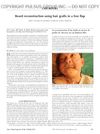
December 2011 in “Canadian Journal of Plastic Surgery” Hair grafts can successfully reconstruct a beard on reconstructed jaw skin, improving appearance and patient satisfaction.
 2 citations
,
September 2019 in “Dermatologic Surgery”
2 citations
,
September 2019 in “Dermatologic Surgery” The two-step procedure of fat grafting followed by hair grafting improves scalp and facial scar correction.
 January 2011 in “Plastic Surgery”
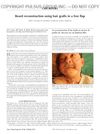
 Hair grafts successfully restored a realistic beard and hid scars, satisfying the patient.
15 citations
,
March 2021 in “Journal of Nanobiotechnology” A new method was developed to grow and maintain human hair follicle stem cells for hair reconstruction.
4 citations
,
July 2023 in “Experimental Dermatology” Fat grafting reduces scar fibrosis but may slow skin healing.
 57 citations
,
July 2018 in “Scientific Reports”
57 citations
,
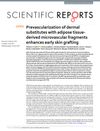
July 2018 in “Scientific Reports” Using adipose tissue-derived fragments improves early skin graft success.
July 2026 in “Plastic and Aesthetic Research” Fat transplantation is becoming important in medicine for repairing tissues and delivering drugs.
 6 citations
,
July 2015 in “Dermatology practical & conceptual”
6 citations
,
July 2015 in “Dermatology practical & conceptual” Feily's method prevents scalp necrosis in dense hair transplants by allowing time for blood flow to return before grafting.
June 2026 in “Frontiers in Cell and Developmental Biology” Expanded ADSCs improve fat graft survival better than SVF.
 68 citations
,
March 2018 in “Biomaterials”
68 citations
,
March 2018 in “Biomaterials” Large-scale fibronectin nanofibers help heal wounds and repair tissue in a skin model of a mouse.
16 citations
,
August 2014 in “PubMed” August 2001 in “Dermatologic Surgery” Elliptografting gives better hair appearance and satisfaction than other methods.
January 2025 in “SSRN Electronic Journal” 2 citations
,
June 2025 in “ACS Biomaterials Science & Engineering” Encapsulating cell-free fat extract in GelMA hydrogel improves skin flap survival in mice.
 March 2025 in “Wound Repair and Regeneration”
 The hydrogel scaffold improved skin flap healing and reduced inflammation.
3 citations
,
March 2023 in “Cell Biology International” Stem cell-enriched fat grafts improve facial hyperpigmentation better than conventional grafts.
50 citations
,
December 2007 in “Journal of Biomedical Materials Research Part B Applied Biomaterials” Keratin-gelatin films improve skin graft success in dogs.
 67 citations
,
September 2003 in “Plastic and Reconstructive Surgery”
67 citations
,
September 2003 in “Plastic and Reconstructive Surgery” Micrografts and minigrafts are safe and effective for hair transplantation in facial and scalp reconstruction, providing high patient satisfaction.
March 2026 in “Materials Today Bio” The new cryo-MAP technique enables rapid and successful hair growth by transplanting hair follicle organoids.
 July 2022 in “Plastic surgery and modern techniques”
 Using stem cell-enriched fat injections before hair transplant surgery can result in less hair loss and thicker hair.
 24 citations
,
July 2018 in “Drug Design Development and Therapy”
24 citations
,
July 2018 in “Drug Design Development and Therapy” NTF gel improves finasteride delivery for hair loss treatment, reducing side effects.
 8 citations
,
February 2020 in “Aesthetic Surgery Journal”
8 citations
,
February 2020 in “Aesthetic Surgery Journal” Adding cells to fat grafts improves hair regrowth in early baldness, but effects lessen over time.
 January 2022 in “Surgical & Cosmetic Dermatology”
 Fat grafting before FUE hair transplantation effectively treats scalp scars.
2 citations
,
January 2025 in “Journal of Nanobiotechnology” A new engineered treatment shows promise in curing heart fibrosis.
1 citations
,
October 1996 in “Dermatologic clinics” Adiponectin reduces inflammation and bone loss in joint replacements.
 August 1998 in “Dermatologic Surgery”
 Dr. George A. Farber recommends using follicular unit transplantation for hair restoration because it gives a more natural look and has fewer problems compared to the older miniflap technique.
A new microneedle patch effectively treats hair loss by delivering growth factors to the skin.