6 citations
,
March 2022 in “IET Image Processing” Targeting the narrowest part of the anterior chamber angle may help prevent pupil block in glaucoma.
September 2024 in “Revista Brasileira de Cirurgia Plástica” The modified forehead lift technique is effective and safe for alopecia patients, with good aesthetic results.
December 2016 in “Anales del sistema sanitario de Navarra” Frontal fibrosing alopecia is increasing, especially in postmenopausal women, and treatment with finasteride can improve it.
 2 citations
,
July 2018 in “Journal of Craniofacial Surgery”
2 citations
,
July 2018 in “Journal of Craniofacial Surgery” Turbinate reduction during nose surgery improves nasal function.
 1 citations
,
January 2018 in “Indian journal of otolaryngology and head and neck surgery”
1 citations
,
January 2018 in “Indian journal of otolaryngology and head and neck surgery” The new surgery method successfully healed the patient's nasal wound without complications.
Early diagnosis and treatment of frontal fibrosing alopecia are crucial to prevent permanent hair loss.
 July 2021 in “Archives of Aesthetic Plastic Surgery”
 The combined surgery effectively rejuvenates the upper face without serious complications.
39 citations
,
April 2009 in “Journal of Plastic Reconstructive & Aesthetic Surgery” The surgery for severe congenital ptosis in children is safe and effective, with good long-term results.
 5 citations
,
October 2018 in “Dermatologic therapy”
5 citations
,
October 2018 in “Dermatologic therapy” Recognizing congenital triangular alopecia is crucial to avoid unnecessary treatments.
12 citations
,
February 2017 in “Graefe s Archive for Clinical and Experimental Ophthalmology” Gore-Tex is effective for severe congenital ptosis, with the open approach better for no lid crease and the closed approach better for a preserved crease.
17 citations
,
June 2016 in “Archives de Pédiatrie” Frontal fibrosing alopecia can occur in children, not just postmenopausal women.
 3 citations
,
April 2015 in “Dermatology practical & conceptual”
3 citations
,
April 2015 in “Dermatology practical & conceptual” Postmenopausal women can experience hairline recession, affecting their quality of life, and more research is needed for treatments.
 73 citations
,
January 1997 in “British Journal of Ophthalmology”
73 citations
,
January 1997 in “British Journal of Ophthalmology” The coronal approach is effective and safe for reducing eye bulging in Graves' eye disease.
35 citations
,
January 2011 in “Facial Plastic Surgery” Forehead lifting can restore a youthful look and improve brow aesthetics using various surgical and nonsurgical methods.
 1 citations
,
April 2017 in “Journal of Investigative Dermatology”
1 citations
,
April 2017 in “Journal of Investigative Dermatology” D-OCT shows increased blood vessel growth in response to tissue damage in Frontal Fibrosing Alopecia and is useful for diagnosis and monitoring.
 4 citations
,
January 2020 in “Skin appendage disorders”
4 citations
,
January 2020 in “Skin appendage disorders” A woman with an unusual pattern of hair loss was confirmed to have Frontal Fibrosing Alopecia and treated with specific medications.
 3 citations
,
February 2022 in “Dermatology practical & conceptual”
3 citations
,
February 2022 in “Dermatology practical & conceptual” The study concludes that early diagnosis of Frontal Fibrosing Alopecia is important, as it is often found in postmenopausal women, may be related to Lichen Planopilaris, and eyebrow hair loss is a common sign.

Frontal fibrosing alopecia in men is often misdiagnosed and needs better diagnostic criteria and treatments.
 166 citations
,
April 2012 in “Journal of The American Academy of Dermatology”
166 citations
,
April 2012 in “Journal of The American Academy of Dermatology” Mostly postmenopausal Caucasian women get Frontal Fibrosing Alopecia, which often includes eyebrow loss and has limited treatment success.
 1 citations
,
September 2017 in “Dermatologic Surgery”
1 citations
,
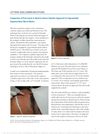
September 2017 in “Dermatologic Surgery” The cephalic approach for nerve blocks is less painful than the anterior approach during hair restoration surgery.
 October 2022 in “Indian journal of anatomy and surgery of head, neck and brain”
 The nasolabial flap is effective for repairing the mouth in patients with oral submucous fibrosis.
74 citations
,
April 2017 in “JEADV. Journal of the European Academy of Dermatology and Venereology/Journal of the European Academy of Dermatology and Venereology” Researchers found three patterns of Frontal fibrosing alopecia, with Pattern III having the best prognosis after treatment.
2 citations
,
August 2025 in “JAAD reviews.” Frontal fibrosing alopecia significantly affects men, often causing hair loss in eyebrows, beard, and sideburns.
 March 2026 in “The Open Dentistry Journal”
 Males in Jazan generally have larger foreheads than females, except in width.

The study concluded that Frontal fibrosing alopecia can affect younger people, is often missed in men, and may be autoimmune-related.
 August 2015 in “Dermatología Argentina”
 Frontal fibrosing alopecia causes hairline recession and eyebrow loss in postmenopausal women.
August 2019 in “Journal of the American Academy of Dermatology” Frontal fibrosing alopecia may be caused by an autoimmune reaction and hormonal imbalance.
 13 citations
,
November 2014 in “Clinics in Plastic Surgery”
13 citations
,
November 2014 in “Clinics in Plastic Surgery” The transtemporal midface lift improves the lower eyelid and cheek area with high patient satisfaction and low complication rates.
 October 2020 in “International Journal of Research in Dermatology”
 The review suggests more research is needed to understand Frontal fibrosing alopecia, a condition causing hairline recession in postmenopausal women.
Frontal Fibrosing Alopecia mainly affects postmenopausal women and is linked to thyroid disease, hyperlipidemia, and anemia.