 March 2026 in “International Journal of Dermatology Venereology and Leprosy Sciences”
 Vitiligo treatment requires a personalized mix of therapies to restore skin color and improve life quality.
 February 2026 in “Libri Oncologici Croatian Journal of Oncology”
 Imiquimod shows promise as a non-invasive treatment for certain HPV-related lesions, but more research is needed to optimize its use.
 February 2026 in “Frontiers in Immunology”
 Human amniotic stem cells can safely treat psoriasis-like skin in mice.
 February 2026 in “International Journal of Recent Surgical and Medical Sciences”
 Human exosomes are effective for targeted treatments but face scalability issues, while plant exosomes are cost-effective for cosmetics.
 January 2026 in “GSC Biological and Pharmaceutical Sciences”
 Adapalene, Diosmin, and Azelastine could be repurposed to treat onchocerciasis.
 January 2026 in “Frontiers in Pharmacology”
 Personalized medicine and new technologies offer promising strategies for better skin disease treatments.
 January 2026 in “International Journal of All Research Education & Scientific Methods”
 Alopecia is caused by various factors, and new treatments like gene editing and regenerative medicine offer hope for personalized hair regrowth solutions.

Phytochemicals from plants may help improve hormonal health naturally.
 December 2025 in “Frontiers in Medicine”
 Biofibre ® 4.0 hair implants are safe and satisfy most patients with hair loss.
 November 2025 in “Discover Pharmaceutical Sciences”
 The essential oils nanoemulsion promotes hair growth better than 2% minoxidil in mice.
 November 2025 in “Open Repository of the University of Porto (University of Porto)”
 Continuous use of finasteride and minoxidil is effective for treating androgenetic alopecia.
 November 2025 in “Clinical Cosmetic and Investigational Dermatology”
 Tofacitinib is effective and safe for treating severe alopecia areata.
 September 2025 in “Universal library of medical and health sciences.”
 Permanent makeup can effectively restore lip shape and color after tissue loss, improving appearance and well-being.
 September 2025 in “Editora Pasteur eBooks”
 Continuous learning and personalized treatments are crucial in dermatology due to rapid technological advancements.
 June 2025 in “Clinical Cosmetic and Investigational Dermatology”
 There's an urgent need for better treatments for hair loss caused by radiation therapy.
 February 2025 in “Medico Research Chronicles”
 Verilich hair serum significantly reduces hair shedding and is safe to use.

Herbal supplements like Berberine, Cinnamon, and Fenugreek may be affordable alternatives for managing PCOS.
 January 2025 in “Bright Sky Publications eBooks”
 Aesthetic medicine is rapidly advancing with new technologies for safer, personalized, and less invasive treatments.
 January 2025 in “International Journal of Herbal Medicine”
 Herbs like neem, tulsi, and tea tree oil may treat dandruff without side effects.
 November 2024 in “International Society of Hair Restoration Surgery”
 FUT is a hair restoration method that should be chosen based on individual patient needs and preferences.
 October 2024 in “Revista Electronica de Veterinaria”
 Siddha medicine can effectively treat Alopecia areata, leading to significant hair regrowth.
 July 2024 in “Journal Of Stem Cell Research”
 Mesenchymal stem cells improve skin appearance and structure in dermatology and aesthetic medicine.
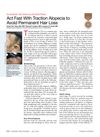 July 2024 in “Federal Practitioner”
 Act quickly to prevent permanent hair loss from tight hairstyles.
 June 2024 in “Al- Anbar Medical Journal”
 Acute telogen effluvium can be resolved by addressing causes, but chronic telogen effluvium is harder to treat.
 April 2024 in “ScienceRise. Pharmaceutical science”
 Men with hair loss feel it affects their emotions and life quality, and want more effective treatments.
 April 2024 in “Archives of Dermatological Research”
 The approach improves scalp surgery results by tailoring techniques to defect size and location.
 April 2024 in “Cell death and disease”
 Long COVID causes various long-term health issues and needs better awareness and treatment.
 March 2024 in “International journal of pharmaceutical sciences and drug research”
 Androgenetic alopecia is influenced by various factors and can be treated with medications, procedures, and non-drug methods.
 January 2024 in “Wiadomości Lekarskie”
 COPD flare-ups worsen life quality and increase hospital visits and costs.
 January 2024 in “Wiadomości Lekarskie”
 CAR-T therapy offers hope for children with hard-to-treat blood cancers.