 April 2010 in “The Journal of Urology”
 Human prostate cells produce more WISP1/CCN4 when there's not enough oxygen.
 19 citations
,
May 1984 in “Digestive diseases and sciences”
19 citations
,
May 1984 in “Digestive diseases and sciences” A young woman's Cronkhite-Canada syndrome improved on its own after she gave birth.
![Influence of FHIT on Benzo[a]pyrene-Induced Tumors and Alopecia in Mice: Chemoprevention by Budesonide and N-Acetylcysteine](/images/assets/f8f56777-f891-4879-8c45-c87d6aa82563/small/35499.jpg) 24 citations
,
May 2006 in “Proceedings of the National Academy of Sciences of the United States of America”
24 citations
,
May 2006 in “Proceedings of the National Academy of Sciences of the United States of America” Budesonide and N-acetylcysteine reduced tumors and alopecia in mice, regardless of FHIT gene status.

Lnc056 helps hair follicle stem cells grow by increasing TRIP6 expression.
 July 2001 in “Annals of Internal Medicine”
 The document's conclusion cannot be provided because the content is not accessible.
74 citations
,
October 2012 in “The American Journal of Human Genetics” Mutations in the HOXC13 gene cause hair and nail development issues.
44 citations
,
September 2016 in “American Journal Of Pathology” Neural crest-derived progenitor cells in the cornea could help treat corneal issues without transplants.
60 citations
,
October 2020 in “Nature Communications” AP-1 and TGFß work together to drive resistance in basal cell carcinoma, suggesting new treatment options.
 3 citations
,
January 2011 in “Intestinal Research”
3 citations
,
January 2011 in “Intestinal Research” Cronkhite-Canada syndrome can cause multiple gastrointestinal polyps and various physical symptoms.
4 citations
,
November 2024 in “Journal of Advanced Research” Targeting NMMHC IIA may help treat blood-brain barrier damage.
 March 2026 in “Zenodo (CERN European Organization for Nuclear Research)”
 The N-K GM Series offers highly selective, eco-friendly medicines targeting harmful microbes, free for personal use.
17 citations
,
July 2024 in “Frontiers in Oncology” New therapies and trials are needed for Merkel cell carcinoma, a tough skin cancer.
 March 2012 in “Journal of The American Academy of Dermatology”
 Hand-foot-mouth disease may cause nail loss in children.
June 2025 in “British Journal of Dermatology” An AI device for skin cancer was successfully integrated into the NHS, improving diagnosis accuracy and service capacity.
22 citations
,
August 2016 in “European Eating Disorders Review” Adolescent girls with anorexia nervosa have lower hair cortisol levels than healthy and psychiatric peers.
 199 citations
,
April 2010 in “Nature”
199 citations
,
April 2010 in “Nature” A gene called APCDD1, which controls hair growth, is found to be faulty in a type of hair loss called hereditary hypotrichosis simplex.
 2 citations
,
June 2012 in “PubMed”
2 citations
,
June 2012 in “PubMed” The document concludes that central centrifugal cicatricial alopecia (CCCA) should be considered in African American men with vertex hair loss and scalp symptoms, and that prompt diagnosis and treatment can slow disease progression.
Providing housing and case management reduces hospital visits for chronically ill homeless adults.
March 2019 in “SLAS TECHNOLOGY” New technologies show promise in healing wounds, treating cancer, autoimmune diseases, and genetic disorders.
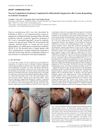
December 2025 in “JGH Open” Early diagnosis and treatment with corticosteroids can improve outcomes in Cronkhite–Canada syndrome.
 14 citations
,
January 2015 in “Acta dermato-venereologica”
14 citations
,
January 2015 in “Acta dermato-venereologica” Acitretin significantly reduced inflammatory attacks in a woman with Naevus Comedonicus Syndrome but caused side effects.
March 2026 in “Journal of Investigative Dermatology” 3 citations
,
August 2024 in “Molecular Biology Reports” LncRNA018392 helps goat skin cells grow by increasing CSF1R.
26 citations
,
July 2023 in “International Journal of Nanomedicine” The microneedle system shows promise for non-invasive brain drug delivery.
July 2023 in “Current Developments in Nutrition” January 2024 in “Animals” Circular RNA ERCC6 helps activate stem cells important for cashmere goat hair growth by interacting with specific molecules in an m6A modification-dependent way.
 35 citations
,
May 2019 in “Frontiers in genetics”
35 citations
,
May 2019 in “Frontiers in genetics” Non-coding RNAs play key roles in the hair growth cycle of Angora rabbits.
November 2025 in “PLoS ONE” Nucleic acids trigger chemokine production in skin cells, affecting skin inflammation.
7 citations
,
September 2022 in “International journal of molecular sciences” The research found that the molecule lncRNA-H19 helps hair follicle cells grow by affecting certain cell pathways in cashmere goats.
February 2020 in “Journal of chemical neuroanatomy” Researchers found a way to make rat hair follicle cells start turning into motor neuron-like cells, but couldn't fully turn them into working motor neurons.