 February 2023 in “International Journal of Pharmaceutics”
 A new version of minoxidil, a hair loss treatment, was made using nanotechnology. This version, called minoxidil cubosomes, works better and causes fewer skin reactions than the old version. It also penetrates and stays in the skin better, promoting hair regrowth. It's safe and could be a good alternative to current treatments.
 32 citations
,
April 2016 in “Aaps Pharmscitech”
32 citations
,
April 2016 in “Aaps Pharmscitech” Nanostructured lipid carriers improve minoxidil delivery for hair loss treatment.
 July 2014 in “Journal of Dermatology and Cosmetic”
 Niosomal minoxidil was found to be more effective in increasing hair count and patient satisfaction than conventional minoxidil in treating hair loss.
19 citations
,
October 1989 in “PubMed” Minoxidil helps hair growth by being sulfated in hair follicles.
 68 citations
,
September 1990 in “Biochemical Pharmacology”
68 citations
,
September 1990 in “Biochemical Pharmacology” Minoxidil activates hair growth by being sulfated by P-PST in the human liver.
3 citations
,
October 2013 The new hydrogel and microemulsion could be better for hair loss treatment than current solutions.
 January 2025 in “JAAD International”
 Bicalutamide added no extra benefit over minoxidil alone for female-pattern hair loss.
 April 2024 in “Journal of cosmetic dermatology”
 Minoxidil is less effective on eyebrows and eyelashes than scalp hair because these areas have lower enzyme activity needed to activate the drug.
 2 citations
,
April 2008 in “Journal of Dispersion Science and Technology”
2 citations
,
April 2008 in “Journal of Dispersion Science and Technology” Shampoos with more than 0.6% of cationic minoxidil particles can promote hair growth.
 45 citations
,
January 1981 in “Annals of Internal Medicine”
45 citations
,
January 1981 in “Annals of Internal Medicine” Minoxidil controls blood pressure effectively, but may cause side effects like hypertrichosis.
23 citations
,
March 2021 in “Gels” Microemulsions can improve minoxidil delivery and effectiveness for hair loss treatment.
 5 citations
,
April 2018 in “Journal of Cosmetic Dermatology”
5 citations
,
April 2018 in “Journal of Cosmetic Dermatology” New 5% minoxidil formula safely and effectively treats male hair loss.
 11 citations
,
April 1990 in “Australasian Journal of Dermatology”
11 citations
,
April 1990 in “Australasian Journal of Dermatology” Minoxidil modestly increases hair growth in men with early baldness and is safe to use.
 12 citations
,
August 2017 in “Archives of Pharmacal Research”
12 citations
,
August 2017 in “Archives of Pharmacal Research” Lecithin-based microparticles can deliver minoxidil for hair growth effectively with less skin irritation.
 July 2024 in “Pharmaceutical Care España”
 Careful monitoring is needed when using oral minoxidil for hair loss due to potential side effects.
 September 2010 in “Reactions Weekly”
 A woman was allergic to 5% minoxidil, with stronger reactions to higher concentrations.
 24 citations
,
May 2013 in “Drug Design Development and Therapy”
24 citations
,
May 2013 in “Drug Design Development and Therapy” Multimodal minoxidil microemulsion is more effective in treating hair loss than minoxidil alone.
January 2017 in “Faculty of 1000 Research Ltd” Oral minoxidil significantly reduces hair shedding in women with chronic telogen effluvium.
 23 citations
,
April 1991 in “Journal of The American Academy of Dermatology”
23 citations
,
April 1991 in “Journal of The American Academy of Dermatology” Minoxidil solution can cause skin irritation and allergies in some users.
13 citations
,
May 1987 in “PubMed” Topical minoxidil can help regrow hair with regular use, but results vary and side effects may occur.
46 citations
,
March 2009 in “Die Pharmazie” Minoxidil-loaded nanostructured lipid carriers are effective for topical use.
 2 citations
,
March 1985 in “Journal of The American Academy of Dermatology”
2 citations
,
March 1985 in “Journal of The American Academy of Dermatology” Minoxidil solution used on the scalp did not lower blood pressure in patients without hypertension.
26 citations
,
January 1987 in “Dermatology” Topical minoxidil is safe and effective for some early male-pattern baldness cases.
November 2024 in “Actas Dermo-Sifiliográficas” Low-dose oral minoxidil can improve hair and eyebrow growth in frontal fibrosing alopecia.
 4 citations
,
January 2017 in “Indian Dermatology Online Journal”
4 citations
,
January 2017 in “Indian Dermatology Online Journal” A child used a hair growth lotion for hair loss, but it caused excessive hair growth on his face and neck instead.
The 2% minoxidil cream is stable, spreads well on the skin, and helps with hair growth.
 17 citations
,
May 1998 in “Contact Dermatitis”
17 citations
,
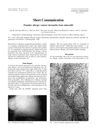
May 1998 in “Contact Dermatitis” Minoxidil can cause pustular allergic reactions on skin.
11 citations
,
July 2010 in “Dermatitis” Patch testing helps find allergens in minoxidil treatments, but doesn't ensure alternatives will be tolerated.

Low-dose oral minoxidil is safe and effective for treating hair loss, with most side effects being mild and reversible.
September 1989 in “Drug and Therapeutics Bulletin” Topical minoxidil is not very effective for baldness.