227 citations
,
February 1989 in “The Journal of Comparative Neurology” CGRP-IR axons may help maintain and renew tissues.
46 citations
,
October 2018 in “Neuroscience Bulletin”  85 citations
,
May 2019 in “Journal of neuroendocrinology”
85 citations
,
May 2019 in “Journal of neuroendocrinology” The article concludes that better understanding gene regulation related to seasonal changes can offer insights into the mechanisms of seasonal timing in mammals.
 November 2025 in “Stem Cell Reviews and Reports”
 The error in figures didn't affect the study's results or conclusions.
118 citations
,
April 2020 in “Stem Cell Research & Therapy” IFNγ-primed MSC secretomes can improve joint health by reducing inflammation and supporting tissue repair.
11 citations
,
April 2023 in “Frontiers in Pharmacology” Integrating biological networks improves drug repurposing and ADR prediction.
133 citations
,
June 2016 in “Nature Neuroscience” Zeb2 is crucial for nerve repair by controlling Schwann cell function.
100 citations
,
November 2017 in “EMBO Reports” Metabolic signals and cell shape influence how cells develop and change.
111 citations
,
August 1998 in “Journal of Investigative Dermatology” μ-opiate receptors in skin cells may affect skin health and healing.
 55 citations
,
April 2010 in “Cancer and Metastasis Reviews”
55 citations
,
April 2010 in “Cancer and Metastasis Reviews” TGFβ's manipulation of inflammation and immune cells affects cancer spread, suggesting new treatment strategies and biomarkers.
10 citations
,
July 2023 in “World Journal of Stem Cells” The secretome helps protect and regenerate retinal cells by enabling communication between stem cells and retinal cells.
19 citations
,
September 2008 in “Journal of Cellular Physiology” Blocking EGFR can cause skin inflammation by disrupting IL-1 signaling.
29 citations
,
June 2020 in “International Journal of Molecular Sciences” Notch signaling disruptions can cause various skin diseases.
 March 2024 in “Vestnik Rossijskogo universiteta družby narodov. Seriâ Agronomiâ i životnovodstvo”
 Wnt and Shh signaling are key in noggin-induced tumors, and blocking them can slow tumor growth.
January 2026 in “Burns & Trauma” NLRP3 helps control inflammation and repair in wound healing, making it a potential target for treatment.
 June 2022 in “bioRxiv (Cold Spring Harbor Laboratory)”
 A specific molecular switch, driven by MAPK/ERK signaling, helps spiny mice heal wounds by regenerating skin instead of forming scars.
Sensory neuron remodeling and Merkel-cell changes happen independently during skin maintenance.
10 citations
,
January 2020 in “Acta Neurobiologiae Experimentalis” Valproic acid and crocin together boost cell growth and may help treat nerve injuries.
 6 citations
,
January 2020 in “BMC Neuroscience”
6 citations
,
January 2020 in “BMC Neuroscience” Male tissue has more cell death than female tissue after ischemia, and some neurosteroids only protect female cells.
 8 citations
,
May 2018 in “The Journal of Allergy and Clinical Immunology”
8 citations
,
May 2018 in “The Journal of Allergy and Clinical Immunology” Activating the Nrf2 pathway reduces inflammation and cell activation in human hair follicles, suggesting a potential treatment for certain hair loss conditions.
12 citations
,
May 2002 in “PubMed” Hair growth is regulated by a combination of hormones, blood vessels, and nerve signals.
 59 citations
,
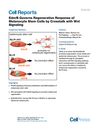
April 2016 in “Cell Reports”
59 citations
,
April 2016 in “Cell Reports” EdnrB signaling helps melanocyte stem cells regenerate and could be targeted to treat pigmentation issues.
6 citations
,
December 2024 in “F1000Research” Fibroblast and immune cell interactions affect tissue repair and fibrosis.
42 citations
,
September 2002 in “The Journal of Comparative Neurology” Glycine likely affects dendrites connected to hair follicle terminals in rats.
 May 2026 in “The Journal of Headache and Pain”
 Inhibiting certain brain neurons may reduce pain and anxiety in trigeminal neuralgia.
The nail immune system is similar to hair but different from skin, with fewer immune markers.
 15 citations
,
April 2017 in “Cell Stem Cell”
15 citations
,
April 2017 in “Cell Stem Cell” Some brain cancer cells avoid immune system detection, and certain treatments could target this to slow their growth; also, certain fat cell precursors help regenerate hair and skin after injury.
286 citations
,
June 2012 in “Nature Immunology” Hair follicles help attract immune cells to the skin during stress.
 59 citations
,
June 2023 in “Nature Aging”
59 citations
,
June 2023 in “Nature Aging” Blocking IL-17 signaling may reduce skin inflammation and delay aging.
8 citations
,
June 2025 in “Stem Cell Research & Therapy” Exosome therapy may help treat diabetic nerve damage, but more research is needed.