 159 citations
,
December 2007 in “American Journal of Pathology”
159 citations
,
December 2007 in “American Journal of Pathology” Stress-related substance P may lead to hair loss and negatively affect hair growth.
143 citations
,
January 2004 in “Journal of Investigative Dermatology Symposium Proceedings” Alopecia areata is an autoimmune disease causing hair loss, treatable with immune-modulating drugs, and linked to genetics.
 101 citations
,
January 1997 in “Journal of Investigative Dermatology Symposium Proceedings”
101 citations
,
January 1997 in “Journal of Investigative Dermatology Symposium Proceedings” Nerves and chemicals in the body can affect hair growth and loss.
61 citations
,
March 2003 in “American Journal Of Pathology” Stress can cause hair loss and skin issues by affecting hair growth cycles.
 48 citations
,
January 2000 in “Hormone Research in Paediatrics”
48 citations
,
January 2000 in “Hormone Research in Paediatrics” Cytokines and neuropeptides are key in controlling androgen levels, affecting skin and hair conditions.
 42 citations
,
March 2008 in “Molecular and Cellular Endocrinology”
42 citations
,
March 2008 in “Molecular and Cellular Endocrinology” Hormones and neuroendocrine factors control hair growth and color, and more research could lead to new hair treatment options.
 30 citations
,
October 2016 in “Current research in translational medicine”
30 citations
,
October 2016 in “Current research in translational medicine” Hair follicles on the scalp interact with and respond to the nervous system, influencing their own behavior and growth.
21 citations
,
February 2015 in “Clinical Cosmetic and Investigational Dermatology” Keloids may be influenced by stress and psychological factors.
19 citations
,
February 1998 in “Cellular Immunology” Hair growth phase in mice weakens certain immune responses.
 18 citations
,
January 2016 in “Skin appendage disorders”
18 citations
,
January 2016 in “Skin appendage disorders” The paper suggests improving diagnosis and treatment of telogen effluvium but does not recommend a new classification system.
15 citations
,
January 2015 in “Skin Appendage Disorders” Increased scalp sweating in frontal fibrosing alopecia may be linked to local skin inflammation.
8 citations
,
March 2020 in “Pain Medicine” Onabotulinumtoxin-A injections significantly improved scalp pain in a patient with trichodynia.
 7 citations
,
October 2000 in “Allergo Journal”
7 citations
,
October 2000 in “Allergo Journal” Stress may affect hair growth by influencing hair follicle development and could contribute to hair loss.
 6 citations
,
January 2021 in “Journal of Cosmetic Dermatology”
6 citations
,
January 2021 in “Journal of Cosmetic Dermatology” Poor sleep during the pandemic may increase stress and worsen hair loss conditions.
 5 citations
,
June 2024 in “Developmental Cell”
5 citations
,
June 2024 in “Developmental Cell” Activating TRPV1 can boost hair growth by involving neurons, macrophages, and fibroblasts.
 5 citations
,
October 2014 in “Journal of cosmetic and laser therapy”
5 citations
,
October 2014 in “Journal of cosmetic and laser therapy” Combining physical dermabrasion with chemical peeling is more effective for skin treatment than chemical peeling alone.
 4 citations
,
January 2021 in “Skin appendage disorders”
4 citations
,
January 2021 in “Skin appendage disorders” Trichodynia is a painful scalp condition not directly linked to the amount or type of hair loss and may involve psychological factors, with treatments showing mixed results.
3 citations
,
April 2020 in “Journal of Mind and Medical Sciences” Anorexia nervosa can harm fertility and increase pregnancy risks.
 2 citations
,
May 2001 in “Current problems in dermatology”
2 citations
,
May 2001 in “Current problems in dermatology” The conclusion is that effectively treating hair disorders is difficult due to the complex factors affecting hair growth and more research is needed to improve treatments.
 July 2022 in “Biomedicines”
 4-Aminopyridine improves skin wound healing and tissue regeneration by increasing cell growth and promoting nerve repair.
 January 2022 in “Journal of Skin and Stem Cell”
 Trichodynia is a painful scalp condition needing targeted treatments beyond symptom management.

Wound healing is complex and requires more research to enhance treatment methods.
Neuropeptides affect hair growth and could be used to control it.
466 citations
,
June 2009 in “Experimental dermatology” We now understand more about what causes acne and this could lead to better, more personalized treatments.
 39 citations
,
January 2013 in “Indian Journal of Dermatology, Venereology and Leprology”
39 citations
,
January 2013 in “Indian Journal of Dermatology, Venereology and Leprology” Eating high glycemic foods and drinking milk may worsen acne by increasing insulin and IGF-1 levels.
 26 citations
,
May 2014 in “BioEssays”
26 citations
,
May 2014 in “BioEssays” Using neurohormones to control keratin can lead to new skin disease treatments.
 4 citations
,
January 2009 in “Indian Journal of Dermatology, Venereology and Leprology”
4 citations
,
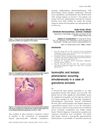
January 2009 in “Indian Journal of Dermatology, Venereology and Leprology” A patient with granuloma annulare experienced both isotopic and isomorphic responses, with skin lesions responding to steroids but relapsing after stopping treatment.
 2 citations
,
January 2014 in “Hair therapy & transplantation”
2 citations
,
January 2014 in “Hair therapy & transplantation” New treatments for hair growth disorders are needed due to limited current options and complex hair follicle biology.
 December 2018 in “IntechOpen eBooks”
 Neurohormones help control skin health and could treat skin disorders.
January 1990 in “Insula-revista De Letras Y Ciencias Humanas” The skin acts as an endocrine organ, producing and managing hormones essential for body functions.