1 citations
,
May 2013 in “Polymer-korea” Micro-needles with minoxidil may help hair growth.
 September 2024 in “Ahmar Metastasis Health Journal”
 Ginger and celery extracts did not significantly improve hair growth in rats.
 3 citations
,
August 2017 in “Oral and Maxillofacial Surgery Cases”
3 citations
,
August 2017 in “Oral and Maxillofacial Surgery Cases” Using platelet-rich plasma and fat grafting to treat nerve pain showed promising results with no side effects.
December 2024 in “European journal of medical research” 1 citations
,
October 2025 in “Iranian journal of pharmaceutical research” Geranyl acetate can protect skin cells from damage and inflammation caused by para-phenylenediamine.
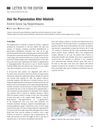 April 2025 in “Turkish Journal of Hematology”
 Nilotinib may cause gray hair to return to its original color.
53 citations
,
October 2011 in “Psychoneuroendocrinology” Finasteride may help improve certain brain function issues linked to dopamine.
 November 2024 in “Nanomaterials”
 The nanocrystalline suspension effectively delivers dutasteride over time with minimal inflammation.
 July 2024 in “Journal of Investigative Dermatology”
 Most women continued using oral minoxidil for hair loss despite mild to moderate side effects.
2 citations
,
September 2020 in “International Journal of Applied Pharmaceutics” Clove leaf extract in hair tonic boosts rabbit hair growth.
 January 2024 in “Journal of Biosciences and Medicines”
 Combining Ginkgo biloba and butylphthalide improves cognitive recovery and reduces inflammation after a stroke.
1 citations
,
January 2014 in “Journal of clinical & experimental dermatology research” Naringi crenulata leaf extracts promote hair growth.
18 citations
,
January 1988 in “Acta oncologica” Retinol palmitate may reduce cancer relapses in early-stage lung cancer patients.
 8 citations
,
September 2021 in “Skin appendage disorders”
8 citations
,
September 2021 in “Skin appendage disorders” Trichotillomania treatment is most successful with a mix of behavioral therapy, medication, and social support.
 November 2005 in “Reactions Weekly”
 A man treated with gefitinib for lung cancer grew new hair on his bald scalp.
New substances were created that improve health and may treat dementia, osteoporosis, and cancer.
5 citations
,
March 2013 in “Journal of cosmetic and laser therapy” Laser treatment successfully removed unwanted facial hair caused by minoxidil.
 4 citations
,
December 2023 in “Advanced science”
4 citations
,
December 2023 in “Advanced science” New injectable hydrogels with gelatin, metal, and tea polyphenols help heal diabetic wounds faster by controlling infection, improving blood vessel growth, and managing oxidative stress.
July 2025 in “Journal of Investigative Dermatology” AI-09 is safe, effective, and reduces wrinkles for up to 6 months.

The optimal concentration for caffeine release in gel form is 0.2% caffeine and 2.3% chitosan.
June 2026 in “The Journal of the Kyushu Dental Society” 16 citations
,
June 2015 in “Drug Design Development and Therapy” The new formulation improves dutasteride's absorption when taken orally.
115 citations
,
December 2019 in “The Plant Journal” Nitrate helps plants manage phosphate uptake and starvation responses through NIGT1 proteins.
September 2025 in “Journal of Drug Delivery Science and Technology” Vitamin D3-coated nanoparticles effectively deliver caffeine for alopecia treatment with minimal side effects.
 August 2008 in “European Neuropsychopharmacology”
 RY-023, a specific drug, can improve early stage memory learning without affecting general activity in rats, but it's less effective for later learning stages and doesn't impact memory recall.
 October 2025 in “Transplantation”
 Dissolving microneedles with finasteride improve drug delivery for hair loss treatment.
 18 citations
,
October 2005 in “International Journal of Pharmaceutics”
18 citations
,
October 2005 in “International Journal of Pharmaceutics” Adding a small amount of TPGS to minoxidil can help hair growth, but too much TPGS reduces this effect and increases minoxidil in the blood.
1 citations
,
August 2025 in “Clinica Chimica Acta” 42 citations
,
June 2019 in “Aging” 3,4,5-tri-O-caffeoylquinic acid promotes hair growth by activating the β-catenin pathway.
 14 citations
,
June 2018 in “Frontiers in pharmacology”
14 citations
,
June 2018 in “Frontiers in pharmacology” Green tea compound EGCG helps mink hair follicles grow by affecting certain cell growth pathways.