 September 2009 in “European Urology Supplements”
 IGRT resulted in lower acute toxicity for stage III prostate cancer patients.
 3 citations
,
October 1979 in “Laboratory animals”
3 citations
,
October 1979 in “Laboratory animals” Hairless rats are good for testing anti-inflammatory drugs, similar to haired rats, without needing to remove fur.
9 citations
,
November 1999 in “Annals of Plastic Surgery” Ruby laser hair removal does not cause increased cell growth in the skin.
9 citations
,
December 2015 in “Journal of Dermatological Case Reports” Narrowband UVB therapy significantly improved a child's rare skin condition.
Menthol boosts the hair growth and thickness effects of P. niruri extract gel.
22 citations
,
July 2024 in “Frontiers in Oncology” FLASH radiation reduces tissue damage more than conventional radiation.
1 citations
,
November 2023 in “Skin Appendage Disorders” 308 nm excimer lamp therapy is effective for alopecia areata but less so for severe cases.
 8 citations
,
December 2015 in “PubMed”
8 citations
,
December 2015 in “PubMed” Phyllanthus niruri extract may help treat hair loss by promoting hair growth and blocking a hair loss-related enzyme.
7 citations
,
January 2002 in “PubMed” Prolonged UVB exposure causes significant skin changes and damage in rats.
 April 2023 in “Journal of Investigative Dermatology”
 Sunlight simulation causes skin inflammation, with different skin types reacting at different levels of exposure.
1 citations
,
February 2025 in “Photodermatology Photoimmunology & Photomedicine” 830 nm LED light effectively treats and prevents skin redness and dark spots, while 590 nm LED light only helps prevent them.
 30 citations
,
April 2013 in “Journal of Investigative Dermatology”
30 citations
,
April 2013 in “Journal of Investigative Dermatology” Radiation mainly affects keratinocyte stem cells, not melanocyte stem cells, causing hair to gray.
6 citations
,
July 2020 in “The Kaohsiung Journal of Medical Sciences” Inhibiting the PI3K/Akt pathway may help prevent radiation-induced liver injury.
 6 citations
,
November 2013 in “International Journal of Radiation Biology”
6 citations
,
November 2013 in “International Journal of Radiation Biology” Gamma-rays exposure during the resting phase of hair growth can damage hair regeneration and color in mice.
6 citations
,
December 2021 in “Journal of Cancer Research and Therapeutics” The treatment improved survival and controlled cancer spread but required managing side effects like rashes.
12 citations
,
January 2014 in “Journal of X-Ray Science and Technology” Using 100–300 keV X-ray energy is best for treating deep-seated tumors with microplanar beam radiation therapy.
2 citations
,
March 2012 in “Hiroshima University Acedemic Information Repository (Hiroshima University)” Kainar syndrome symptoms may be linked to nuclear test exposure effects.
 17 citations
,
January 2010 in “International journal of trichology”
17 citations
,
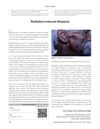
January 2010 in “International journal of trichology” A man experienced hair loss from radiotherapy, which can be temporary or permanent depending on radiation dose, with potential treatments available.
January 2026 in “Journal of Radiation Research” 53BP1 focus analysis in hair cells can help estimate radiation doses.
May 2019 in “Journal of clinical oncology” Radiation therapy with chemotherapy can cause severe, long-lasting hair loss.
37 citations
,
November 2011 in “Photodermatology Photoimmunology & Photomedicine” Narrowband UVB phototherapy alone is not very effective for treating alopecia areata.
 18 citations
,
July 2014 in “Molecular Medicine Reports”
18 citations
,
July 2014 in “Molecular Medicine Reports” UVB radiation changes the levels of certain microRNAs in skin cells, which may affect cell survival and hair growth.
17 citations
,
October 2009 in “Dermatology” Ultraviolet light helped hair growth more effectively than triamcinolone acetonide.
 14 citations
,
January 2014 in “Cells Tissues Organs”
14 citations
,
January 2014 in “Cells Tissues Organs” Ionizing radiation causes irreversible skin damage, with single doses leading to acute injury and hair graying, and fractional doses causing more severe long-term tissue damage.
4 citations
,
December 2014 in “Dermatologica sinica/Zhōnghuá pífūkē yīxué zázhì” The excimer lamp is a safe and effective treatment for severe alopecia areata.
January 2022 in “Case Reports in Clinical Medicine” Infrared light helped heal acid burns and improved neck movement.
January 2025 in “EXPERIMENTAL ANIMALS” Gamma-ray exposure improves genome editing efficiency in mice using the i-GONAD method.
February 2016 in “Seoul National University Open Repository (Seoul National University)” Photodynamic therapy can temporarily remove nonpigmented hair but is less effective than lasers for black hair.
24 citations
,
August 2020 in “JAMA dermatology” Persistent radiation-induced hair loss is dose-dependent, and treatments like topical minoxidil can be effective.
January 2008 in “대한미용학회지” UV exposure severely damages hair, making it rough and weak.