Intramuscular injection of 131I is a safe and effective way to induce hypothyroidism in rats without harming muscle tissue.
 79 citations
,
September 2009 in “Pediatric dermatology”
79 citations
,
September 2009 in “Pediatric dermatology” The 308-nm Excimer laser is effective and safe for treating patchy alopecia areata in children.
 May 2017 in “Journal of The American Academy of Dermatology”
 595 nm pulsed dye laser is a cost-effective treatment for nonmelanoma skin cancer with a low recurrence rate.
12 citations
,
January 2021 in “Dermatology Research and Practice” The 1927 nm Thulium laser effectively and safely treats postinflammatory hyperpigmentation in darker skin tones.
 2 citations
,
May 2015 in “PloS one”
2 citations
,
May 2015 in “PloS one” Hair follicle pores help cell survival and growth, even after radiation.
8 citations
,
June 2021 in “Frontiers in Medicine” The combination of the excimer lamp and liquor carbonis detergens is more effective for scalp psoriasis than the lamp alone.
 7 citations
,
April 2020 in “Curēus”
7 citations
,
April 2020 in “Curēus” Combining hair transplantation with microneedling or laser and UV light may help treat tough vitiligo on hands and feet, with microneedling being affordable and easy to learn.
19 citations
,
October 2017 in “Dermatologic Surgery” The alexandrite laser is a safe and effective treatment for Acne Keloidalis Nuchae.
 16 citations
,
April 2015 in “Lasers in Surgery and Medicine”
16 citations
,
April 2015 in “Lasers in Surgery and Medicine” Using a fractional laser can stimulate hair growth, but the intensity and duration of inflammation are crucial. Too much can cause ulcers and scarring. Lower beam energy and fewer treatments are recommended to avoid damage.
August 2011 in “Journal of the Chinese Medical Association” Public education on iodine use is crucial for radiation protection, especially for children.
47 citations
,
October 2015 in “Dermatologic surgery” The 308-nm excimer laser is effective for skin conditions but needs more research on long-term effects.
December 2022 in “IntechOpen eBooks” 308 excimer phototherapy is a safe and effective way to treat hair loss from Alopecia Areata.
3 citations
,
September 2023 in “Journal of Photochemistry and Photobiology A Chemistry” 2 citations
,
November 2025 in “Healthcare” Combining a 675 nm laser with isotretinoin improves acne treatment results.
January 2014 in “한국미용학회지” UV-A radiation significantly damages semi-permanent dyed hair.
14 citations
,
August 2017 in “International Journal of Immunopathology and Pharmacology” Photodynamic therapy improved skin issues from sorafenib when other treatments failed.
 18 citations
,
May 2013 in “Journal of Dermatological Treatment”
18 citations
,
May 2013 in “Journal of Dermatological Treatment” Non-ablative fractional laser treatments have a low risk of side effects in Asian patients.
 9 citations
,
August 2017 in “Photochemistry and Photobiology”
9 citations
,
August 2017 in “Photochemistry and Photobiology” Red light at 627 nm can safely trigger IL-4 release in skin cells, potentially helping treat inflammatory skin conditions.
 27 citations
,
December 2014 in “Current problems in dermatology”
27 citations
,
December 2014 in “Current problems in dermatology” Photodynamic therapy is the preferred treatment for skin precancer due to its effectiveness and safety.
31 citations
,
February 1999 in “Dermatologic surgery” Sun exposure after laser hair removal can cause skin darkening, which is hard to treat and requires avoiding UV light.
 April 2023 in “Journal of Investigative Dermatology”
 Narrowband Ultraviolet B treatment can significantly reduce anxiety in psoriasis patients, but it doesn't significantly affect depression.
 April 2023 in “Journal of Investigative Dermatology”
 Radiation treatment causes skin fibrosis by increasing certain fibroblast subpopulations, but using a c-Jun inhibitor or fat grafting can reduce this effect.
5 citations
,
January 1964 in “Naunyn-Schmiedeberg s Archives of Pharmacology” Iodine is absorbed by hair just below the skin surface.
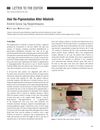 April 2025 in “Turkish Journal of Hematology”
 Nilotinib may cause gray hair to return to its original color.
April 2015 in “The FASEB Journal” Nitrogen mustard causes DNA damage and structural changes in mouse skin hair follicles, but some recovery occurs after 5 days.
 8 citations
,
January 2018 in “PubMed”
8 citations
,
January 2018 in “PubMed” Smaller finasteride particles increase effectiveness in treating hair loss.
 August 2025 in “Scientific Reports”
 C4BPA protein may link acne severity and insulin resistance.
 January 2025 in “Journal of Materials Chemistry B” June 2024 in “Cermin Dunia Kedokteran”
 Low level laser therapy is effective and safe for various skin and hair conditions.
 May 2014 in “La Revue de médecine interne”
 Early detection and treatment of primary biliary cirrhosis and related autoimmune diseases improve outcomes.