Search
for
Sort by
Research
420-450 / 1000+ results
research Insights learned from L457(3.43)R, an activating mutant of the human lutropin receptor
The L457(3.43)R mutation in the human lutropin receptor causes increased activity and hormone insensitivity, leading to precocious puberty.

research Nanostructured Lipid Carrier for Hyperpigmentation Treatment - a Dermal Prospective
Nanostructured lipid carriers are effective for treating hyperpigmentation in women aged 30-40.
research Low Level Laser Treatment for Patterned Hair Loss: A Systematic Review
Low-level laser therapy may help hair growth, but more research is needed.
research Lichen Planopilaris and Low-Level Light Therapy: Four Case Reports and Review of the Literature About Low-Level Light Therapy and Lichenoid Dermatosis
Low-Level Light Therapy significantly reduced inflammation and promoted hair regrowth in patients with Lichen planopilaris.
research Dihydroartemisinin loaded nanostructured lipid carriers (DHA-NLC): evaluation of pharmacokinetics and tissue distribution after intravenous administration to rats.
DHA-NLC may improve drug delivery and reduce side effects for cancer treatment.
research Genome-wide detection and sequence conservation analysis of long non-coding RNA during hair follicle cycle of yak
The study found key long non-coding RNAs involved in yak hair growth cycles.

research Comparative in vivo assessment of hair-growth efficacy using nanostructured lipid carriers individually loaded with lavender oil or tea seed oil
Lavender and tea seed oil in nanostructured carriers effectively promote hair growth.
research Nelfb promotes dermal white adipose tissue formation through RNA Polymerase II mediated adipogenic gene regulation
Nelfb is crucial for forming skin fat tissue by regulating genes needed for fat cell development.

research The Laxometer: increasing the safety of hair transplants that use a large number of grafts
The Laxometer helps make hair transplants with many grafts safer.
research Examining the Safety and Efficacy of Low-Level Laser Therapy for Male and Female Pattern Hair Loss: A Review of the Literature
Low-level laser therapy safely and effectively improves hair growth and coverage for male and female pattern hair loss.
research Photobiomodulation: The Clinical Applications of Low-Level Light Therapy
Low-Level Light Therapy (LLLT) is a safe and effective method for skin rejuvenation, acne treatment, wound healing, body contouring, and hair growth, but more well-designed trials are needed for confirmation.

research The growth of human scalp hair mediated by visible red light laser and LED sources in males
Red light therapy at 655 nm significantly improved hair growth in men with hair loss.

research Topical and transdermal lipid-polymer hybrid nanoparticles (LPN): an integration in advancing dermatological treatments
Lipid-polymer hybrid nanoparticles show promise for skin treatments but need better formulation strategies.
research Nevus Lipomatosus Superficialis With Dilated Hair Follicles
Accurate diagnosis of NLS with dilated hair follicles is crucial to distinguish it from other conditions.
research Fractional microporation-guided delivery of nanoencapsulated drugs for enhanced cutaneous and follicular absorption: a comparison of ablative laser and radiofrequency microneedling
research lncRNAs UC.145 and PRKG1-AS1 Determine the Functional Output of DKK1 in Regulating the Wnt Signaling Pathway in Gastric Cancer
UC.145 may be a new biomarker for predicting gastric cancer.
research An Integrated Analysis of Cashmere Fineness lncRNAs in Cashmere Goats
lncRNA XLOC_008679 and gene KRT35 affect cashmere fineness in goats.
research Efficacy and safety of 1565-nm non-ablative fractional laser versus long-pulsed 1064-nm Nd:YAG laser in treating enlarged facial pores
Both 1565-nm laser and 1064-nm laser safely and effectively reduce enlarged facial pores, with the 1064-nm laser causing fewer side effects.
research 0866 Role of transcriptional elongation in dermal fat development
Nelfb is essential for dermal fat development and survival.
research Low-level laser therapy in androgenetic alopecia: narrative review
Low-level laser therapy is a safe and effective treatment for hair loss.

research Nanostructured lipid carriers (NLCs) composed of argan oil, the potential novel vehicle for caffeine delivery to stratum corneum and hair follicles
Argan oil-based nano carriers could potentially deliver caffeine to hair follicles to treat hair loss.
research The clinical features and long time follow-up of neonatal lupus erythematosus in 12 children
Neonatal lupus symptoms usually resolve, but some children may develop other autoimmune diseases later.
research Enhanced skin penetration of lidocaine through encapsulation into nanoethosomes and nanostructured lipid carriers: a comparative study
Nanostructured lipid carriers deliver lidocaine to the skin better than nanoethosomes.
research Enhancing Hair Follicle Stimulation: A Nanoliposome-Based Delivery of Lavender Essential Oil (Lavandula angustifolia Mill.)
LEON gel significantly boosts hair growth without irritation.
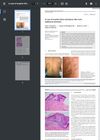
research A case of eruptive lichen spinulosus after toxic epidermal necrolysis
A boy developed a rare skin condition after recovering from a severe skin reaction, and it improved with lotion treatment.
research M2 Macrophage and Extracellular Matrix Genes Are Enriched in High‐Activity Lichen Planopilaris
Higher activity in lichen planopilaris is linked to certain immune and tissue genes.
research The effects of fulvic acids and low-level laser therapy on orthodontic retention in rats
Low-level laser therapy reduces orthodontic relapse in rats, but fulvic acids do not.
research NEMO syndrome (incontinentia pigmenti) and systemic lupus erythematosus: A new disease association
NEMO syndrome and systemic lupus erythematosus are linked in a new disease association.
research RANKL Induces Organized Lymph Node Growth by Stromal Cell Proliferation
RANKL causes lymph nodes to grow by making certain cells multiply.