 5 citations
,
July 2022 in “Orphanet journal of rare diseases”
5 citations
,
July 2022 in “Orphanet journal of rare diseases” RSPO1 mutations in certain patients lead to skin cells that don't develop properly and are more likely to become invasive, increasing the risk of skin cancer.
1 citations
,
April 2016 in “Journal of lipid research” Lipin-1 is important for skin cell differentiation and skin barrier function.
 3 citations
,
February 2020 in “The journal of gene medicine”
3 citations
,
February 2020 in “The journal of gene medicine” A mutation in the HR gene causes a rare form of irreversible hair loss in two Kashmiri families. Whole exome sequencing is effective for finding such mutations.
49 citations
,
November 2021 in “Annual review of pathology” Lysophospholipids like LPA and S1P are important for hair growth, immune responses, and vascular development, and could be targeted for treating diseases.
28 citations
,
May 2015 in “Molecular Neurobiology” LSD1 is crucial for regenerating hair cells in zebrafish.
 4 citations
,
December 2013 in “British Journal of Dermatology”
4 citations
,
December 2013 in “British Journal of Dermatology” ESR2 gene linked to female-pattern hair loss.
14 citations
,
April 2013 in “Journal of dermatological science” Hairless protein reduces Msx2 gene activity, affecting hair follicle development.

Dual TCR Treg cells are common in various mouse tissues and show diverse characteristics.
Delta-opioid receptors affect skin cell circadian rhythms, possibly impacting wound healing and cancer.
S1PR1 helps control inflammation in blood vessel cells by affecting gene activity differently in various cell types and locations.
 1 citations
,
February 2009 in “Clinical and Experimental Dermatology”
1 citations
,
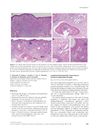
February 2009 in “Clinical and Experimental Dermatology” Hormone-replacement therapy improved a woman's skin condition known as lymphomatoid papulosis.
42 citations
,
December 2011 in “The journal of immunology/The Journal of immunology” RANKL causes lymph nodes to grow by making certain cells multiply.
9 citations
,
May 2014 in “BMC medical genetics” A woman with a unique syndrome similar to TRPS has a genetic change near the TRPS1 gene, affecting its regulation.
May 2005 in “Faculty Opinions – Post-Publication Peer Review of the Biomedical Literature” Truncated LTBP-1 disrupts TGF-beta signaling, affecting hair growth.
September 2025 in “Science Advances” PADI4 enzyme slows down cell growth in developing hair follicles.
October 2019 in “bioRxiv (Cold Spring Harbor Laboratory)” L-PRP and P-PRP reduced endometriosis in rats, but not significantly more than saline.
 12 citations
,
May 2012 in “Endocrinology and metabolism/American journal of physiology: endocrinology and metabolism”
12 citations
,
May 2012 in “Endocrinology and metabolism/American journal of physiology: endocrinology and metabolism” Human scalp hair follicles can be used to study how prolactin affects hair growth and cell death.
1 citations
,
April 2021 in “IntechOpen eBooks” The PCR technique can identify genetic differences in a wool-related gene among different sheep breeds, which may help improve wool and pelt quality.
5 citations
,
September 2021 in “Journal of Molecular Histology” LHX2, with other markers, can identify hair placodes in rats.
1 citations
,
May 2025 in “International Immunopharmacology” L-borneol helps skin wound healing by promoting stem cell differentiation.
May 2009 in “OPAL (Open@LaTrobe) (La Trobe University)” Suppressing the HGPS mutation may improve symptoms and suggest reversibility.
July 2020 in “Research Square (Research Square)” The study found key long non-coding RNAs involved in yak hair growth cycles.

A new syndrome, Teelwani Syndrome, combines features of two rare genetic disorders.
21 citations
,
June 2009 in “Mammalian genome” A new mutation in the Hr gene causes hair loss in mice, similar to a human hair disorder.
 September 2016 in “Journal of Dermatological Science”
 A gene mutation worsens skin irritation in mice due to a lack of certain fats.
 46 citations
,
December 2001 in “Journal of Endocrinology/Journal of endocrinology”
46 citations
,
December 2001 in “Journal of Endocrinology/Journal of endocrinology” FLRG and follistatin have different roles in wound healing.
 May 2017 in “Journal of The American Academy of Dermatology”
 PLAU and SerpinB2 affect cell death differently in various forms of leprosy and could be targets for new treatments.
May 2018 in “The Journal of Immunology” A(1-7) treatment reduces symptoms of lupus in mice.
10 citations
,
February 2013 in “PLoS ONE” Neprilysin is important for hair growth regulation.