April 2025 in “Journal of Diabetes & Metabolic Disorders” Monitoring TGF-β and linc-PINT expression may help identify and treat high-risk heart arrhythmia patients.
 2 citations
,
January 2024 in “Advances in Dermatology and Allergology”
2 citations
,
January 2024 in “Advances in Dermatology and Allergology” S100A7 and IL-17 may contribute to inflammation in lichen planopilaris.
 January 2024 in “Brazilian Journal of Hair Health”
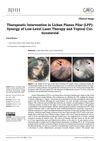
 Combining low-level laser therapy with topical corticosteroids effectively improved Lichen Planopilaris symptoms.
1 citations
,
January 2012 The CRABP I gene in cashmere goats is highly conserved but has unique features at specific amino sites.

Plant roots respond to fungus smells by possibly using certain proteins and a plant hormone to change root growth, but more research is needed.
 1 citations
,
March 2023 in “Science Translational Medicine”
1 citations
,
March 2023 in “Science Translational Medicine” Blocking a certain signal in the gp130 receptor can improve tissue healing and lessen osteoarthritis symptoms.
 29 citations
,
January 2010 in “Methods in Enzymology”
29 citations
,
January 2010 in “Methods in Enzymology” The document concludes that careful design of genetic fate mapping experiments is crucial for accurate cell lineage tracing in mice.
5 citations
,
July 2014 in “Molecular Biology Reports” 1 citations
,
December 2016 in “Revista română de medicină de laborator” The NIPAL4 mutation c.527C>A is common in Romanian patients with autosomal recessive congenital ichthyosis.
 2 citations
,
September 2022 in “Frontiers in veterinary science”
2 citations
,
September 2022 in “Frontiers in veterinary science” Certain long non-coding RNAs are important for the growth of hair follicles in Inner Mongolian cashmere goats.
5 citations
,
September 2021 in “Clinical case reports” GLPLS is a rare skin condition with specific hair loss and skin symptoms.
July 2021 in “Authorea (Authorea)” Graham-Little Piccardi Lassueur Syndrome is a rare skin condition with specific hair loss and skin symptoms.
210 citations
,
February 2008 in “Nature genetics” Mutations in the P2RY5 gene cause autosomal recessive woolly hair.
 127 citations
,
July 2002 in “EMBO journal”
127 citations
,
July 2002 in “EMBO journal” Normal skin cell renewal doesn't need RAR signaling, but vitamin A-related skin thickening does.
 45 citations
,
January 2012 in “The Journal of Steroid Biochemistry and Molecular Biology”
45 citations
,
January 2012 in “The Journal of Steroid Biochemistry and Molecular Biology” Too much AKR1C3 enzyme causes resistance to finasteride by increasing testosterone.
40 citations
,
May 2005 in “Journal of Cell Science” Truncated LTBP-1 disrupts TGF-β signaling, affecting hair growth.
 June 2024 in “International Journal of Dermatology”
 Upadacitinib may effectively treat resistant lichen planopilaris.
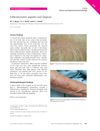 May 2014 in “Clinical and Experimental Dermatology”
 A 70-year-old woman with a rare skin condition improved after treatment with topical steroids and acitretin.
 1 citations
,
September 2021 in “Cureus”
1 citations
,
September 2021 in “Cureus” The rs1128977 gene variant may affect cholesterol and body measurements.
Genetic analysis of rabbits identified key genes for traits like coat color, body size, and fertility.
 April 2025 in “Journal of Investigative Dermatology”
 High LH levels cause hair loss by damaging and aging hair follicles.
28 citations
,
September 2020 in “International Journal of Molecular Sciences” Leucocyte-rich platelet-rich plasma boosts cell activity and helps wound healing.
6 citations
,
January 2006 in “Journal of dermatological science” Runx1 helps control the KAP5 gene in human hair follicles.
1 citations
,
November 2022 in “Journal of Investigative Dermatology” ALRN-6924 may prevent hair loss caused by chemotherapy.
 7 citations
,
July 2005 in “Journal of Dermatological Science”
7 citations
,
July 2005 in “Journal of Dermatological Science” The gene URB is more active in human hair growth cells and responds to a hair-related hormone.
 15 citations
,
December 2014 in “PLoS ONE”
15 citations
,
December 2014 in “PLoS ONE” A mutation in the iRhom2 gene causes hairless mice due to abnormal hair follicle development.
77 citations
,
April 2005 in “Journal of Investigative Dermatology” Repetin is a protein involved in skin and hair development, binding calcium and compensating for other proteins when needed.
 December 2025 in “International Journal of Surgery”
 GBP1 is a key target for treating Epstein-Barr virus-related kidney cancer, and finasteride may help.
Researchers found genes in sheep that may affect hair growth and wool quality.
 10 citations
,
September 2015 in “PLoS ONE”
10 citations
,
September 2015 in “PLoS ONE” New mutations in the VDR gene cause vitamin D-resistant rickets without hair loss.