 January 2024 in “Pan African Medical Journal”
 Non-scarring hair loss is common in lupus patients and can be diagnosed with specific hair and tissue tests.
3 citations
,
November 2019 in “Journal of the ASEAN Federation of Endocrine Societies” A 20-year-old woman with a rare form of Turner syndrome showed improvement with hormonal therapy and needs comprehensive care.
19 citations
,
October 1996 in “International Journal of Dermatology” Pseudopelade is a rare inherited hair loss condition with a genetic cause.
July 2025 in “Pediatric Transplantation” A rare skin infection in a 10-year-old kidney transplant patient was successfully managed by adjusting medication.
A teenager had both alopecia areata and vitiligo, which are rare to occur together.
4 citations
,
October 2024 in “Experimental Dermatology” CD8A and FOXD2-AS1 may be key for diagnosing and treating alopecia areata.
 6 citations
,
January 2013 in “The Journal of Dermatology”
6 citations
,
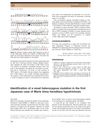
January 2013 in “The Journal of Dermatology” Researchers found a new genetic mutation causing a rare hair loss condition in the first Japanese child studied.
January 2019 in “Revista Dermatológica Centro Uraga” Alopecia triangular temporal is a rare condition with unclear causes and treatment, but trichoscopy helps in diagnosis.
 2 citations
,
March 2023 in “Research Square (Research Square)”
2 citations
,
March 2023 in “Research Square (Research Square)” Forensic DNA phenotyping faces challenges due to inconsistent terminology, limited genetic understanding, and debates over technology and models.
 118 citations
,
October 2013 in “Trends in Genetics”
118 citations
,
October 2013 in “Trends in Genetics” The AUTS2 gene is linked to neurological disorders and may affect human brain development and cognition.

A genetic variant in the KRT71 gene may cause loose anagen hair and wooly hair, and symptoms might improve with age.
 31 citations
,
January 2010 in “GenomeBiology.com (London. Print)”
31 citations
,
January 2010 in “GenomeBiology.com (London. Print)” The research concluded that selection significantly shaped the genetic variation of the X chromosome, with certain regions affected by past selective events.
16 citations
,
September 2015 in “International Journal of Molecular Sciences” A specific gene variant causes severe skin issues and increases infection risk, requiring careful medical monitoring.
July 2024 in “Journal of Investigative Dermatology” DS-2325a is safe and well-tolerated, supporting further development for Netherton Syndrome treatment.
A 16-year-old girl with lupus symptoms improved with treatment despite negative ANA tests.
 September 2024 in “Journal of the American Academy of Dermatology”
 Alopecia areata patients have a higher risk of blood clots.
January 2011 in “The Chinese Journal of Dermatovenereology” Shorter GGN repeats in the androgen receptor gene are linked to androgenetic alopecia.
1 citations
,
August 2022 in “Pigment Cell & Melanoma Research” New mouse models help study melanocytic cells for melanoma research.
January 2015 in “Journal of pediatric endocrinology & metabolism/Journal of pediatric endocrinology and metabolism” A 5-year-old girl with McCune-Albright syndrome grew abnormal hair due to the drug tamoxifen.
June 2024 in “Bioscientia Medicina Journal of Biomedicine and Translational Research” Most children with alopecia areata have patchy hair loss and common trichoscopic features like yellow and black dots.
 April 2023 in “Medizinische Genetik”
 New research has found 14 genes linked to the risk of developing alopecia areata, improving understanding and treatment options.
 1 citations
,
January 2018 in “Acta dermato-venereologica”
1 citations
,
January 2018 in “Acta dermato-venereologica” A teenager's hair with alternating white and dark bands, known as Pili annulati, is a genetic condition that is usually harmless and often considered attractive.
February 2022 in “Authorea (Authorea)” PAON shows skin patterns due to genetic mosaicism.
 April 2016 in “Proceedings of SPIE”
 UV-induced autofluorescence is effective for identifying different types of alopecia.
December 2020 in “Journal of Face Aesthetics” Trichoscopy effectively helps diagnose different types of hair loss in women.
11 citations
,
August 2016 in “Journal of the European Academy of Dermatology and Venereology” Serial trichoscopy is more reliable than the modified hair pull test for tracking alopecia areata.

DNA analysis can help tailor alopecia treatment.
Certain genes may influence hair loss differently in men and women.
1 citations
,
May 2023 in “Frontiers in Pharmacology” Genetic screening for NUDT15 polymorphisms is crucial for patients taking azathioprine, especially in Asians.
8 citations
,
January 2022 in “Current topics in developmental biology/Current Topics in Developmental Biology”