 1 citations
,
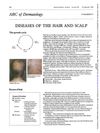
February 1988 in “The BMJ”
1 citations
,
February 1988 in “The BMJ” The document explains different hair and scalp conditions, including common hair loss after pregnancy or illness, drug-induced hair loss, hereditary excessive hair growth, patterned baldness, autoimmune hair loss, and permanent loss due to skin disease, with generally limited treatment options.
August 2026 in “Dermatology and Therapy” Scalp rosacea is a treatable, non-scarring condition affecting mostly middle-aged men, linked to hair loss and sun exposure.
June 2026 in “The Sri Lanka Journal of Dermatology” Hair disorders significantly reduce quality of life.
May 2026 in “SKIN The Journal of Cutaneous Medicine” Xtressé™ gummies are safe and may help improve hair in women with non-scarring hair loss.

Caffeine therapy helped hair recovery after chemical and traction damage.

Trichoscopy is a valuable tool for accurately diagnosing scalp conditions without invasive procedures.
Ritlecitinib is a new treatment for severe hair loss in people 12 and older.
January 2025 in “Open Science Framework” Hair disorders significantly affect self-image, mental health, and quality of life.
January 2025 in “Indian Journal of Dermatopathology and Diagnostic Dermatology” Dermoscopy helps diagnose rare GLPLS in males.
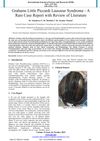 October 2023 in “International Journal of Science and Research (IJSR)”
 Early diagnosis of GLPLS is crucial to prevent complications, but scarring alopecia is irreversible.
 August 2023 in “Journal of analytical & pharmaceutical research”
 Microneedle-assisted therapy with human basic fibroblast growth factor significantly regrew hair in patients with hair loss.
January 2023 in “Journal of Clinical and Diagnostic Research” Trichoscopic patterns often overlap in scalp disorders, so dermatologists need to stay updated.
November 2021 in “International Journal of Pharma and Bio Sciences” Alopecia causes hair loss, and scarring alopecia leads to permanent hair loss due to inflammation.
 November 2021 in “CRC Press eBooks”
 Anagen effluvium is a reversible condition causing sudden hair loss, often due to chemotherapy or head radiation.
May 2020 in “Scientific periodicals of Ukraine” Alopecia and acne in women are complex conditions needing coordinated care and personalized treatment.
 July 2018 in “IP Indian journal of clinical and experimental dermatology”
 Hair loss in rural Indian children is often due to malnutrition, poor grooming, stress, and infections.

Injecting a person's own skin cells back into their skin is a promising, safe, and affordable treatment for skin disorders.
 June 2017 in “Reactions Weekly”
 Some breast cancer treatments caused long-term hair loss in women, similar to a condition called alopecia areata.
Alopecia areata is reversible because hair follicles can regenerate due to stem cells.

The document discusses various treatments for different types of hair loss, including steroids, minoxidil, and anthralin.
 January 2015 in “Вестник дерматологии и венерологии”
 Patients with non-scarring hair loss often have emotional disorders.
 January 2014 in “Pathology”
 RET mutation is important in familial medullary thyroid carcinoma, and BRAF mutation in papillary thyroid carcinoma is linked to more aggressive cancer and higher death rates.
July 2013 in “Indian Journal of Dentistry” A 46-year-old man showed symptoms of a rare condition usually seen in postmenopausal women, highlighting the need for dentist-dermatologist collaboration.
 January 2008 in “Dialnet (Universidad de la Rioja)”
 Alopecia can be linked to autoimmune diseases and shows different hair loss patterns.
 September 1998 in “Journal of the European Academy of Dermatology and Venereology”
 Autoimmune and inflammatory processes are involved in both scarring and non-scarring types of hair loss.
Eye drops with β-blockers may cause hair loss.
 November 2019 in “Journal of Aesthetic Nursing”
 The article concludes that a thorough diagnosis and treatment plan, including medications, non-invasive methods, or surgery, is important for managing hair loss, with a combination of minoxidil and finasteride being particularly effective.
July 2026 in “JAAD reviews.” GLP-1 receptor agonists may cause hair loss, but more research is needed.
January 2026 in “European Journal of Dermatology” Understanding alopecia is crucial to improving care and addressing hair loss concerns.
 October 2025 in “EMJ Dermatology”
 GLP-1RA therapy may increase the risk of hair loss.