 5 citations
,
October 2018 in “Dermatologic therapy”
5 citations
,
October 2018 in “Dermatologic therapy” Recognizing congenital triangular alopecia is crucial to avoid unnecessary treatments.

The hairline can reliably guide neurosurgical planning.
54 citations
,
June 2001 in “The Indian Journal of Pediatrics” Lower hair zinc levels may be linked to Neural Tube Defects.
 1 citations
,
September 2015 in “Aesthetic Surgery Journal”
1 citations
,
September 2015 in “Aesthetic Surgery Journal” Dr. Umar successfully used softer hair from the nape and around the ear for natural-looking hairlines in 128 patients, with some concerns about hair loss over time.
 8 citations
,
April 2001 in “Dermatologic Surgery”
8 citations
,
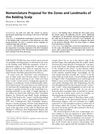
April 2001 in “Dermatologic Surgery” Michael L. Beehner proposed a standardized way to describe balding areas on the scalp to help hair restoration experts communicate better.
14 citations
,
April 1976 in “Journal of Cutaneous Pathology” A calcified nodule on a boy's face came from hair follicles and expelled calcium through the skin.
 January 2021 in “Skin appendage disorders”
 The report concludes that atypical Brauer nevus is more common in males, present at birth, and often misdiagnosed due to its unusual scalp locations.
 13 citations
,
September 2015 in “Aesthetic Surgery Journal”
13 citations
,
September 2015 in “Aesthetic Surgery Journal” Transplanting hair from the nape and around the ear to the hairline and temples generally satisfies patients and looks natural.
19 citations
,
July 1994 in “International Journal of Dermatology” A 9-year-old boy had a calcium deposit nodule on his earlobe.
 4 citations
,
May 2015 in “Indian Journal of Dermatology, Venereology and Leprology”
4 citations
,
May 2015 in “Indian Journal of Dermatology, Venereology and Leprology” Congenital triangular alopecia can occur outside the typical fronto-temporal region.
 April 2001 in “Dermatologic Surgery”
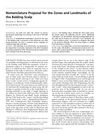
 Michael L. Beehner proposed a standardized naming system for balding scalp areas to help hair restoration surgery.
 1 citations
,
November 2016 in “Congenital Anomalies”
1 citations
,
November 2016 in “Congenital Anomalies” Get head MRI for babies with achondroplasia early, use free immunoglobulin light chains to detect certain neurodevelopmental disorders, and video calls work for speech therapy in patients with facial anomalies.
 34 citations
,
December 1995 in “Pediatric Dermatology”
34 citations
,
December 1995 in “Pediatric Dermatology” Congenital Triangular Alopecia is a rare, non-scarring hair loss that can be surgically treated in females for cosmetic reasons.
 2 citations
,
May 2014 in “Journal of The American Academy of Dermatology”
2 citations
,
May 2014 in “Journal of The American Academy of Dermatology” Melanoma thickness at diagnosis is linked to access to dermatologists and preventive services, not to socioeconomic status.
 10 citations
,
July 2017 in “Archives of Plastic Surgery”
10 citations
,
July 2017 in “Archives of Plastic Surgery” Hair thickness decreases from the upper to lower areas of the back of the head, affecting hair transplant results.
 January 2018 in “Springer eBooks”
 Congenital triangular alopecia is a harmless, non-spreading hair loss condition often seen in young children.
 February 2010 in “Journal of The American Academy of Dermatology”
 Babies born after 38 weeks to mothers under 36 years old and not delivered by C-section have a higher risk of neonatal occipital alopecia.
Nipple area expansion in mice needs both pregnancy hormones and mechanical strain.
June 2026 in “Indian Dermatology Online Journal” A supernumerary nipple was correctly identified using dermoscopy, avoiding misdiagnosis.
9 citations
,
December 2004 in “Archives of Pathology & Laboratory Medicine” The neck mass was a rare benign "wattle," surgically removed for diagnosis and appearance.
 1 citations
,
February 2014 in “Hair therapy & transplantation”
1 citations
,
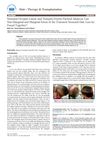
February 2014 in “Hair therapy & transplantation” A baby boy had two types of temporary hair loss at birth, which might be two forms of newborn hair loss combined.
4 citations
,
September 2019 in “Journal of Biomedical Optics” Medulla loss in scalp hair could help detect breast cancer.
 9 citations
,
April 2017 in “International Journal of Dermatology”
9 citations
,
April 2017 in “International Journal of Dermatology” Different areas of the scalp have varying hair thickness, useful for different types of hair transplant needs.
January 2022 in “Clinical Cases in Dermatology” A 12-year-old boy has a rare, harmless hair loss on his chin with no need for treatment.
March 2022 in “Clinical Cosmetic and Investigational Dermatology” CDKN2AIP gene is less active in nevus sebaceous, affecting related RNA networks.
 8 citations
,
April 2010 in “JEADV. Journal of the European Academy of Dermatology and Venereology/Journal of the European Academy of Dermatology and Venereology”
8 citations
,
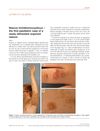
April 2010 in “JEADV. Journal of the European Academy of Dermatology and Venereology/Journal of the European Academy of Dermatology and Venereology” The first pediatric case of naevus trichilemmocysticus was documented.
 June 2026 in “Scientific Reports”
 Nestin-expressing hair follicle cells may be useful for nerve repair and regeneration.
 April 2024 in “Deleted Journal”
 Scalp pain should be classified as a type of headache.
3 citations
,
December 2003 in “Archives of Pathology & Laboratory Medicine” The nodule was a benign cutaneous lymphadenoma, not cancer, and was successfully removed.
 April 2016 in “The journal of investigative dermatology/Journal of investigative dermatology”
 The back of the scalp has more nerve fibers than the front, which may explain why some people feel more sensitivity there.